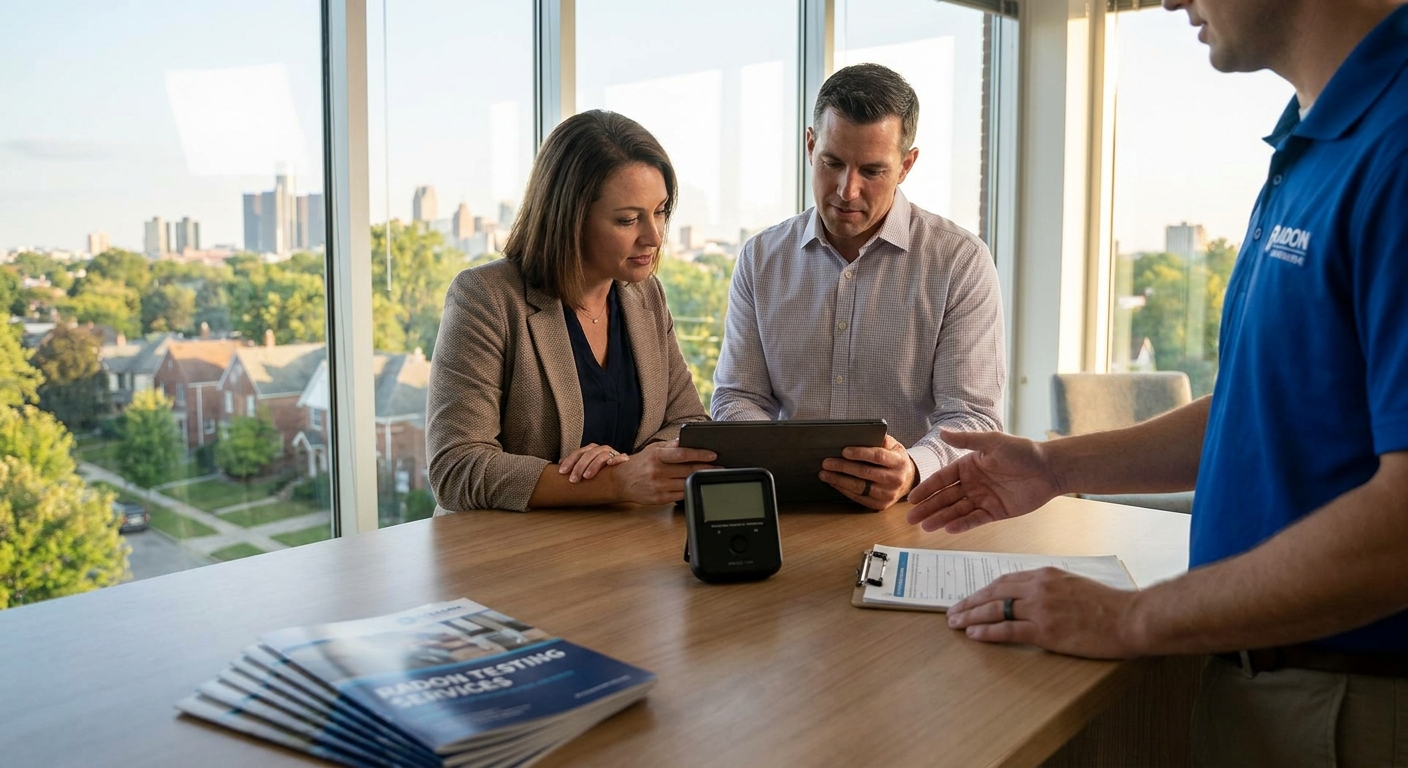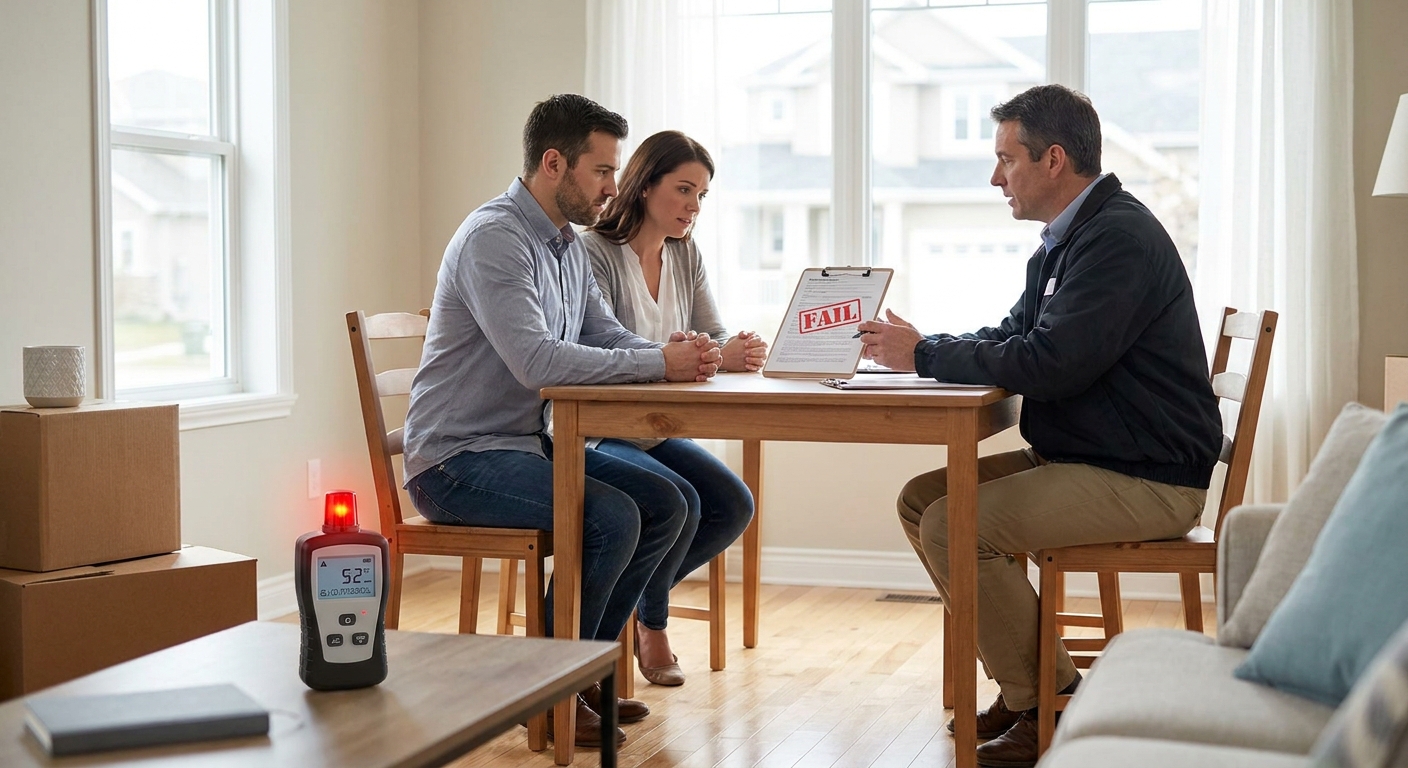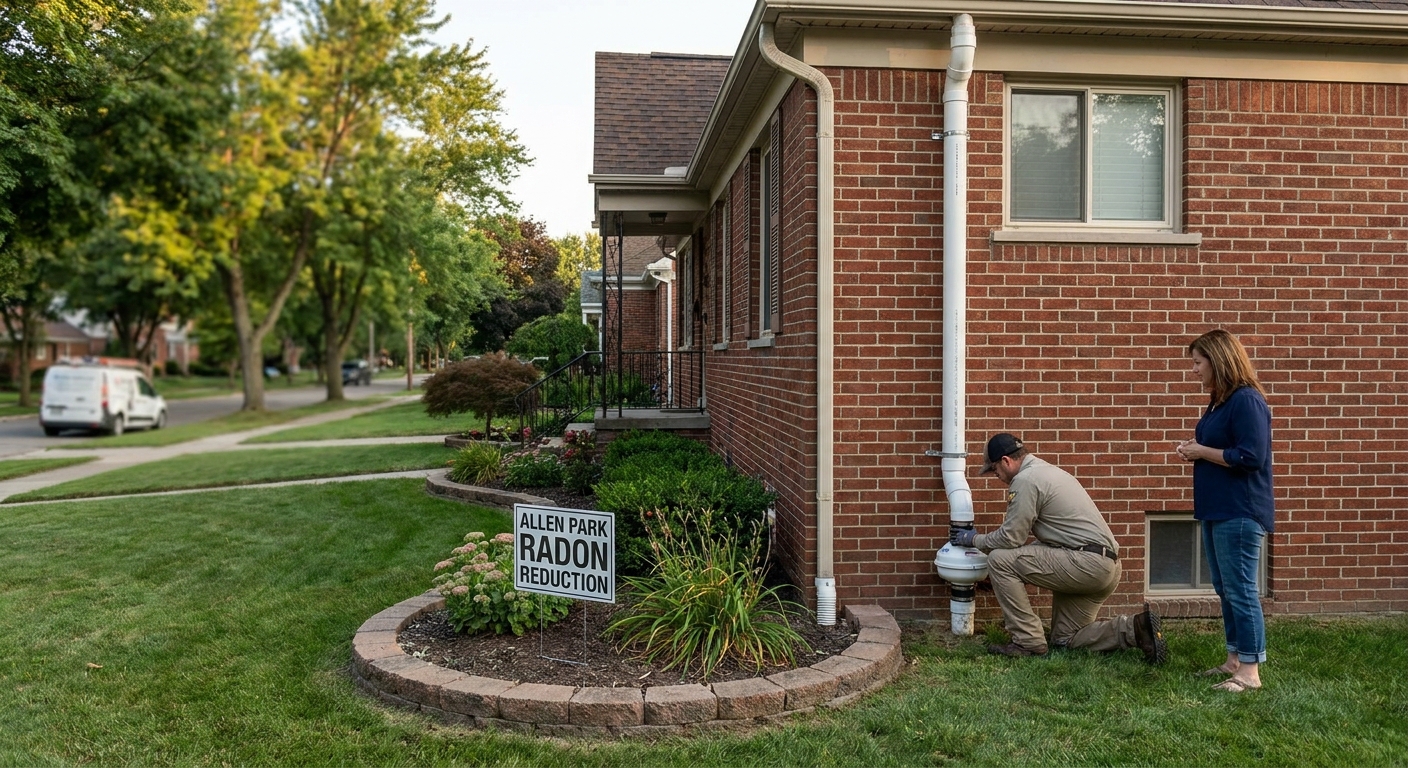
Allen Park sits in Wayne County, where post-war ranch homes and brick bungalows with full basements are common — and that combination of Michigan glacial soil and finished basements is exactly the setup that traps radon gas indoors. If a test came back above 4 pCi/L, you need to know which mitigation system fits your foundation, not just that "radon mitigation" is a line item on an inspection report.
- Sub-slab depressurization fits most Allen Park ranch homes and pulls levels below 4 pCi/L in 24-48 hours after activation.
- Allen Park radon mitigation for a home with a crawlspace or block foundation needs a different approach than a slab-on-grade system — verify foundation type before quoting.
- NRPP-certified installers are non-negotiable in Michigan; the state has no state-level radon license, so certification is the only real credential filter.
- A 5-year system warranty and a post-install retest are standard asks — skip any installer who won't put both in writing.
Why this matters
Michigan ranks among the higher-radon states nationally because of glacial till deposits that sit under much of the Lower Peninsula, and Wayne County homes built directly on that soil see elevated readings often enough that many Downriver municipalities treat radon testing as standard practice during home sales. Radon is a decay product of uranium in soil and rock, and it moves through cracks, sump pits, and utility penetrations into basements — the exact floor plan of most Allen Park housing stock built between 1945 and 1970.
The EPA sets 4 pCi/L as the action level for mitigation, and homes tested at 2 pCi/L or higher get an EPA "consider mitigation" flag. If your test report from 2026 shows a number above 4, waiting isn't a strategy — lung cancer risk from radon exposure compounds over years, not days, but the fix itself takes a single day for most homes.
Who this guide is for
This is for Allen Park homeowners who have a radon test result in hand — from a real estate transaction, a DIY kit, or a professional test — and need to pick a mitigation system that matches their specific foundation, not a generic quote. It's also for buyers under contract on a Downriver property where the seller's radon disclosure came back elevated and negotiations hinge on mitigation cost.
If you haven't tested yet, start there before shopping systems: a 48-hour test tells you whether you need one at all.
What to look for in radon mitigation for Allen Park homes
Foundation type match
A sub-slab depressurization system works only on a poured concrete slab or basement floor with accessible sub-slab soil — most Allen Park ranches qualify, but older homes with dirt-floor crawlspaces need a membrane-and-vent approach instead. Get the foundation confirmed before you accept a quote, because the wrong system type simply won't pull suction.
Fan placement and noise
Mitigation fans run continuously, 365 days a year, and a poorly placed unit in an attached garage or near a bedroom wall becomes a daily annoyance. Ask where the installer plans to route the PVC pipe and mount the fan — exterior wall runs on the side away from patios and windows keep noise and appearance complaints down.
NRPP certification
Michigan has no state radon contractor license, which means anyone can call themselves a radon installer with zero training. NRPP (National Radon Proficiency Program) certification is the actual credential that verifies EPA-standard installation practices — ask for the certification number and confirm it's current for 2026.
Post-mitigation testing
A system isn't done until a follow-up test confirms the reading dropped below 4 pCi/L. Reputable installers build a 48-hour post-install retest into the service, either included or as a clearly priced add-on — if that's missing from the proposal, ask why.
Warranty coverage
A 5-year warranty on parts and labor is standard for a properly sized system in this market. Anything shorter suggests the installer is either undersizing the fan for your square footage or cutting corners on pipe sealing.
System sizing for basement square footage
A fan rated for a 1,200 square foot slab won't move enough air in a 2,400 square foot finished basement with multiple sub-areas. Undersized systems are the most common reason mitigation fails a retest — ask for the fan's CFM rating and compare it against your basement's total slab area.
Get your Allen Park home tested
NRPP-certified testing and mitigation quotes for Metro Detroit homeowners.
Top picks: mitigation system types for Allen Park homes
Sub-slab depressurization — the default pick. This is the system used on roughly 80% of basement and slab-on-grade homes nationally, per EPA guidance on mitigation methods. A single suction point drilled through the basement floor, connected to a 4-inch PVC pipe and an exterior fan, typically pulls a home from 8-10 pCi/L down under 4 pCi/L within two days of activation. Verdict: Buy for any Allen Park ranch or bungalow with a poured basement floor.
Drain tile depressurization — the efficient alternative. If your home already has a perimeter drain tile system tied to a sump pit, the installer can route suction through that existing tile loop instead of drilling a new slab penetration. It's often faster to install and equally effective when the drain tile forms a complete loop around the foundation. Verdict: Consider if your home has a sump pump and intact drain tile — ask your installer to check before quoting a new slab hole.
Sump hole depressurization — the tight-fit option. For homes where the sump pit is the only accessible sub-slab access point, sealing the pit lid and running suction through it avoids cutting new holes in a finished basement floor. It works well but depends on the pit having a good seal to the surrounding soil. Verdict: Consider for finished basements where floor cuts aren't practical.
Block wall depressurization — the specialty fix. Homes with hollow block foundation walls (common in some older Allen Park construction) can leak radon through the block cavities themselves, not just the slab. This system draws suction from the block wall cavity in addition to or instead of the slab. Verdict: Skip unless your foundation inspection specifically flags hollow block wall infiltration — it's the wrong system for a standard poured basement.
What to avoid
- Passive-only systems with no fan. A passive vent pipe without an active fan relies on stack effect alone and frequently fails to bring high-reading Allen Park homes below 4 pCi/L — insist on an active fan system if your initial test was above 8 pCi/L.
- Installers who skip the diagnostic test. A proper installer runs a sub-slab communication test before drilling to confirm suction will reach the whole slab. Skipping this step is how you end up with a system that mitigates one corner of the basement and leaves the rest untouched.
- Quotes with no retest included. A price that looks lower because it excludes the post-install verification test isn't actually cheaper — you're just paying for the retest separately, and you won't know if the system worked until you do.
Verdict comparison
| System type | Best foundation match | Typical fix time | Verdict |
|---|---|---|---|
| Sub-slab depressurization | Poured basement/slab | 1-2 days | Buy |
| Drain tile depressurization | Homes with sump + drain tile loop | 1 day | Consider |
| Sump hole depressurization | Finished basements, sealed sump | 1 day | Consider |
| Block wall depressurization | Hollow block foundation walls | 1-2 days | Skip (unless flagged) |
Before your installer arrives, walk through how to prepare your home for a radon mitigation system so the crew isn't waiting on you to clear a basement corner or move a sump lid on install day.
FAQ
What's the best radon mitigation system for an Allen Park ranch home?
Sub-slab depressurization is the best fit for most Allen Park ranch homes with poured basement floors, typically pulling readings below 4 pCi/L within 1-2 days of activation. Homes with existing sump pits or drain tile loops may qualify for a faster drain tile depressurization install instead.
How much does allen park radon mitigation cost in 2026?
Mitigation cost depends on foundation type, basement square footage, and fan sizing, so get a home-specific estimate rather than relying on a national average. Ask for a written quote that includes the post-install retest, not just the system installation.
Is a passive radon system enough for a Michigan basement?
A passive-only system without a fan often fails to bring high readings below the EPA action level of 4 pCi/L in Michigan basements. Active fan systems are the standard recommendation for any initial test result above 8 pCi/L.
How long does radon mitigation installation take?
Most sub-slab depressurization installs are completed in a single day, with the fan activated the same day. A follow-up retest 48 hours later confirms whether the reading dropped below 4 pCi/L.
Do I need a radon test before scheduling mitigation?
Yes — a mitigation system should only be installed after a test confirms a reading at or above the EPA's 4 pCi/L action level. Testing first also tells the installer which system type your foundation needs.
Does radon mitigation affect home resale in Allen Park?
A documented, NRPP-certified mitigation system with a retest showing levels below 4 pCi/L is generally viewed as a resolved issue by buyers and their agents. Keep the installation paperwork and retest results for the closing file.
How often should a radon mitigation system be checked?
Most systems include a fan pressure gauge that should be checked periodically, and a full retest every two years confirms the system is still performing. Systems installed in 2026 typically carry a 5-year parts and labor warranty.
Can I install a radon mitigation system myself?
DIY installation is possible but risky, since incorrect suction point placement or undersized fans are the leading cause of failed retests. NRPP-certified installers carry the diagnostic tools to confirm suction reaches the full slab before finishing the job.
One last thing
The detail most Allen Park homeowners miss: the fan's CFM rating matters more than the brand name on it. A correctly sized fan matched to your basement's slab area is the difference between a system that passes retest on the first try and one that needs a second suction point added later at extra cost.