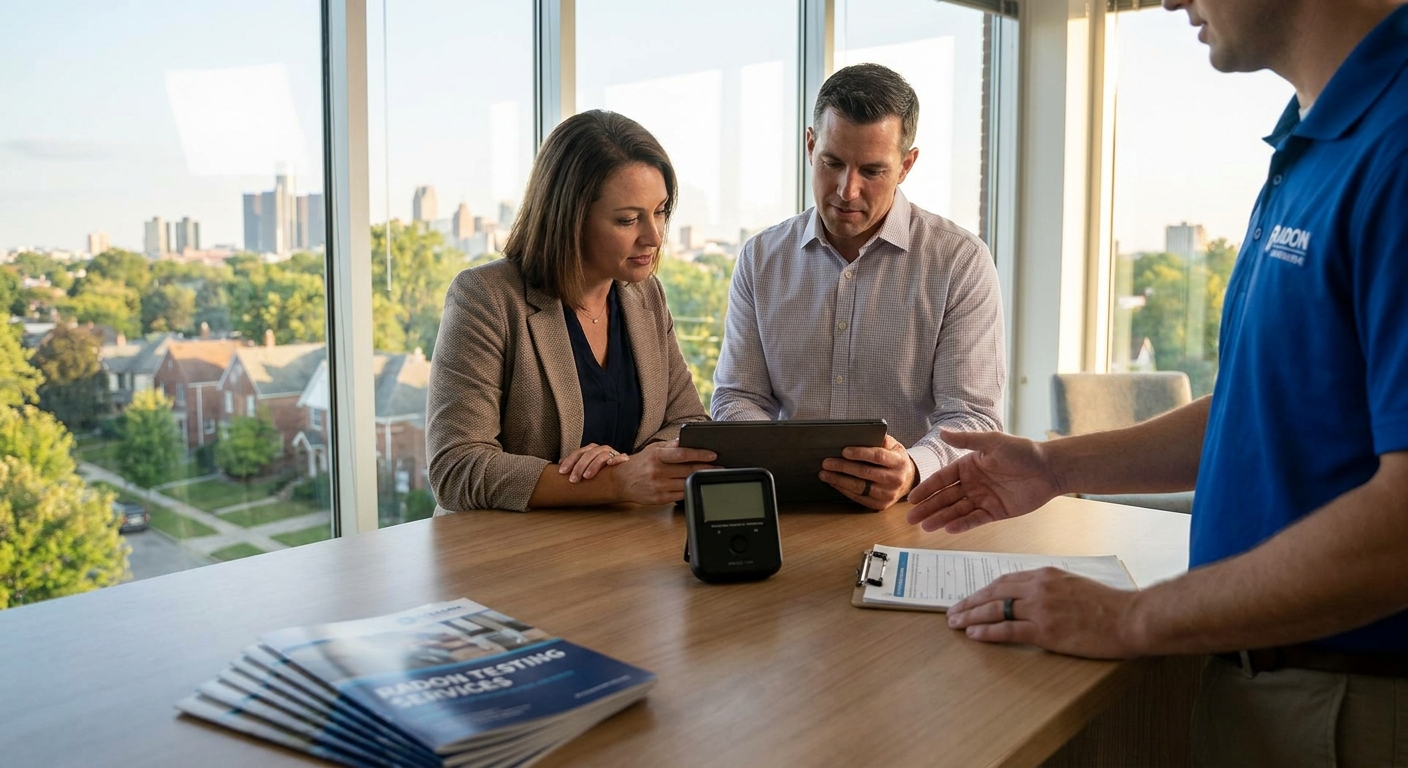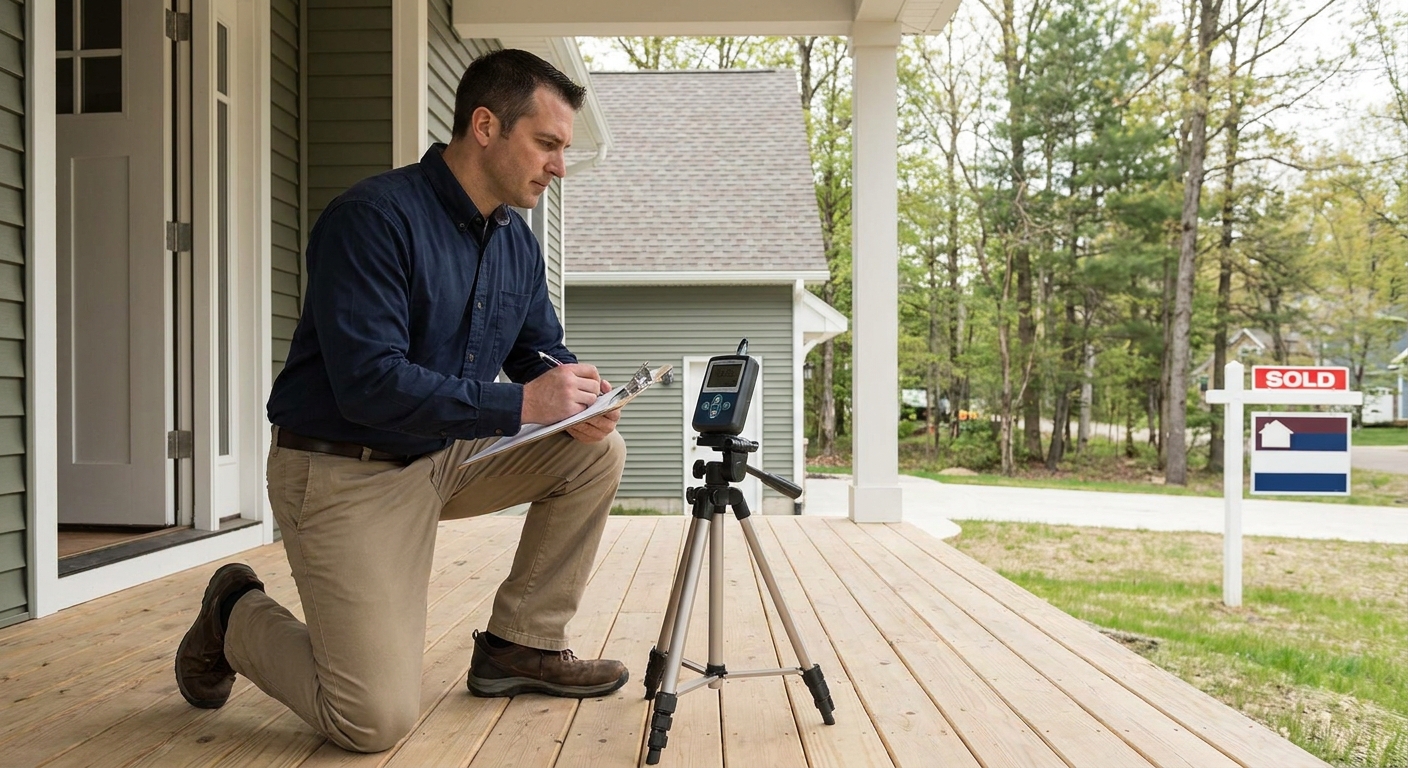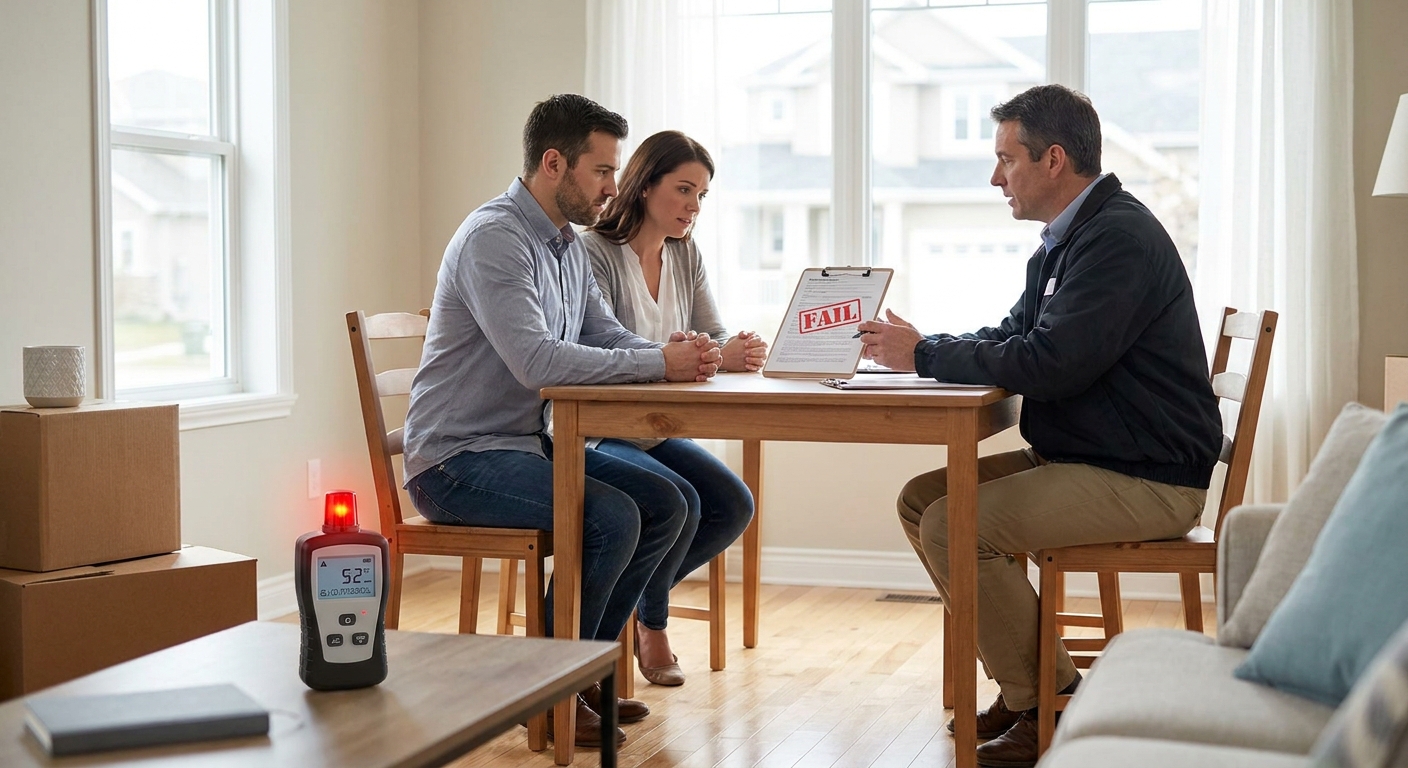
A failed radon test doesn't have to sink a home sale, but it does change the timeline and the negotiation. Here's exactly what to do in the days after a result comes back above the EPA action level, from confirming the number to closing with a signed-off mitigation system.
- A failed radon test home sale situation means a result at or above 4.0 pCi/L. Mitigation, not panic, is the fix.
- Radon mitigation systems typically install in one day and cut levels below 2.0 pCi/L in most Michigan homes.
- Buyers and sellers usually split or negotiate mitigation cost into the purchase agreement rather than killing the deal.
- A 48-hour post-mitigation retest is the document that gets you to the closing table.
- NRPP-certified contractors like Michigan Radon Control can turn a failed test into a closed sale within 7-10 days.
Why this matters
Michigan sits in a high-radon zone because of glacial soil deposits and uranium-bearing bedrock, so a failed test during a home sale is common, not rare. Real estate contracts in Michigan routinely include a radon contingency, which means a result above 4.0 pCi/L gives either party a documented reason to pause, renegotiate, or walk.
Sellers who treat a failed test as a crisis lose leverage. Buyers who assume the house is unsafe lose a deal that's fixable in under two weeks. The actual fix, a sub-slab depressurization system, is a known, EPA-endorsed process, and most closings survive it without a scratch.
What you'll need
- The original lab or continuous monitor test result, with the reporting date
- A copy of the purchase agreement's radon or inspection contingency clause
- Contact with 2-3 NRPP-certified radon mitigation contractors for quotes
- A closing timeline from your realtor or title company
- Access to the basement, crawlspace, or slab area for system installation
- A budget conversation between buyer and seller before contractors are hired
For sellers working with an agent unfamiliar with radon negotiation, radon testing guidance for real estate agents covers how Michigan agents typically structure these clauses.
The steps
1. Confirm the result and the test type
Check whether the failed test was a short-term charcoal canister, a continuous radon monitor, or a long-term alpha track detector. The type affects how much weight it carries in negotiation. A short-term test above 4.0 pCi/L is grounds to move forward, but a second confirmatory test in the same location strengthens the case if the buyer's agent pushes back. Expect the confirmation step to take 2-4 days if you order another short-term test.
Common mistake: treating one high reading from a test placed near a sump pump or open window as final. Placement errors inflate numbers and waste a week disputing a result that a retest would settle.
2. Read the contingency clause literally
Michigan purchase agreements typically state what happens at or above 4.0 pCi/L, usually seller-paid mitigation, a credit, or contract termination rights for the buyer. Pull the exact language before calling anyone; it determines who pays and who chooses the contractor.
Don't assume the seller always fixes it. Some clauses cap the seller's cost obligation at a dollar figure, which changes what mitigation options are on the table.
3. Get quotes from NRPP-certified contractors, not general handymen
Mitigation is a licensed, code-specific job. Sub-slab systems, fan sizing, and vent termination points all have to meet EPA and state guidelines. Call 2-3 certified contractors and get written quotes within 48-72 hours; most will assess the foundation type on the same call.
Michigan Radon Control provides NRPP-certified radon mitigation system installation across Metro Detroit and Lansing, and systems typically carry a 5-year warranty on parts and labor.
Common mistake: picking the cheapest quote without checking fan placement and exterior discharge point. A poorly routed system can fail inspection or draw complaints from neighbors about the exhaust location.
4. Decide who pays before the contractor starts
Split the cost, credit it at closing, or have the seller pay outright, whichever the contingency clause supports. Negotiating this before the install date avoids a second delay when invoices come in. Sub-slab depressurization systems in Michigan homes generally run in a predictable range depending on foundation size and complexity. Get the exact number in writing from the contractor, not from a general online estimate.
5. Schedule the install around the closing date
Most single-point sub-slab systems install in a single day, sometimes two for larger homes or homes with multiple foundation types. Work backward from your closing date. You need the install done, plus a 48-hour retest, plus time for the lab result to come back, which usually means booking the contractor 7-10 days before closing at the latest.
Common mistake: scheduling the install and retest with zero buffer. A rushed timeline leaves no room for a rescheduled contractor visit or a slow lab turnaround.
6. Retest 48 hours after activation, not sooner
The EPA and most state protocols require the mitigation fan to run continuously for at least 48 hours before a valid retest. Testing early gives an artificially low reading that won't hold up if the buyer's agent requests documentation later.
7. Document everything for the closing file
Gather the original failed test, the contractor's installation invoice and system diagram, and the passing retest result. Title companies and buyer's agents will want this paper trail. It's what actually closes the file, not a verbal assurance that the problem is fixed.
Get a mitigation quote before your closing date
NRPP-certified installs across Metro Detroit and Lansing, most completed in a single day.
Troubleshooting
Retest still comes back above 4.0 pCi/L. The contractor needs to return and adjust the system, usually a fan upgrade or an additional suction point. This adds 2-3 days but is far more common in homes with multiple foundation types than a full system failure.
Contractor can't schedule before closing. Ask about an escrow holdback instead of delaying the sale. Funds sit in escrow until the system is installed and retested post-closing. Not every lender allows this, so confirm with the title company first.
Seller refuses to pay for mitigation. Check the contingency clause again. If it's silent on cost allocation, this becomes a negotiation, not an automatic buyer win. A credit at closing is often the fastest compromise.
Buyer wants a credit instead of a system. This is legal in most Michigan transactions, but it means the radon problem stays unresolved after move-in. Flag this clearly in writing so the buyer isn't surprised later.
Test placement gets disputed. Have the retest performed by a third-party NRPP-certified tester, not the mitigation contractor who installed the system. It removes any appearance of a conflict of interest.
Tools and resources
- Best radon testing companies in Michigan for a second opinion or confirmatory test
- How to prepare your home for a radon mitigation system if the install is scheduled and you need to clear access points
- Your purchase agreement's radon contingency clause, reviewed by your realtor or attorney
- A written contractor quote itemizing fan model, suction points, and warranty terms
What to do next
If mitigation is already scheduled, the next thing to nail down is timing. Confirm the 48-hour fan run-in period lines up with your closing date before you sign off on anything. If you're a buyer's agent or listing agent handling this for the first time, review how these contingencies typically get structured so the next failed test doesn't cost you a week of back-and-forth.
FAQ
What happens if a home fails a radon test during a sale in Michigan?
A result at or above 4.0 pCi/L typically triggers the radon contingency in the purchase agreement, which usually requires mitigation before closing or a negotiated credit. Most Michigan sales close on schedule once a certified contractor installs a system and a 48-hour retest confirms levels below 4.0 pCi/L.
Who pays for radon mitigation when a home sale fails a radon test?
Payment depends on the contingency clause in the purchase agreement. Sellers pay outright in many contracts, but a split cost or closing credit is also common. Read the exact clause language before assuming either side is automatically responsible.
How long does it take to fix a failed radon test before closing?
Most single-point mitigation systems install in one day, followed by a mandatory 48-hour fan run-in before a valid retest. Budget 7-10 days total from contractor scheduling to a passing retest result in hand.
Can a buyer back out of a home sale over a failed radon test?
Yes, if the purchase agreement's radon contingency grants termination rights above the EPA action level of 4.0 pCi/L. Most buyers negotiate mitigation or a credit instead of walking, since the fix is quick and well-established.
Does a radon mitigation system guarantee a passing retest?
A properly sized sub-slab depressurization system installed by an NRPP-certified contractor brings levels below 4.0 pCi/L in the large majority of Michigan homes. Homes with multiple foundation types sometimes need a second suction point to pass.
Is a short-term radon test enough to fail a home sale contingency?
Yes, most Michigan purchase agreements accept a short-term charcoal canister or continuous monitor result as valid grounds for the radon contingency. A confirmatory retest in the same spot is common practice if either party disputes the number.
How much does radon mitigation cost during a home sale?
Cost varies by foundation size and complexity, and contractors quote it individually after assessing the crawlspace, basement, or slab. Get written quotes from 2-3 NRPP-certified contractors before agreeing to a cost split with the other party.
What radon level is considered a failed test in 2026?
The EPA action level remains 4.0 pCi/L in 2026. Results at or above that number are the standard trigger for a radon contingency in Michigan real estate contracts. Levels between 2.0 and 4.0 pCi/L are worth mitigating but rarely trigger contract clauses.
One last thing
The number that actually matters at closing isn't the failed test. It's the retest. Buyers and sellers who fixate on the original high reading waste days re-litigating a number that a free fan run-in period and a fresh lab result already resolve. Get the retest scheduled the moment the install finishes, and the failed radon test home sale problem stops being a negotiation and becomes a paperwork task.