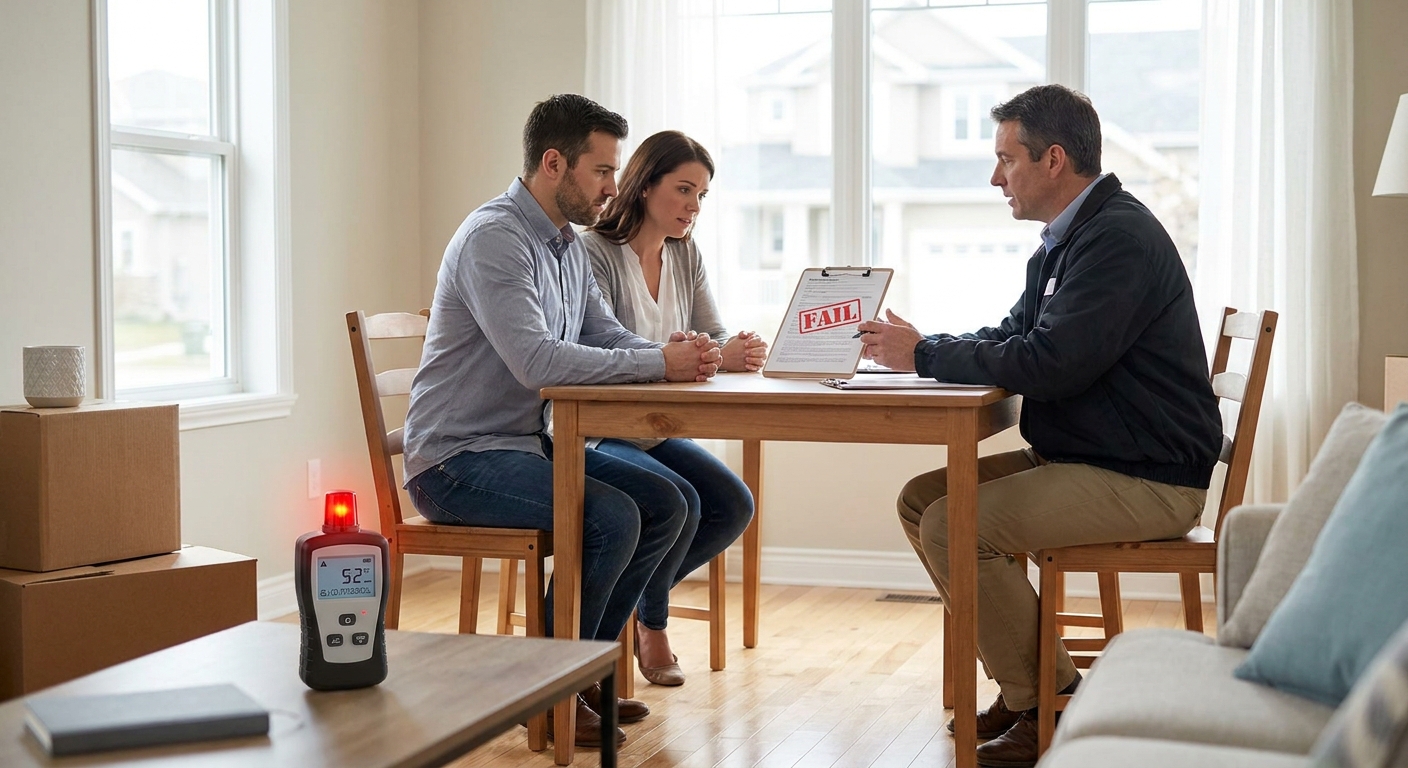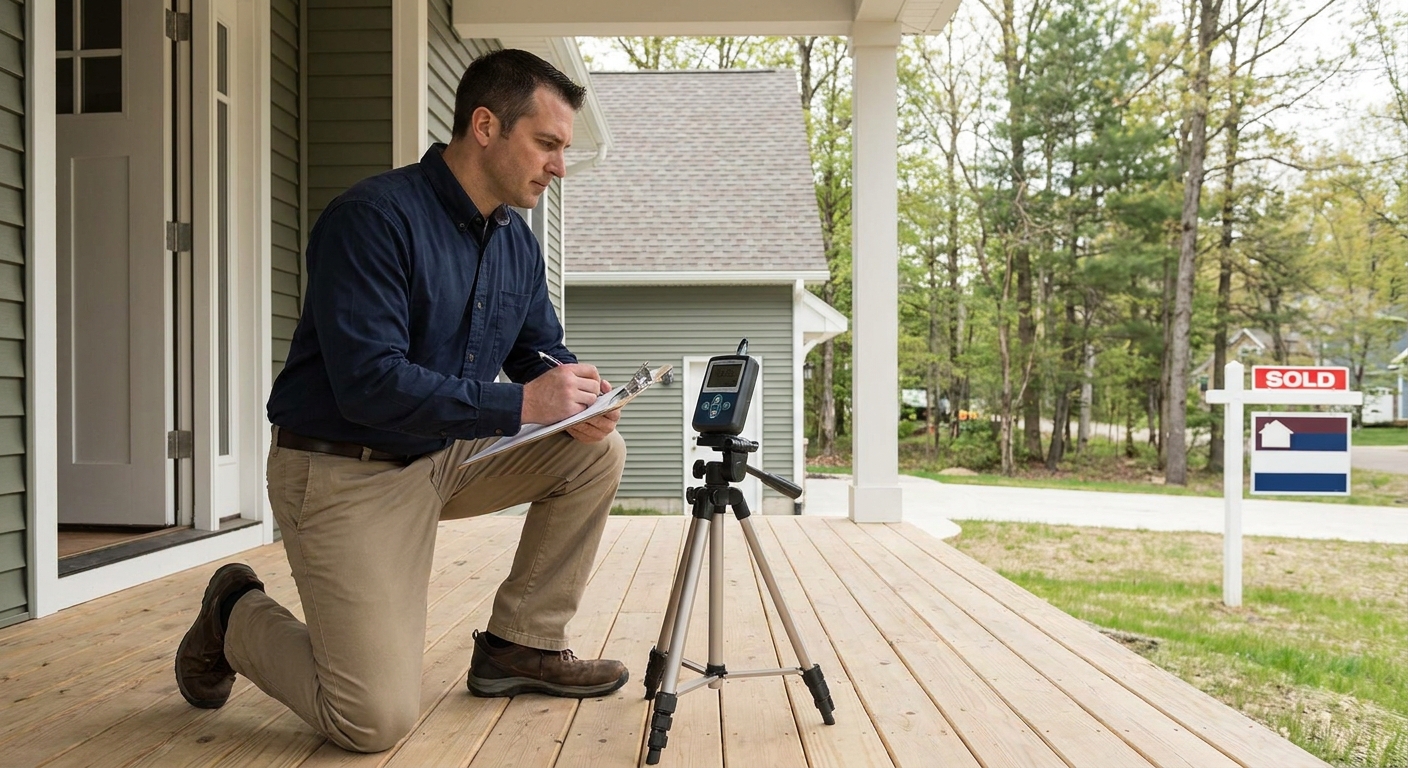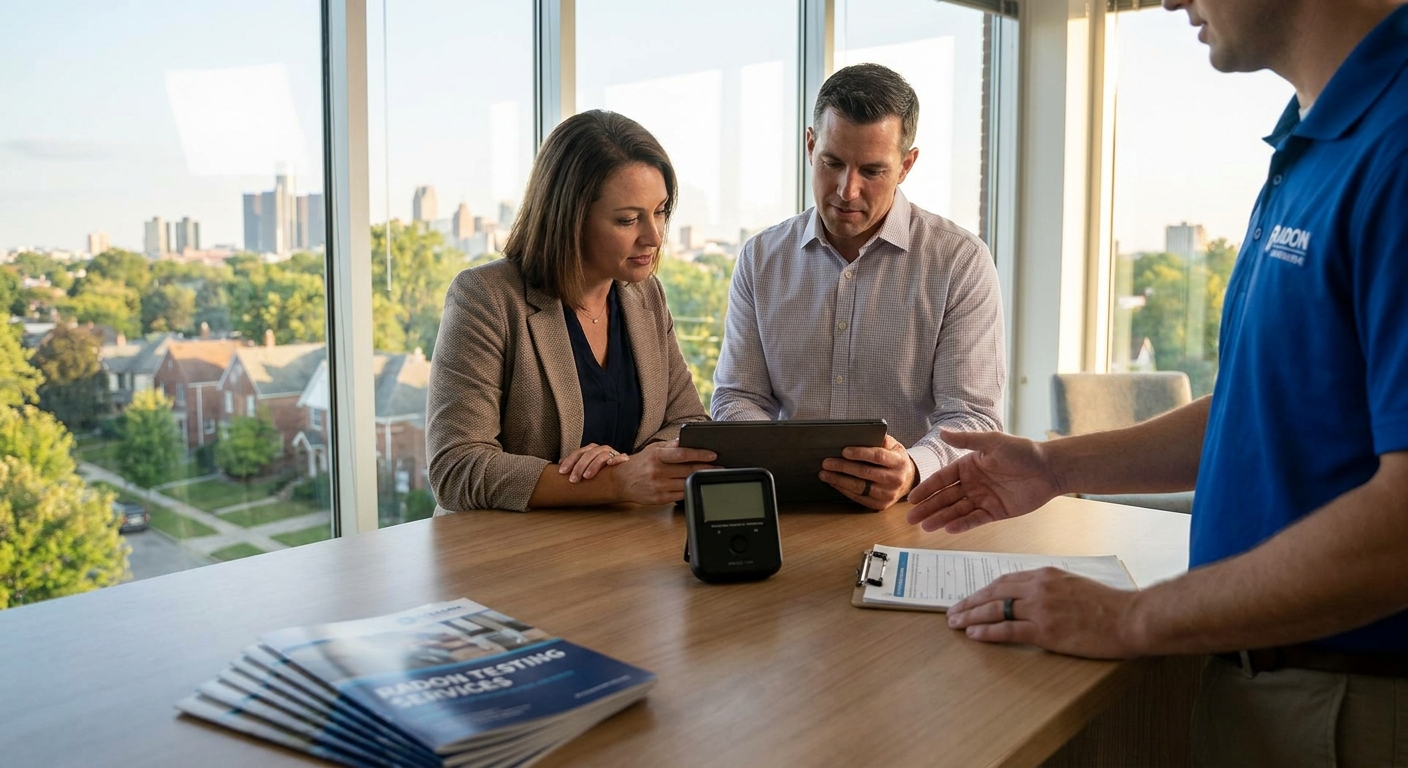
Metro Detroit and Lansing closings stall for one reason more than any other environmental issue: a radon test that doesn't hold up under a lender's or title company's scrutiny. This guide ranks what actually matters when you're picking radon testing for realtors near me in 2026 — certification, turnaround, and paperwork that survives a file review.
- NRPP-certified testers using continuous radon monitors are the only safe choice for radon testing for realtors near me in 2026 — Buy.
- Charcoal canister kits from hardware stores fail most real estate transaction timelines and chain-of-custody rules — Skip.
- Michigan Radon Control's realtor guidance page covers disclosure language and document packages agents need before closing — Buy.
- National inspection franchises that bolt on radon testing as an add-on service are inconsistent on turnaround — Hold.
Why this matters
A radon test tied to a real estate transaction isn't the same as a homeowner testing out of curiosity. Title companies and lenders expect a continuous radon monitor, a chain-of-custody form, and a report with a named, certified technician attached to it. Michigan Radon Control runs that exact protocol across Metro Detroit and Lansing, which is why realtors keep this guide bookmarked during closing season.
Miss the protocol and you risk a re-test request from the buyer's agent five days before closing. That delay is avoidable. The criteria below explain what separates a testing company that closes deals from one that reopens them.
How we ranked these options
Every option below is scored on four things realtors in Metro Detroit actually ask about: NRPP or state-equivalent certification, use of a continuous radon monitor instead of a passive charcoal kit, turnaround time against a typical 30-day closing window, and whether the company hands over paperwork a title company will accept without a follow-up call.
Options that fail on certification or paperwork get marked Skip or Hold regardless of price. A cheap test that gets rejected at closing costs more than a properly documented one.
The ranked list
1. NRPP-certified testers running continuous monitors — Buy
This is the baseline, not a bonus. A continuous radon monitor logs hourly readings over the full 48-hour test window and flags interference (doors opened, HVAC changes) that would void a charcoal test. Reports come with a technician ID number that title companies can verify. Any company that can't produce an NRPP ID on request is not qualified for a real estate transaction in 2026. Buy.
2. Companies with a dedicated realtor document package — Buy
Agents don't need a science lecture — they need a report, a disclosure paragraph, and a chain-of-custody form that matches what the buyer's lender expects. Michigan Radon Control's radon testing guidance for Michigan real estate agents page lays out exactly which forms attach to a purchase agreement and how disclosure language should read. Agents managing three or four closings a month save real time here. Buy.
3. Regional specialists covering the Novi–Farmington Hills–Livonia corridor — Buy
This stretch of Oakland and Wayne counties sits over glacial till and fractured bedrock that pushes radon readings higher than the state average in some subdivisions. A tester who already knows the housing stock in Novi, Farmington Hills, and Livonia schedules faster and interprets borderline readings (3.5–4.5 pCi/L) with local context instead of guessing. Buy.
4. Mid-Michigan capitol region coverage: Lansing and East Lansing — Buy
Lansing-area homes, especially older housing near campus in East Lansing, often have sump pits and crawlspaces that change how a test should be placed in the home. A company with dedicated coverage in that market avoids the two-hour drive delay that stalls a same-week test request. Buy.
5. National inspection franchises bundling radon as an add-on — Hold
Some home inspection franchises offer radon testing as a checkbox add-on to a general inspection. The equipment and protocol vary by franchisee, and turnaround on the radon-specific report can lag two to three days behind the main inspection report. Ask directly whether the technician handling your radon test is separately NRPP-certified before you book. Hold.
6. Charcoal canister kits from hardware stores — Skip
These kits run 2 to 7 days of passive exposure and get mailed to a lab for results, which is too slow and too easy to challenge for a closing timeline. Buyers' agents routinely reject charcoal results in a transaction because there's no continuous data log to prove the test wasn't tampered with. Skip.
7. Uncertified testers found through classifieds or social marketplaces — Skip
No certification, no chain-of-custody form, no report a title company will accept. If the price looks too low to be a licensed NRPP technician, it's because it isn't one. Skip.
Need a closing-ready radon test?
NRPP-certified testing across Metro Detroit and Lansing with realtor-ready paperwork.
Comparison table
| Option | Certification | Turnaround | Realtor Paperwork | Verdict |
|---|---|---|---|---|
| NRPP-certified continuous monitor testers | Yes | 48 hours | Full chain-of-custody | Buy |
| Realtor document package providers | Yes | 48 hours | Disclosure + forms included | Buy |
| Regional specialists (Novi/Farmington Hills/Livonia) | Yes | 48-72 hours | Full chain-of-custody | Buy |
| Lansing/East Lansing coverage | Yes | 48-72 hours | Full chain-of-custody | Buy |
| National inspection franchise add-on | Varies | 3-5 days | Sometimes incomplete | Hold |
| Charcoal canister kits | No | 2-7 days | No chain-of-custody | Skip |
| Uncertified classified testers | No | Unclear | None | Skip |
Where to source a test
- Ask for the NRPP ID number before you book. A legitimate technician gives it without hesitation; it's checkable against the national registry.
- Confirm it's a continuous monitor, not a charcoal kit, for any transaction closing inside 30 days. Charcoal results get challenged too often to risk it.
- Ask what happens if the result comes back above 4 pCi/L. A company that also installs mitigation systems and stands behind a multi-year warranty on the install saves the deal instead of just flagging a problem.
FAQ
What is the best radon testing option for realtors near me in 2026?
NRPP-certified testers using continuous radon monitors are the best radon testing option for realtors in 2026 because they produce a 48-hour report with chain-of-custody documentation that title companies accept without a follow-up call.
Is a charcoal radon test kit acceptable for a real estate closing?
Charcoal kits are generally not acceptable for a real estate closing because they take 2 to 7 days and lack the continuous data log lenders and title companies expect. Continuous radon monitors are the standard for transactions in 2026.
How long does a radon test take before closing?
A continuous radon monitor test takes 48 hours minimum under ANSI-AARST real estate protocol. Add a day for scheduling and report delivery, so book the test at least 4-5 days before you need results.
What radon level requires mitigation in Michigan?
The EPA action level is 4 pCi/L nationally, and Michigan homes routinely test above it because of the state's glacial till and fractured bedrock geology. Anything at or above 4 pCi/L should trigger a mitigation quote before closing.
Do realtors need to disclose radon test results in Michigan?
Michigan doesn't mandate radon disclosure by state statute the way some states do, but most purchase agreements and buyer agents request results if a test has been performed. Agents should keep the report on file regardless.
How much does radon mitigation cost after a failed test?
Costs vary by system type and home layout, so get a specific quote once a test confirms a reading above 4 pCi/L rather than budgeting off a generic number.
Can a radon test be rushed for a fast closing?
Some certified testers can schedule same-week, but the 48-hour continuous monitor window itself can't be shortened without invalidating the result. Book as early in the transaction as possible.
Which Metro Detroit suburbs have the highest radon readings?
Areas over glacial till and fractured bedrock in Oakland and Wayne counties, including parts of Novi, Farmington Hills, and Livonia, tend to run higher than the state average, though every lot is different and only a test confirms actual levels.
One last thing
The detail most agents miss: a passing radon test today doesn't guarantee a passing test next year. Michigan's freeze-thaw cycles shift soil gas pathways under a foundation, so a home that tested at 2.8 pCi/L in 2023 can test above 4 pCi/L in 2026 with zero renovation work done. Build a re-test conversation into every relisting past the two-year mark, not just new listings.