Livonia sits on the same glacial till and clay-heavy soil that pushes radon readings above the EPA action level in roughly one in three Wayne County basements tested in 2026. Picking the right mitigation system for a ranch, colonial, or split-level home in Livonia comes down to foundation type, not brand names.
- Sub-slab depressurization wins for radon mitigation Livonia MI homes with poured basements — Buy for most ranch and colonial builds.
- Drain tile suction is the fallback pick when a sump pit already exists — Consider before drilling new suction points.
- Block wall suction only fits hollow concrete block foundations common in older Livonia homes — Skip if your basement is poured concrete.
- Passive-only systems rarely pull levels below the EPA's 4 pCi/L action level on their own — Skip for existing high-radon homes.
- NRPP-certified installers retest after mitigation to confirm levels stay under 4 pCi/L in 2026.
Why this matters
Michigan's radon problem isn't hype — it's geology. The uranium-bearing glacial deposits under Southeast Michigan break down into radon gas, and that gas finds its way through foundation cracks, sump pits, and utility penetrations into basements across Livonia. A 48-hour short-term test is the only way to know your actual number, and the EPA sets 4 pCi/L as the point where mitigation is recommended.
Once a home tests high, the fix isn't optional caulk and hope — it's an active system engineered for that specific foundation. Get that match wrong and you'll pay for a fan that never brings levels down.
Michigan Radon Control installs NRPP-certified systems across Metro Detroit and Lansing, and the foundation type in a Livonia home dictates which of the four main system designs actually works.
Who this is for
This guide is for Livonia homeowners who've already tested above 4 pCi/L, or who are buying/selling a house where a radon inspection came back high. It's built for people comparing system types before they call a contractor — not for someone who just wants a cheap DIY patch on a serious air quality problem.
What to look for in radon mitigation systems for Livonia homes
Foundation type match
A sub-slab system needs a poured concrete slab to pull air from underneath it. Livonia's mid-century ranches and colonials from the 1950s through 1970s mostly have this, which makes sub-slab the default recommendation for most of the city's housing stock.
Fan placement and noise tolerance
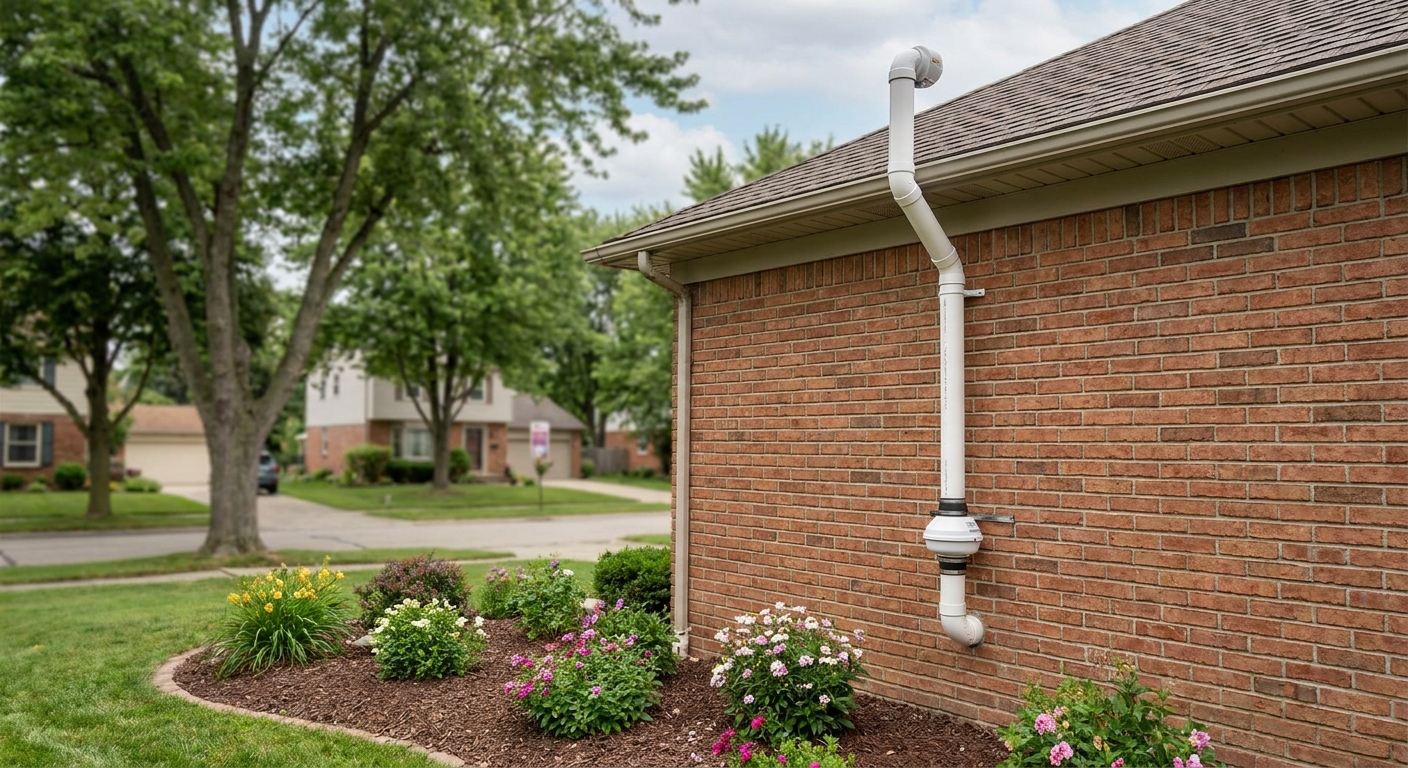
Mitigation fans run continuously, 24 hours a day, every day of the year. Attic-mounted fans are quieter from inside the house; exterior wall-mounted units are easier to service but audible near patios and bedroom windows facing that side.
NRPP certification on the installer
An NRPP-certified installer follows EPA protocol for suction point placement, pipe routing, and post-install testing. A system installed without that certification can look identical and still fail to pull levels under 4 pCi/L.
Local permit and code compliance
Livonia and Wayne County require permits for radon mitigation installs that involve electrical work and exterior venting. Skipping this step creates problems at resale, when a home inspector or realtor flags an unpermitted system.
Post-install testing and warranty
A proper install includes a retest to confirm the number actually dropped below 4 pCi/L. Systems backed by a 5-year warranty give you a path back to the installer if levels creep back up.
Energy draw and discharge point
Mitigation fans typically pull 80 to 100 watts continuously. Discharge points need to sit above the roofline and away from windows, which matters more on split-level homes with multiple roof planes.
Top picks: radon mitigation systems for Livonia, MI homes
Sub-slab depressurization (ASD) — the default pick. This system drills one or more suction points through the basement slab and routes a PVC pipe to a roof-mounted fan. It's the go-to for Livonia's poured-slab ranches and colonials, and it typically pulls the largest volume of soil gas per suction point of any active system. Buy for any home with a standard poured basement floor.
Drain tile suction — the practical fallback. If your Livonia home already has a sump pit tied into a drain tile loop, sealing that pit and routing suction through it avoids drilling new holes in the slab. It works almost as well as ASD in homes with an intact drain tile system running the perimeter. Consider this before paying for additional suction points if a sump pit already exists.
Block wall suction — the specialist pick. Older Livonia homes with hollow concrete block foundation walls need suction drawn from inside the block cavities, not the slab. It's a different install method entirely, and a sub-slab-only system in a block wall home often underperforms. Buy only if your foundation is confirmed hollow block; Skip for poured concrete basements.
Sump-hole suction — the tight-space option. Where a sump pump sits in a pit but there's no full drain tile loop, sealing that single pit and drawing suction from it can work in smaller basements. It's a narrower fix than drain tile suction and depends on how well the pit connects to the soil gas layer under the slab. Consider for smaller basements without a full drain loop; test after install before assuming it's enough.
Passive stack systems — the new-construction leftover. Some newer Livonia builds include a passive vent pipe with no fan, relying on natural pressure differences to vent soil gas. Passive-only setups rarely bring an existing high reading down to safe levels on their own. Skip relying on a passive system alone if your home already tested above 4 pCi/L — it needs a fan added to become active.
What to avoid
- A single charcoal test kit as your final answer. Short-term charcoal kits are a screening tool, not a diagnosis — radon levels swing with weather and season, and one reading from March doesn't confirm your July number.
- Crack sealing sold as a standalone fix. Caulking foundation cracks reduces some entry points but doesn't create the negative pressure needed to pull soil gas away from the house — it's a supplement to an active system, never a replacement.
- A system sized for a different foundation type. A contractor who installs the same sub-slab design regardless of whether your basement is poured or block is cutting corners, and it shows up in a failed retest.
Before any of this starts, check how to prepare your home for a radon mitigation system so the install day goes faster and the suction point ends up in the right spot the first time.
Get your Livonia home tested
NRPP-certified radon testing and mitigation across Metro Detroit and Lansing.
Verdict comparison
| System type | Best foundation match | Noise level | Verdict |
|---|---|---|---|
| Sub-slab depressurization | Poured concrete slab | Low, roof-mounted fan | Buy |
| Drain tile suction | Slab with existing sump/drain tile | Low | Consider |
| Block wall suction | Hollow concrete block | Low to moderate | Buy for block homes |
| Sump-hole suction | Small basement with sump pit | Low | Consider |
| Passive stack only | New construction, low starting reading | None (no fan) | Skip if already high |
FAQ
What is the best radon mitigation system for a Livonia, MI home?
Sub-slab depressurization is the best fit for most Livonia homes because the majority have poured concrete basement slabs. Homes with hollow block foundations need block wall suction instead.
How much does radon mitigation cost in Livonia?
Cost depends on foundation type, number of suction points, and fan placement, so it varies home to home. An NRPP-certified installer can quote an exact number after inspecting your basement.
Is sub-slab depressurization better than a block wall system?
Neither is universally better — the right one depends entirely on your foundation type. Sub-slab works on poured slabs, while block wall suction is built for hollow concrete block foundations.
How long does it take to install a radon mitigation system?
Most active systems install in a single day, typically 4 to 8 hours depending on suction point count and pipe routing. Post-install retesting to confirm the level dropped below 4 pCi/L happens afterward.
Do I need a permit for radon mitigation in Livonia?
Yes, Livonia and Wayne County require permits for mitigation installs involving electrical wiring and exterior venting. An unpermitted system can create issues during a home sale inspection.
How do I know if my Livonia home needs radon mitigation?
A 48-hour short-term test result above the EPA's 4 pCi/L action level means mitigation is recommended. Given Michigan's glacial soil composition, testing is worth doing even without symptoms.
Can I install a radon mitigation system myself?
It's not recommended — improper suction point placement or pipe routing can leave levels above 4 pCi/L even with a fan running. NRPP-certified installers follow EPA protocol and retest to confirm the fix worked.
How long does a radon mitigation system last?
Fans typically run for 5 to 10 years before needing replacement, and systems are often backed by a 5-year warranty. Annual retesting confirms the system is still performing.
One last thing
The number that actually matters isn't the first test — it's the retest after mitigation. A system that drops your reading from 8 pCi/L to 3.9 pCi/L technically passes, but a well-tuned sub-slab system on a Livonia ranch usually lands well under 2 pCi/L. If your post-install number is sitting right at the line, that's a sign the suction point or fan sizing needs a second look, not a home you should call finished.