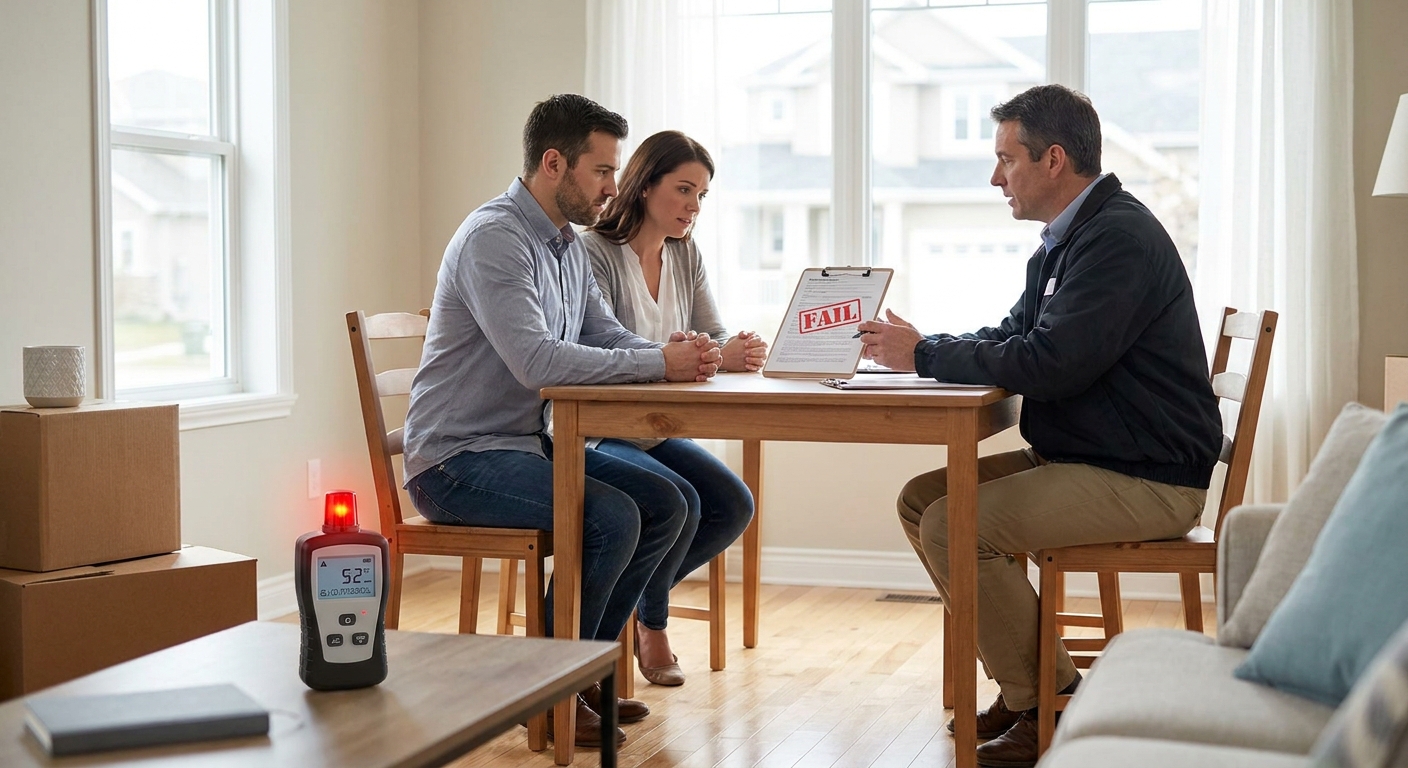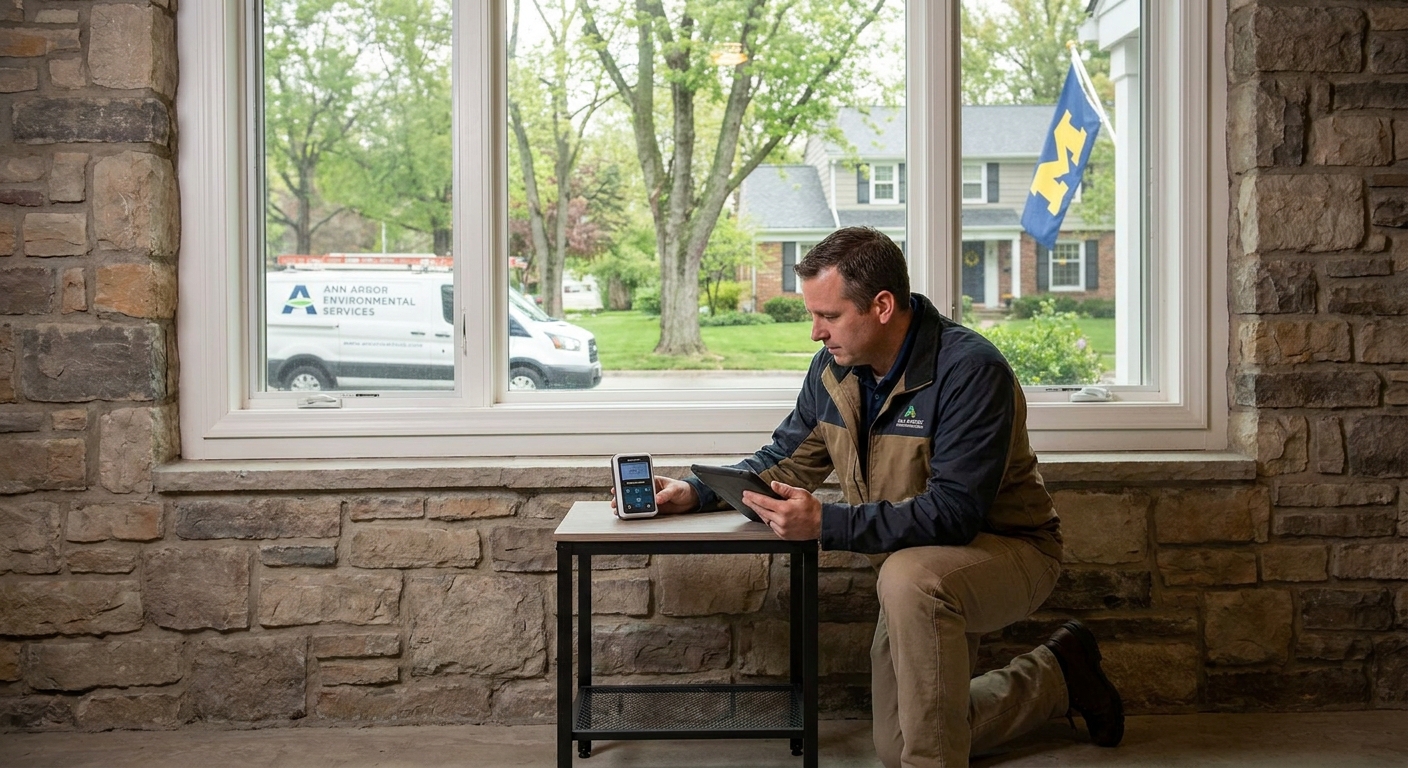
Ann Arbor sits on a mix of glacial till and limestone bedrock that traps uranium-bearing minerals close to the surface, and that geology is exactly why Washtenaw County shows up in EPA's highest radon risk zone. This guide breaks down what actually matters when you're choosing radon mitigation in Ann Arbor, whether you just got a high test result or you're buying a home with an existing system.
- Washtenaw County sits in EPA Radon Zone 1, the highest risk designation in the country.
- Sub-slab depressurization fits roughly 80% of Ann Arbor basements and full-basement homes.
- Any result at or above 4.0 pCi/L means radon mitigation ann arbor homeowners should schedule within weeks, not months.
- NRPP-certified installers are non-negotiable in 2026 -- uncertified work voids most resale disclosures.
- Michigan Radon Control installs and re-tests systems to confirm post-mitigation levels drop below the EPA action level.
Why this matters
Radon is a colorless, odorless gas produced by decaying uranium in soil and rock, and it's the second-leading cause of lung cancer in the U.S. after smoking, according to the EPA. Michigan's basement-heavy housing stock makes this worse: basements sit closer to soil gas, and older Ann Arbor homes with fieldstone or block foundations often have more entry points than newer slab construction.
The EPA action level is 4.0 pCi/L. Anything above that number means mitigation is recommended, and predicted average indoor levels across Washtenaw County already sit above that threshold before you even factor in a leaky sump lid or a cracked slab. A short-term test tells you where you stand today. A mitigation system is what changes the number going forward.
Who this is for
This guide is written for Ann Arbor homeowners who've tested at or above 4.0 pCi/L, homebuyers reviewing a radon inspection report before closing, and realtors who need to explain mitigation options to a nervous client fast. If you haven't tested yet, start there -- everything below assumes you already have a number in hand from a certified test, not a guess. Michigan Radon Control runs NRPP-certified testing and installation across Metro Detroit and Lansing, including Ann Arbor and the rest of Washtenaw County.
What to look for in radon mitigation for Ann Arbor homeowners
NRPP certification, not just a license
Michigan doesn't require a state contractor license specifically for radon work, which means anyone with a drill can advertise "radon mitigation." NRPP (National Radon Proficiency Program) certification is the actual credential that matters, and it's what most mortgage lenders and real estate attorneys ask to see on a mitigation report in 2026.
System type matched to your foundation
A full basement with a poured slab needs a different approach than a home with a crawl space or a hollow block foundation wall. Installers who quote the same system regardless of foundation type are cutting corners, and it shows up later as a system that runs constantly but never gets the number below 4.0 pCi/L.
Fan placement and noise level
The fan is the loudest, most visible part of any system, and where it sits determines both suction efficiency and how much you notice it living in the house. Exterior-mounted fans in unfinished garages or attics are standard for Ann Arbor's older housing stock because interior placement in a finished basement usually means relocating ductwork.
Post-mitigation testing protocol
A system isn't done until it's been re-tested and confirmed below 4.0 pCi/L, typically 24 to 48 hours after activation. Any installer who doesn't include a follow-up test as part of the job is asking you to take their word for it, and that's not how this works in 2026.
Warranty and maintenance plan
Fans have a working life of roughly 5 to 10 years, and manometer gauges need periodic visual checks to confirm the system is still under negative pressure. A warranty that covers parts and labor, paired with a maintenance check, protects you from a silent failure -- radon systems don't make noise when they stop working.
Local familiarity with Ann Arbor's housing stock
Ann Arbor mixes 1920s bungalows, mid-century ranches, and newer slab-on-grade construction near the townships, and each needs a different mitigation approach. An installer who's worked block-wall foundations in the Old West Side and crawl spaces out toward Dexter will spot problems a generalist misses.
Top picks by foundation type
Sub-slab depressurization (SSD) -- the default pick for poured basement floors. One PVC pipe runs from below the slab through the roofline, pulled by a fan drawing negative pressure under the concrete. SSD handles roughly 80% of Ann Arbor basement installs and typically pulls levels from the 8-12 pCi/L range down under 2.0 pCi/L. Buy for standard basement homes with a continuous poured slab.
Drain tile suction -- the wildcard for homes with an interior perimeter drain system already in place. Instead of drilling a new suction point, the system taps into the existing drain tile loop, which cuts installation time and disruption. Consider if your home already has a functioning interior drain tile system; Skip if the drain tile is old, broken, or disconnected in sections, since it won't hold suction.
Block wall suction -- built for homes with hollow concrete block foundation walls, common in Ann Arbor's older neighborhoods. Radon moves through the hollow cavities in the block, so the system draws suction from within the wall itself rather than under the slab. Buy for pre-1960s block foundations; Skip for poured concrete walls, where it does nothing.
Sump-based radon system -- the twofer for homes with an active sump pump. A sealed sump lid becomes the suction point, combining radon control with the existing sump pit instead of adding a second penetration point. Buy if you already have a sump pump and a lid that can be sealed properly; Consider getting a quote alongside SSD if your sump sits away from the main slab area.
Crawl space membrane system -- for homes with exposed dirt or gravel crawl spaces instead of a basement. A heavy plastic vapor barrier gets sealed across the crawl space floor and walls, then a fan draws air from beneath the membrane. Buy for full crawl space homes; Skip as a standalone fix if there's also a connected basement area, since radon will just migrate to the untreated section.
Before any of these go in, walk through the site prep. This guide on preparing your home for a radon mitigation system covers clearing the install path, moving stored items away from the foundation wall, and what access installers need on the day of the job.
Get an Ann Arbor mitigation estimate
NRPP-certified installers, site visit within days, EPA-standard install.
What to avoid
- A single short-term test as your only data point. Radon levels swing with weather and season; a 48-hour test in dry summer conditions can read lower than a January test in the same house. Confirm with a follow-up test before deciding no action is needed.
- Sealing cracks as a standalone fix. Caulk and epoxy close visible gaps, but radon moves through soil at a molecular level and finds new paths through pores in concrete you can't see. It slows entry; it doesn't stop it.
- Skipping the post-install re-test. A system that's installed but never confirmed below 4.0 pCi/L is a guess, not a fix, no matter how confident the installer sounds.
Verdict comparison
| System type | Best for | Typical result | Verdict |
|---|---|---|---|
| Sub-slab depressurization | Poured basement slab | Under 2.0 pCi/L | Buy |
| Drain tile suction | Working interior drain tile | Under 2.0 pCi/L | Consider |
| Block wall suction | Hollow block foundation | Under 2.0 pCi/L | Buy for older homes |
| Sump-based system | Active sump pump present | Under 2.0 pCi/L | Buy |
| Crawl space membrane | Full crawl space, no basement | Under 2.0 pCi/L | Buy |
FAQ
What's the best radon mitigation system for an Ann Arbor basement?
Sub-slab depressurization is the best fit for most Ann Arbor basements with a poured concrete floor, since it draws suction directly from beneath the slab. It handles the majority of full-basement installs and typically brings levels under 2.0 pCi/L.
Is radon mitigation worth it if my test came back at 4.5 pCi/L?
Yes -- 4.5 pCi/L is already above the EPA action level of 4.0 pCi/L, and mitigation systems reliably bring levels down under 2.0 pCi/L. Waiting doesn't lower exposure; the gas keeps entering at the same rate every day the house sits untreated.
How much does radon mitigation cost in Ann Arbor?
Cost depends on foundation type, fan placement, and whether the system taps existing drain tile or a sump pit versus drilling a new suction point. Request a site-specific estimate since pricing varies by home layout and access.
How long does a radon mitigation system take to install?
Most single-system installs in Ann Arbor homes are completed in a single day. Homes needing multiple suction points, like a combined basement and crawl space, can take longer.
Do radon mitigation systems work in homes with crawl spaces?
Yes, but they need a sealed vapor barrier membrane across the crawl space floor paired with a suction fan, not a standard sub-slab system. Homes with both a crawl space and a basement often need both systems addressed separately.
How soon after testing should I install a mitigation system?
The EPA recommends acting within weeks of a confirmed result at or above 4.0 pCi/L, not months. Radon exposure is cumulative, so delaying installation extends exposure without lowering the risk.
Does a radon mitigation system need maintenance?
Yes -- check the manometer gauge periodically to confirm the system is still under negative pressure, and expect the fan to need replacement roughly every 5 to 10 years. A silent fan failure won't trigger an alarm on its own.
Can I install a radon mitigation system myself?
It's not recommended. Improper suction point placement or an unsealed penetration can leave levels above 4.0 pCi/L while giving a false sense of the problem being solved. NRPP-certified installation with a documented post-test is the standard for a reason.
One last thing
A radon system that's working correctly is almost silent -- the fan hums quietly in the attic or garage, and the manometer gauge is the only thing that tells you it's still under negative pressure. Check that gauge twice a year. It's the cheapest, fastest way to catch a fan failure before radon levels creep back up in your Ann Arbor home in 2026.