Dearborn's housing stock runs old — bungalows and Cape Cods from the 1920s through the 1950s sit on basements and slab foundations that were built decades before anyone tested for radon gas. Testing your home is the only way to know what you're actually breathing, and 2026 is a good year to stop guessing.
- A short-term charcoal canister test (48-96 hours) is the fastest reliable option for radon testing dearborn mi buyers and sellers need before closing.
- NRPP-certified professional testing beats hardware store kits for real estate transactions — Buy.
- EPA action level is 4.0 pCi/L; above that, mitigation planning starts immediately.
- Continuous radon monitors give tamper-evident results real estate agents accept without question — Buy.
- Michigan Radon Control backs mitigation installs with a 5-year warranty once a test confirms elevated levels.
Why radon testing matters in Dearborn
Michigan sits on glacial till loaded with uranium-bearing rock fragments, and that geology doesn't stop at the Wayne County line. Radon gas seeps up through soil and foundation cracks, and in a tight, well-insulated Dearborn basement it can concentrate fast. Michigan Radon Control runs NRPP-certified testing across Metro Detroit specifically because guesswork isn't a strategy homeowners can live with — literally.
The EPA's action level is 4.0 pCi/L. Below that, you monitor. Above it, you mitigate. There's no gray area, and a Dearborn homeowner who skips testing in 2026 is making a bet with nothing to back it up.
Who this is for
This guide is for Dearborn homeowners buying, selling, or just living in a house that's never been tested — plus real estate agents managing a closing timeline where radon testing dearborn mi results need to land before the inspection contingency expires. If you've already got a mitigation system installed and just need a retest, the criteria below still apply, but skip straight to the comparison table.
What to look for in radon testing for Dearborn homes
NRPP or NRSB certification of the tester
Anyone can buy a radon meter. Not everyone follows EPA protocol on placement, calibration, and closed-house conditions. NRPP certification means the person running your test has passed a standardized exam and follows documented procedure — the difference matters when a lender or title company reviews the report.
Test duration that fits your timeline
A 90-day alpha track test gives you a seasonal average, but nobody closing on a house in three weeks has 90 days. Short-term tests (48-96 hours) are built for exactly this pressure and are what most Dearborn closings actually use in 2026.
Tamper-evident device technology
Continuous radon monitors log data every hour and flag if a door opened, a window cracked, or the unit moved. Real estate transactions live or die on trust between buyer and seller — a device that can prove nobody touched it removes an entire category of dispute.
Correct placement in the lowest livable level
A test placed in a kitchen or a rarely-used guest room reads low and lies to you. EPA protocol places the device in the lowest level of the home that's used regularly — for most Dearborn homes, that's the basement rec room or a finished basement bedroom.
Closed-house conditions before and during the test
Windows and exterior doors need to stay shut for 12 hours before the test starts and through the entire testing window. A homeowner who airs out the house halfway through invalidates the result without realizing it.
Turnaround speed for time-sensitive closings
A lab that takes two weeks to process results is useless when your closing is in ten days. Ask about turnaround before you schedule, not after.
Ready to test your Dearborn home?
NRPP-certified radon testing across Metro Detroit and Lansing.
Top picks: testing options for Dearborn homeowners
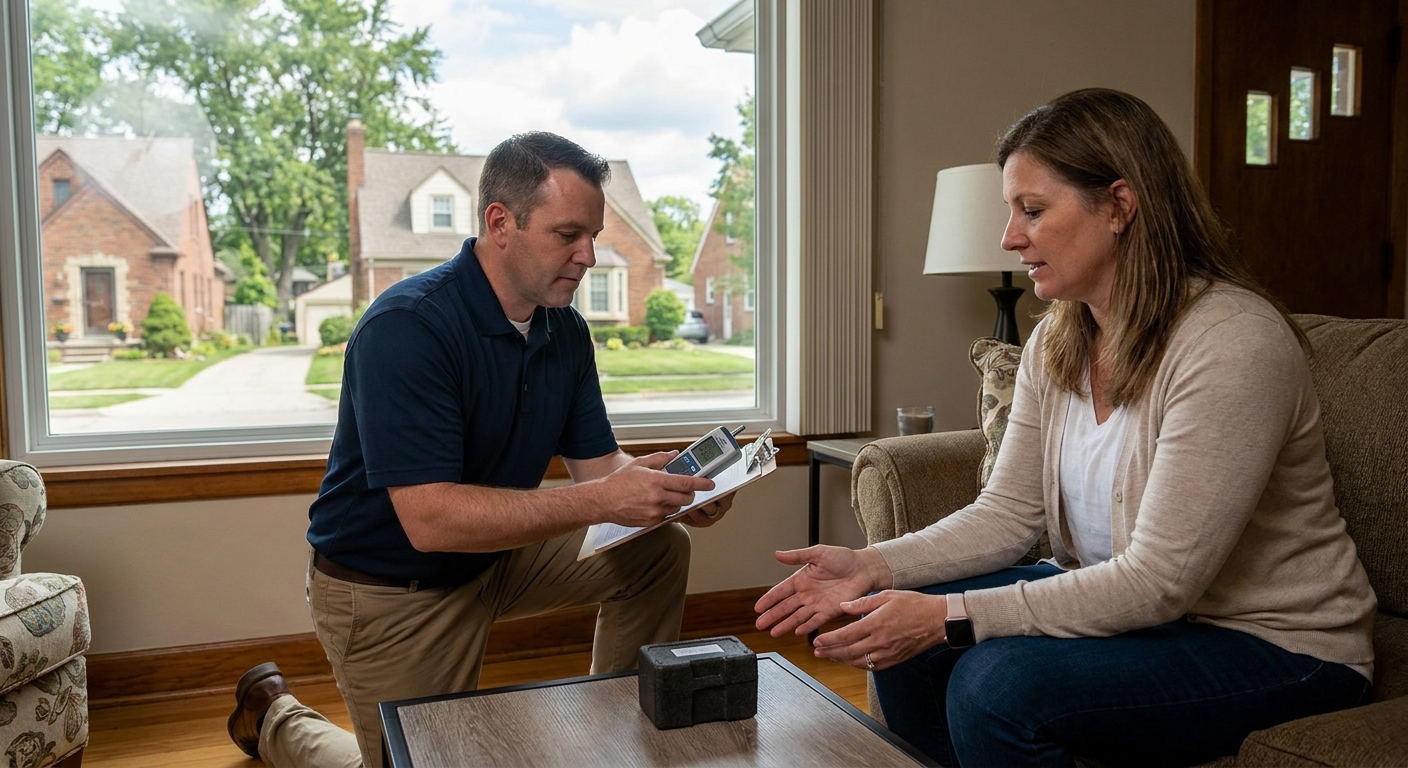
Short-term charcoal canister test — the fast pick. Runs 48-96 hours and reads down to fractions of a pCi/L. It's the standard for real estate closings across southeast Michigan in 2026 because it's cheap to deploy and fast to process. Buy.
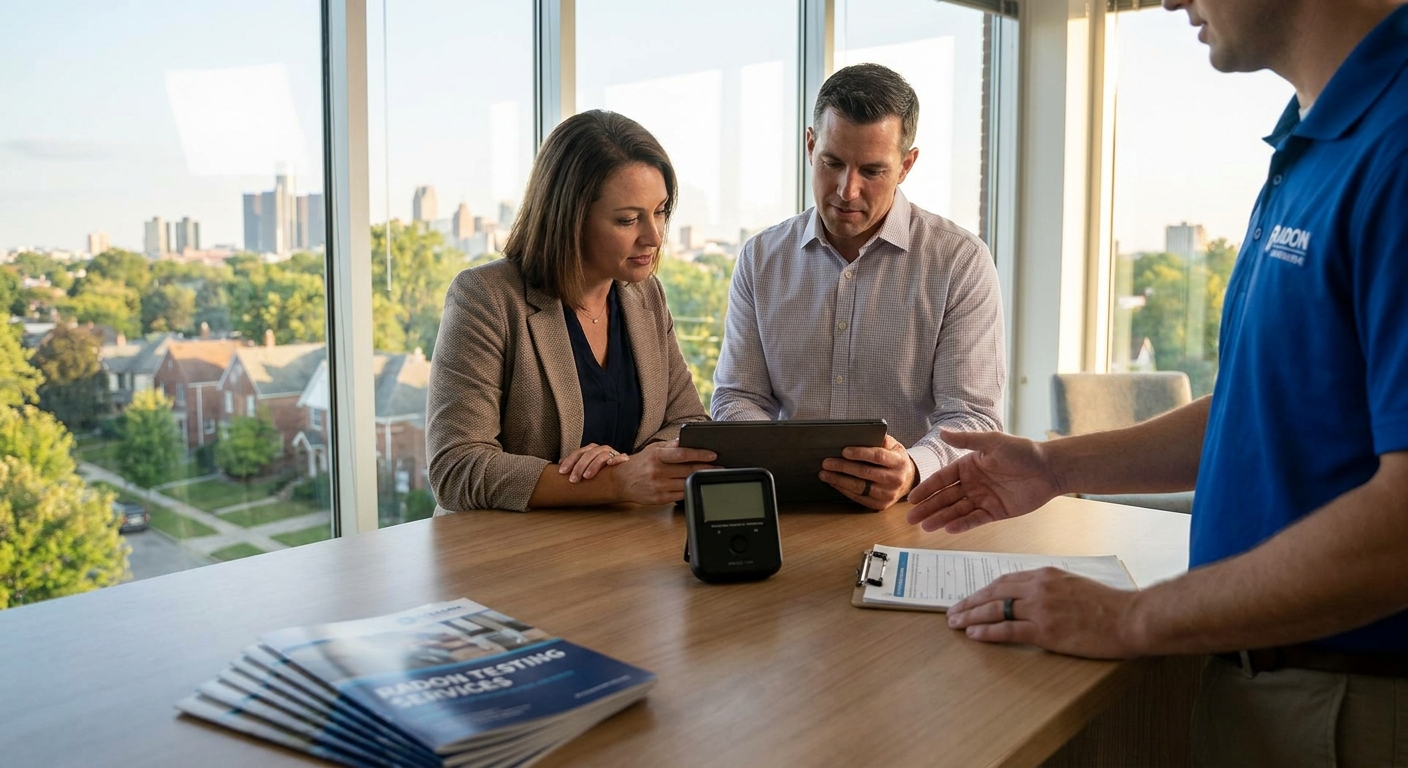
Continuous radon monitor (CRM) — the real estate pick. Logs hourly data and flags tampering, which is why agents and title companies trust it without a second look. Same 48-96 hour window as the canister test, but with a digital audit trail. Buy.
Long-term alpha track test — the baseline pick. Runs 90 days or longer and gives you a seasonal average rather than a snapshot. Good for homeowners who aren't in a transaction and just want a year-round read on their basement air. Consider.
Hardware store DIY kit — the skip. Mail-in kits sound convenient, but they skip NRPP protocol on placement and closed-house conditions, and most title companies won't accept the results for a closing. Skip.
Professional NRPP-certified test — the safe pick. Combines correct placement, closed-house verification, and a report format lenders and agents recognize on sight. For a Dearborn homeowner who needs a result nobody can challenge, this is the one to book. Buy.
What to avoid
- Placing a test kit near an air vent, window, or exterior door — airflow dilutes the reading and gives you a false low result.
- Testing during a home renovation with doors and windows propped open — closed-house conditions aren't optional, they're the whole protocol.
- Accepting a mail-in DIY result for a real estate closing — most Dearborn-area lenders and title companies want a certified tester's report, not a self-administered kit.
Verdict comparison
| Test Type | Duration | Best For | Real Estate Accepted | Verdict |
|---|---|---|---|---|
| Short-term charcoal canister | 48-96 hours | Fast pre-closing results | Yes | Buy |
| Continuous radon monitor (CRM) | 48-96 hours, tamper-evident | Real estate transactions | Yes | Buy |
| Long-term alpha track | 90+ days | Annual baseline reading | Rarely | Consider |
| Hardware store DIY kit | Self-timed, variable | Casual curiosity only | No | Skip |
| Professional NRPP-certified test | 48-96 hours, protocol-controlled | Homeowners needing certainty | Yes | Buy |
If your Dearborn home tests above 4.0 pCi/L, the next move is mitigation, not another test. Start with the guide on how to prepare your home for a radon mitigation system installation before a crew shows up — it covers what to clear out of the basement and what the install day actually looks like.
FAQ
What's the best radon testing method for Dearborn homes in 2026?
A short-term charcoal canister test or continuous radon monitor is the best option for most Dearborn homeowners in 2026, especially during a real estate transaction. Both run 48-96 hours and produce results title companies and lenders accept without pushback.
Is radon testing required before selling a house in Dearborn, MI?
Michigan doesn't mandate radon testing by state law, but many buyers and lenders request it as part of the inspection contingency. Skipping it can slow or complicate a closing if the buyer's agent asks for results mid-transaction.
How long does a radon test take?
Short-term tests run 48 to 96 hours, while long-term alpha track tests run 90 days or more. Most Dearborn closings use the short-term window because it fits typical escrow timelines.
What radon level is considered dangerous in Michigan?
The EPA action level is 4.0 pCi/L — anything at or above that number warrants a mitigation system. Levels between 2.0 and 4.0 pCi/L are worth monitoring even though they fall below the official threshold.
Can I test for radon myself, or do I need a professional?
You can buy a DIY kit, but most real estate transactions and lenders want results from an NRPP-certified tester. A professional test also follows strict placement and closed-house protocol that DIY kits frequently skip.
Does radon testing need to happen in a specific season?
No — radon testing works year-round as long as closed-house conditions are maintained for 12 hours before and during the test. Winter testing in Michigan is common because homes are already sealed up against the cold.
What happens if my Dearborn home tests above 4.0 pCi/L?
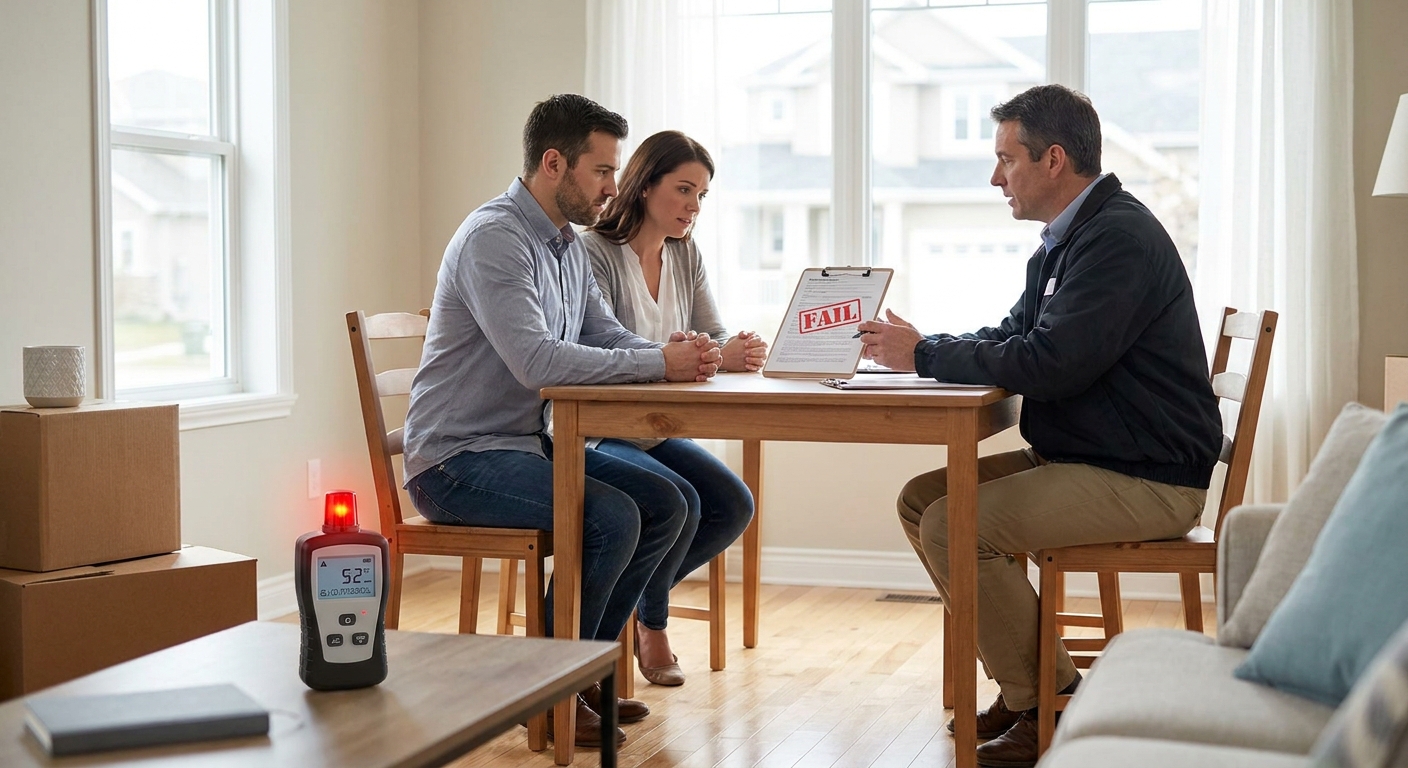
A result above 4.0 pCi/L means it's time to install a mitigation system, typically a sub-slab depressurization setup that vents radon gas above the roofline. Retesting after installation confirms the system brought levels back down.
How much does radon testing cost in Dearborn, Michigan?
Pricing varies by test type and turnaround speed, so check current rates directly with a certified provider before booking. Continuous monitor tests and short-term canister tests are typically priced close to each other.
One last thing
The number that surprises most Dearborn homeowners isn't the EPA action level — it's how little the outside of the house tells you. Two homes on the same block, same build year, same foundation type, can post radon readings 3x apart depending on soil cracks and slab seams nobody can see from the driveway. Testing is the only way to find out which house you actually own.