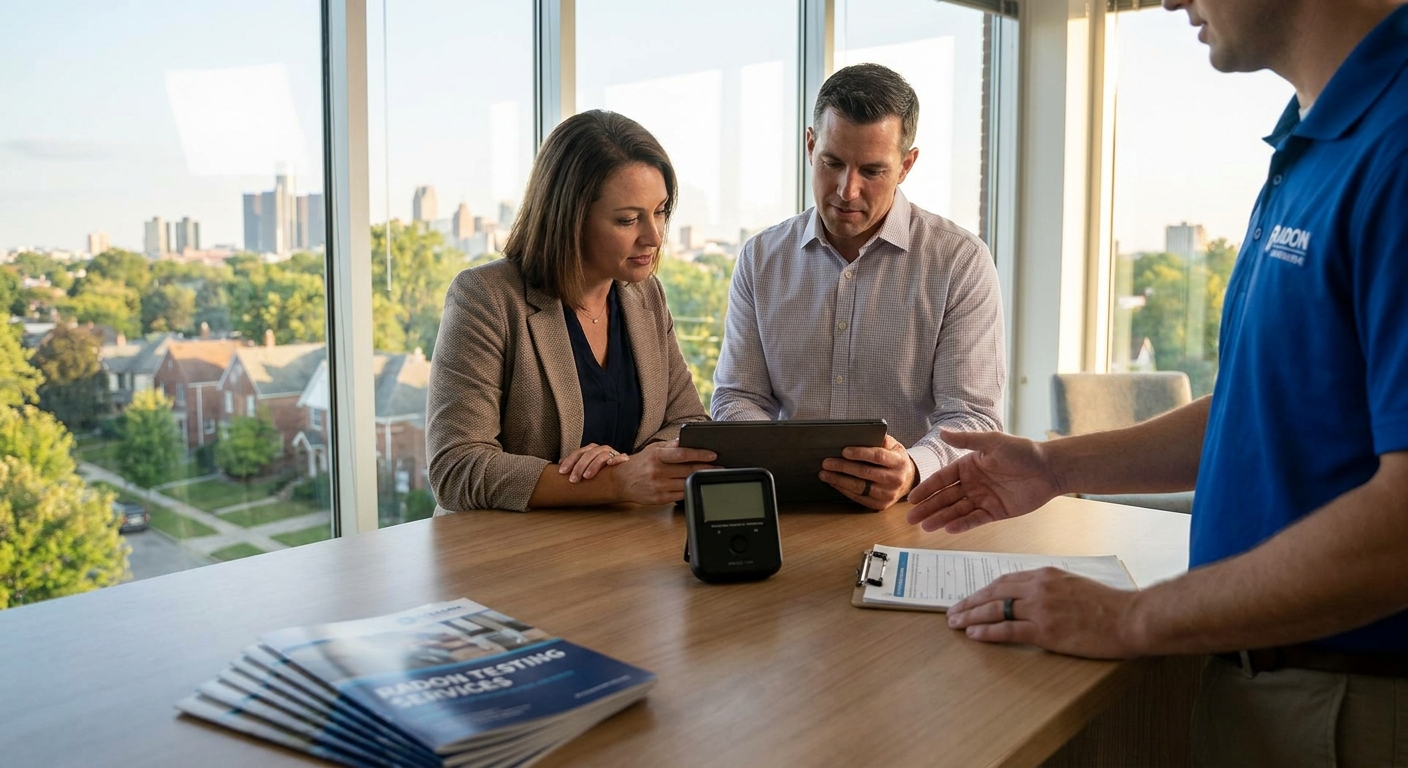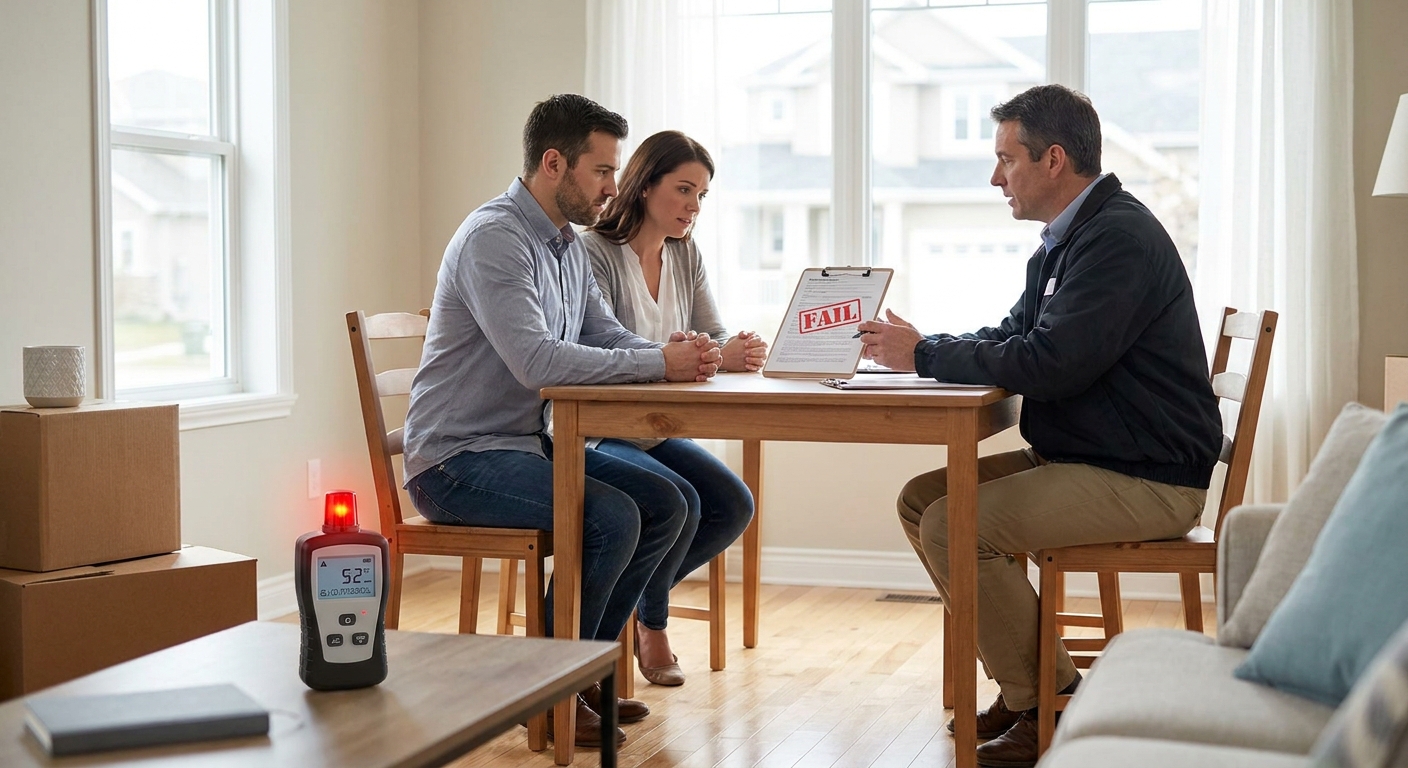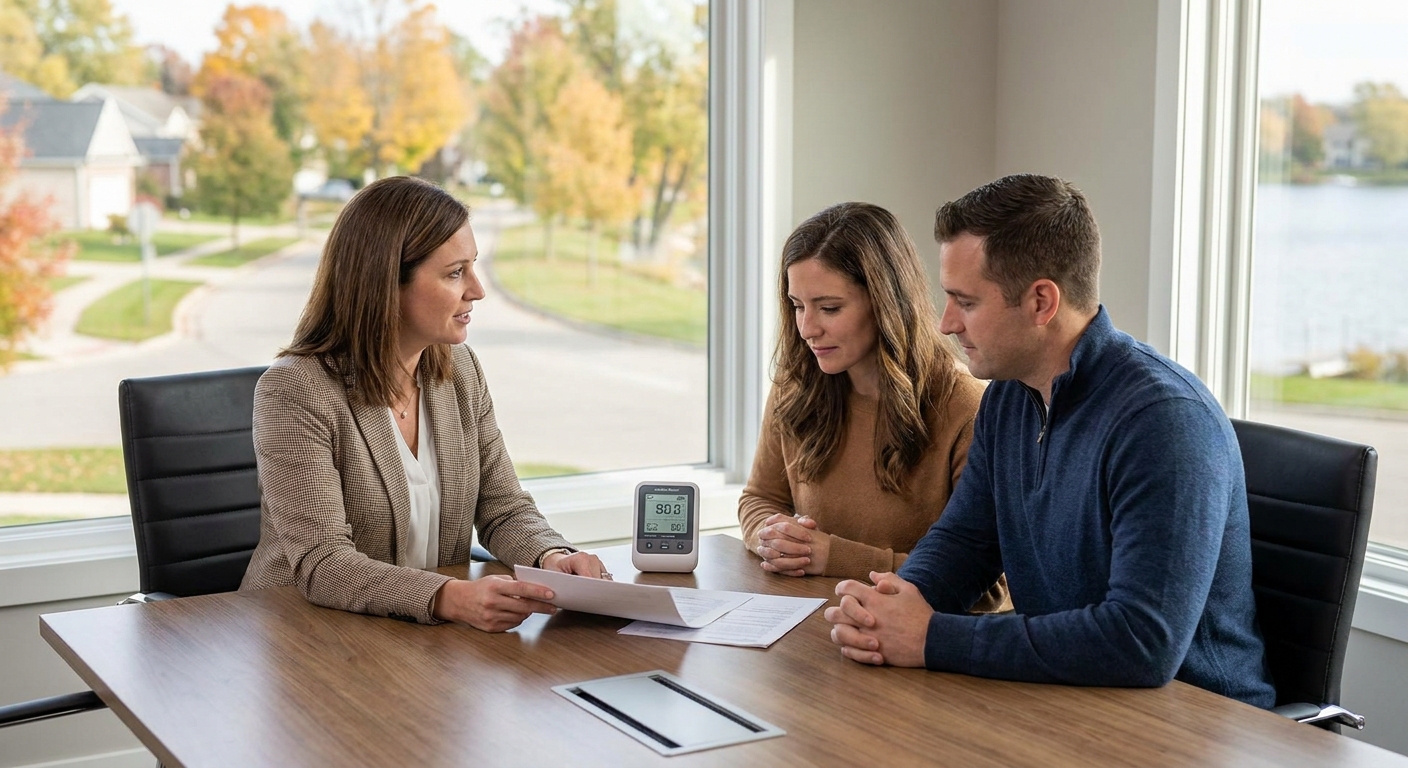
Metro Detroit and Lansing agents deal with radon disclosure on nearly every transaction that touches a basement or slab, and the wrong test vendor can blow a closing date. This guide breaks down what to look for in radon testing for realtors, which service types fit which deal, and which shortcuts cost you the sale.
- NRPP-certified continuous monitor testing beats charcoal kits for any deal with a closing date attached — Recommend.
- East Lansing continuous monitor testing delivers results in 48 hours, tight enough for most 10-day inspection windows.
- Ann Arbor's combined testing and mitigation service keeps one vendor accountable end to end — Recommend for known-problem properties.
- Big-box charcoal test kits lack chain-of-custody documentation buyers' agents need for disclosure files — Skip.
- Radon testing for realtors in 2026 means picking a vendor whose paperwork survives a title company review, not just a low number on a printout.
Why this matters
Michigan sits largely in EPA Zone 1, the agency's highest radon-potential category, and that geology doesn't check whether a house is a starter ranch in Livonia or a new build in Novi. A radon reading above 4 pCi/L on a home inspection report can stall a deal for weeks if the seller scrambles to find a mitigation contractor after the fact.
Agents who bring a vetted radon testing plan into the purchase agreement conversation close faster and avoid the last-minute renegotiation that kills financing timelines. Michigan Radon Control works both sides of that equation: NRPP-certified testing for the inspection period, and mitigation installs when a number comes back hot.
Who this is for
This guide is built for listing agents, buyer's agents, and transaction coordinators across Metro Detroit and Lansing who need a repeatable radon plan they can hand to any client without re-explaining the process every time. If you're writing disclosure language or scheduling inspections against a 10-day contingency clock, the criteria below apply directly to you. Michigan Radon Control's NRPP-certified radon testing covers the service tier most agents actually need — not a generic hardware-store kit, not an over-scoped commercial job.
What to look for in radon testing for realtors
Turnaround time that matches your closing window
A 10-day inspection contingency doesn't leave room for a test that takes a week to schedule and another week to report. Continuous monitor testing that returns results in 48 hours keeps you inside a standard Michigan purchase agreement timeline without a contingency extension request.
NRPP certification and EPA protocol compliance
An uncertified test result is a liability in a disclosure file — buyers' attorneys and title companies both check for it. NRPP certification means the technician followed EPA closed-house conditions, which is what makes the number defensible if the deal gets contested later.
Continuous monitor placement, not just a charcoal kit
Charcoal canisters can be moved, opened, or placed near a window by anyone in the house during the test period, and there's no way to prove they weren't. A continuous monitor logs tamper flags and hourly readings, which is the difference between a number you can stand behind and one you can't.
Chain-of-custody documentation for disclosure files
Every test needs a paper trail showing who placed the device, when it was picked up, and how the reading was calculated. Skip this and you're handing the other side's attorney an easy way to reopen negotiations after closing.
Straight answers on mitigation, not upsell pressure
A good vendor tells you plainly when a result doesn't need mitigation instead of pushing a system on every property that crosses 4 pCi/L by a fraction. That honesty is what keeps your clients calling you back for the next transaction instead of a competing agent.
Get Client-Ready Radon Results Fast
NRPP-certified testing built around Michigan closing timelines.
Top picks for realtors closing deals in 2026
The fast-close pick — East Lansing continuous monitor testing This service runs a 48-hour continuous monitor cycle built for tight inspection windows around the Lansing area. It documents tamper flags automatically, which matters when a listing agent needs a defensible number fast. East Lansing continuous monitor testing fits any deal with a standard 10-day contingency. Recommend.
The full-service pick — Ann Arbor testing and mitigation combo When a seller already suspects an elevated reading from a prior test, pairing testing and mitigation under one vendor removes the handoff risk between two separate contractors. Ann Arbor testing and mitigation keeps scheduling and warranty terms consistent from test to install. Recommend.
The high-radon-zone pick — Novi mitigation systems Novi sits in a pocket with consistently higher soil-gas readings, and homes there often need a mitigation system installed before a buyer's financing contingency clears. The install typically completes in a single day under EPA protocol, with a 5-year system warranty attached. Consider it for any Novi listing where a pre-inspection test already flagged elevated levels.
The new-construction pick — Livonia mitigation systems Newer Livonia builds sometimes ship with a passive radon stack that was never activated with a fan. Activating an existing passive system avoids new foundation penetration and keeps the install faster than a full retrofit. Consider this for any new-construction resale where the original builder installed rough-in piping.
The skip — big-box charcoal test kits These kits run $15-30 at hardware stores and give a single-number reading with no chain-of-custody log, no tamper detection, and no NRPP certification behind the result. Any buyer's attorney can challenge the number after closing, and there's no defense for it. Skip.
What to avoid
- Short-term charcoal kits sold as a closing solution. They lack the documentation a title company or attorney will ask for if the deal gets contested.
- Mitigation quotes with no NRPP certification behind them. An uncertified installer voids the confidence a buyer's agent needs to close without a re-inspection clause.
- Skipping the prep step before install day. Sellers who don't clear crawlspace access or basement storage before a mitigation crew arrives lose a full day of scheduling. Point them to how to prepare a home for a radon mitigation system before the appointment is booked.
Verdict comparison table
| Pick | Best for | Turnaround | Verdict |
|---|---|---|---|
| East Lansing continuous monitor | Deals with a 10-day contingency | 48 hours | Recommend |
| Ann Arbor testing + mitigation | Sellers with a known prior reading | Test through install, one vendor | Recommend |
| Novi mitigation systems | High-radon-zone listings | Single-day install, 5-year warranty | Consider |
| Livonia mitigation systems | New construction with passive stacks | Activation only, no new penetration | Consider |
| Charcoal test kits | Nothing tied to a closing deadline | 2-7 day exposure, no documentation | Skip |
FAQ
What's the best radon test for a home sale in Michigan?
A continuous monitor test run by an NRPP-certified technician is the standard for real estate transactions in 2026. It logs tamper flags and hourly readings, which charcoal kits cannot produce.
Is radon testing required for realtors in Michigan?
Michigan doesn't mandate radon testing on every sale, but disclosure laws require sellers to share known radon results. Most agents order testing proactively to avoid surprises during the inspection period.
How long does radon testing take before closing?
A short-term continuous monitor test typically runs 48 hours, fitting inside a standard 10-day inspection contingency. Longer exposure kits can take up to a week and risk missing that window.
Who pays for radon testing, the buyer or the seller?
This is negotiable and usually written into the purchase agreement. In most Metro Detroit deals, the buyer orders and pays for the test during the inspection period.
What radon level requires mitigation in Michigan?
The EPA action level is 4 pCi/L; a reading at or above that threshold typically triggers a mitigation recommendation. Levels between 2 and 4 pCi/L are worth discussing with a certified technician even though they fall below the federal threshold.
Can a realtor perform radon testing themselves?
No. Test results need to come from an NRPP-certified technician following EPA closed-house protocol for the number to hold up in a disclosure file or a contested closing.
How much does radon mitigation cost for a Michigan home?
Cost depends on system type, home size, and foundation layout, so get a direct quote rather than relying on a general figure. A single-day install under a certified vendor typically comes with a multi-year system warranty.
Does radon testing delay a real estate closing?
Only if the test is ordered late or comes back elevated without a mitigation plan already lined up. Scheduling continuous monitor testing early in the inspection period avoids that delay entirely.
One last thing
The number one reason radon derails a closing isn't a high reading — it's a low-quality test result nobody can defend when a buyer's attorney pushes back in 2026. Agents who standardize on NRPP-certified continuous monitor testing for every listing stop having that conversation altogether.