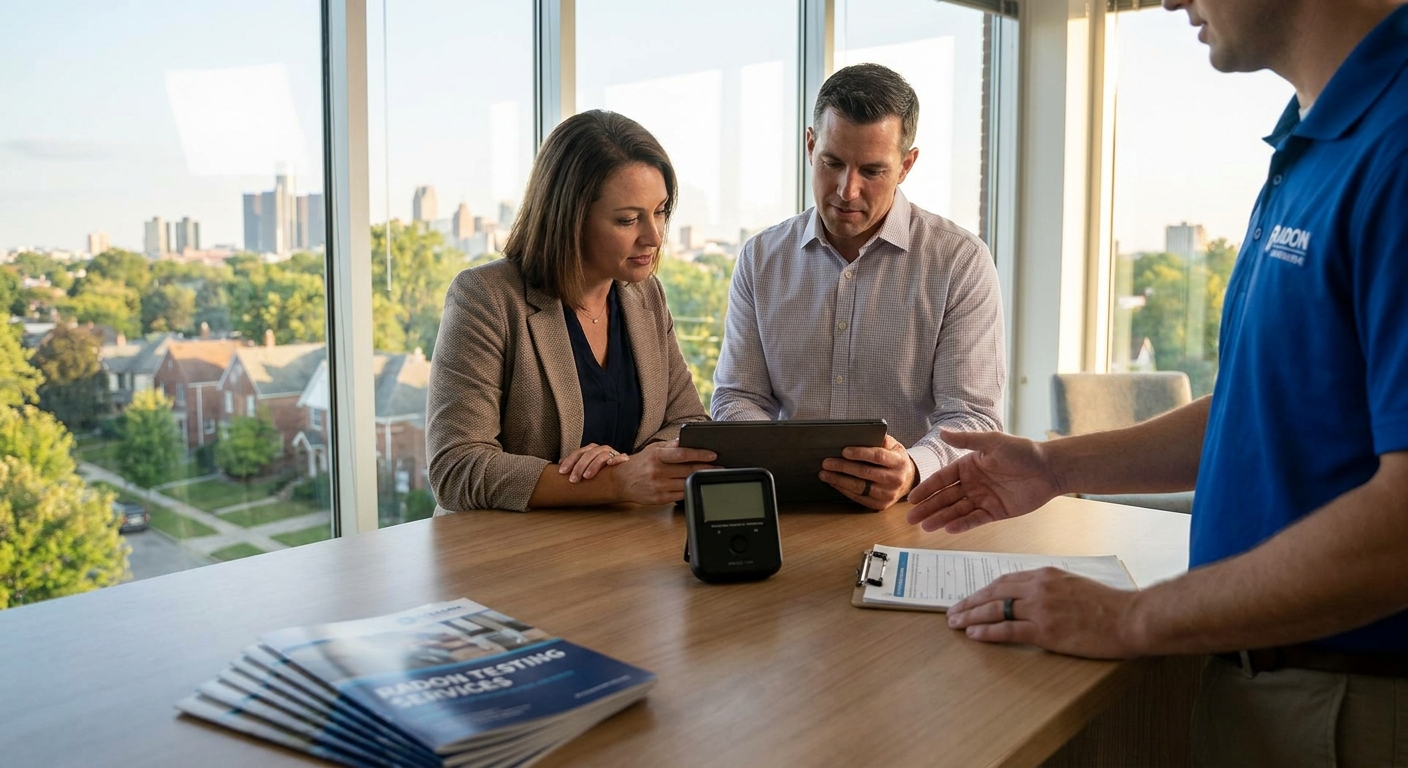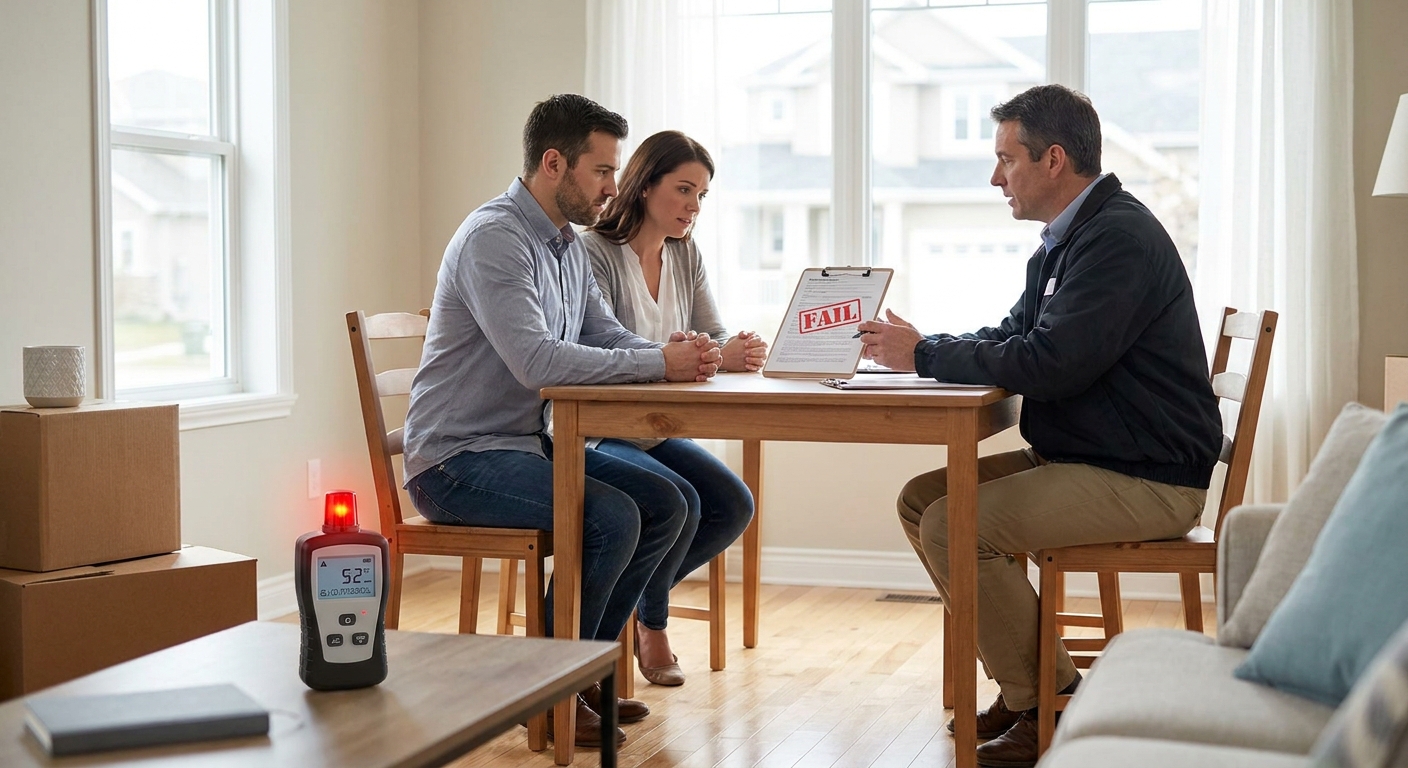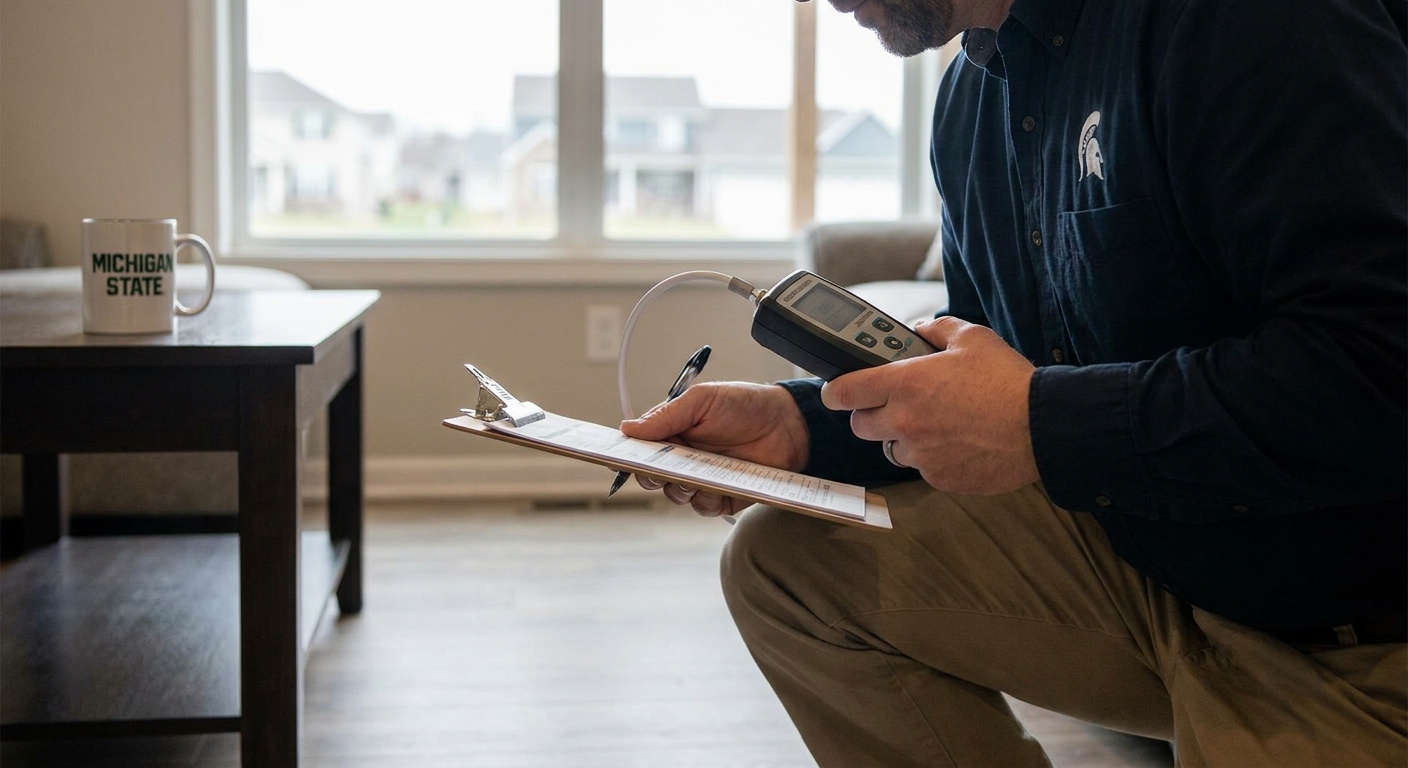
East Lansing sits on the same glacial till and limestone bedrock that pushes radon into homes across mid-Michigan, and a proper test is the only way to know what's actually in your air in 2026.
- Michigan Radon Control recommends a 48-hour short-term test before any East Lansing closing in 2026.
- EPA's action level is 4 pCi/L; glacial soil under East Lansing pushes many homes above that mark.
- Continuous radon monitors give the most reliable year-round read for East Lansing households — Buy.
- Big-box mail-order kits skip NRPP placement protocol and often produce unreliable readings — Skip.
- Retest 30 days after any mitigation system install to confirm levels dropped below 4 pCi/L.
Who this is for
This guide is for East Lansing homeowners who need a radon number they can trust: sellers preparing for a home inspection, buyers with a contingency clock running, and anyone who's owned a house long enough to wonder if the basement air is safe. If you're closing on a property near MSU's campus or a subdivision off Hagadorn Road, you need a test that holds up under scrutiny, not a hardware-store kit taped to a windowsill. Michigan Radon Control runs NRPP-certified testing across the Lansing area, and the certification matters more here than in most home-maintenance decisions because a bad placement or a skipped closed-house protocol invalidates the result.
What to look for in radon testing for East Lansing homeowners
NRPP certification, not a store-bought kit
An NRPP-certified tester follows EPA placement protocol: device height, distance from exterior walls, distance from HVAC returns. A charcoal kit taped to a basement shelf near a sump pump reads high for the wrong reason and forces a retest, which costs you time during a closing window.
Test duration matched to your deadline
Short-term tests run 48 hours minimum and work for real estate transactions. Long-term tests run 90 days or more and reflect seasonal averages better, which matters if you're not under a closing deadline and want the full picture before deciding on mitigation.
Closed-house conditions
EPA protocol requires windows and exterior doors closed for 12 hours before the test starts and for the full test period. East Lansing's swing seasons (April, October) make this easy to violate accidentally if you're airing out the house before showings.
Local geology awareness
Ingham County sits on glacial till over fractured limestone, a combination that lets radon gas migrate through soil more easily than in areas with dense clay. A tester who knows the Lansing-area subsurface reads results in context instead of treating every number as a surprise.
Real estate transaction timing
Buyers usually have 5-10 days written into a purchase agreement for radon testing. A short-term test with same-day equipment pickup and lab turnaround keeps that clock from becoming a problem.
Mitigation readiness, not just a number
A test result above 4 pCi/L is the start of a decision, not the end of one. Testing without a clear next step wastes the retest window if you end up installing a system anyway.
Testing options for East Lansing homes
The fast read: 48-hour short-term charcoal or electret test. Turnaround runs 48 hours plus lab processing, and it satisfies most real estate contingencies in Michigan. Use it when you have a closing deadline. Verdict: Buy for transactions.
The accurate pick: continuous radon monitor (CRM). A CRM logs hourly readings and flags tampering or closed-house violations automatically, which protects both buyer and seller from a disputed result. It costs more than a passive kit but removes the guesswork. Verdict: Buy for anyone who wants a defensible number.
The annual average: long-term alpha track test. Running 90+ days, this method captures seasonal swings East Lansing sees between a humid August and a sealed-up February. It's not built for a transaction deadline, but it's the most honest picture of year-round exposure. Verdict: Consider if you're not on a closing clock.
The unreliable shortcut: mail-order kit from a hardware chain. These skip professional placement and closed-house verification, and a misplaced sensor near a floor drain or window draft can swing results 30-40% either direction. Verdict: Skip for anything tied to a sale.
If a test comes back above 4 pCi/L, the next step is a mitigation system, and knowing what that installation involves before the crew shows up saves a day of back-and-forth. The guide to preparing your home for a radon mitigation system walks through clearing crawlspace access and marking utility lines.
Get your East Lansing home tested
NRPP-certified radon testing across the Lansing area, scheduled around your closing date.
What to avoid
- Testing during a remodel or with windows propped open for painting fumes. Ventilation during the test window invalidates closed-house protocol and produces an artificially low reading that won't hold up if a buyer's inspector retests.
- Placing a passive kit in a sump pit or next to a dehumidifier. Both create localized air movement that skews the sample away from what you'd actually breathe in the living space.
- Skipping the retest after mitigation. A system that isn't drawing correctly can still leave levels above 4 pCi/L; the only way to confirm it worked is a follow-up test 30 days out.
Verdict comparison
| Method | Duration | Best for | Verdict |
|---|---|---|---|
| Short-term charcoal/electret | 48 hours | Real estate closings | Buy |
| Continuous radon monitor | Real-time, ongoing | Year-round households | Buy |
| Long-term alpha track | 90+ days | Non-deadline homeowners | Consider |
| Hardware-store mail kit | Varies | Nothing tied to a sale | Skip |
Why this matters
Radon is a decay product of uranium in soil and rock, and it's odorless, so a test is the only signal you get. Michigan's glacial soils and fractured bedrock create pathways for the gas to move into basements and crawlspaces more readily than in states with denser clay subsurface, and East Lansing's older housing stock, much of it built before radon-resistant construction became standard, doesn't have built-in barriers. A test result isn't a formality here in 2026 the way it might be in a state with tighter geology.
FAQ
How much does radon testing cost in East Lansing, MI?
Short-term professional radon tests typically run in the low hundreds of dollars in the Lansing area as of 2026, with continuous monitor tests priced similarly but delivering more detailed data. DIY kits cost less upfront but carry a higher risk of an invalid result that forces a retest.
What is considered a high radon level in Michigan?
The EPA action level is 4 pCi/L nationwide, including Michigan, and any result at or above that threshold warrants a mitigation system. Many East Lansing homes test above this level due to the glacial till and limestone bedrock common in Ingham County.
How long does a radon test take?
Short-term tests run a minimum of 48 hours under closed-house conditions, while long-term tests run 90 days or more for a seasonal average. Real estate transactions almost always use the short-term option to meet closing deadlines.
Do I need a radon test to sell my house in East Lansing?
Michigan law doesn't mandate radon testing for a sale, but most purchase agreements include a radon contingency requested by the buyer. Sellers who test proactively in 2026 avoid last-minute negotiation delays during closing.
Can I test for radon myself?
You can buy a passive test kit yourself, but placement errors and closed-house violations are common without NRPP training, and an invalid result costs you the retest window. Professional testing removes that risk for anything tied to a transaction.
How often should I retest my East Lansing home?
Retest every two years even without a mitigation system, since radon levels shift with soil conditions and home settling. If you've installed a system, retest 30 days after activation and again every two years afterward.
Is radon testing different for older East Lansing homes vs new construction?
Older homes without radon-resistant construction techniques generally show more variability and higher average readings than homes built after radon-resistant standards became common. New construction still needs testing, since soil conditions matter more than build year.
What happens if my test comes back above 4 pCi/L?
A result at or above 4 pCi/L means a mitigation system is recommended, typically a sub-slab depressurization system installed within a few days of scheduling. A retest 30 days after installation confirms the system brought levels down.
One last thing
Michigan's elevated radon problem traces back to the same glacial deposits and limestone that shaped the Great Lakes basin, which means a clean test in a neighbor's house two streets over tells you nothing about your own basement. Soil composition changes block to block, not just county to county, so a 2026 test on your specific lot is the only number worth trusting.