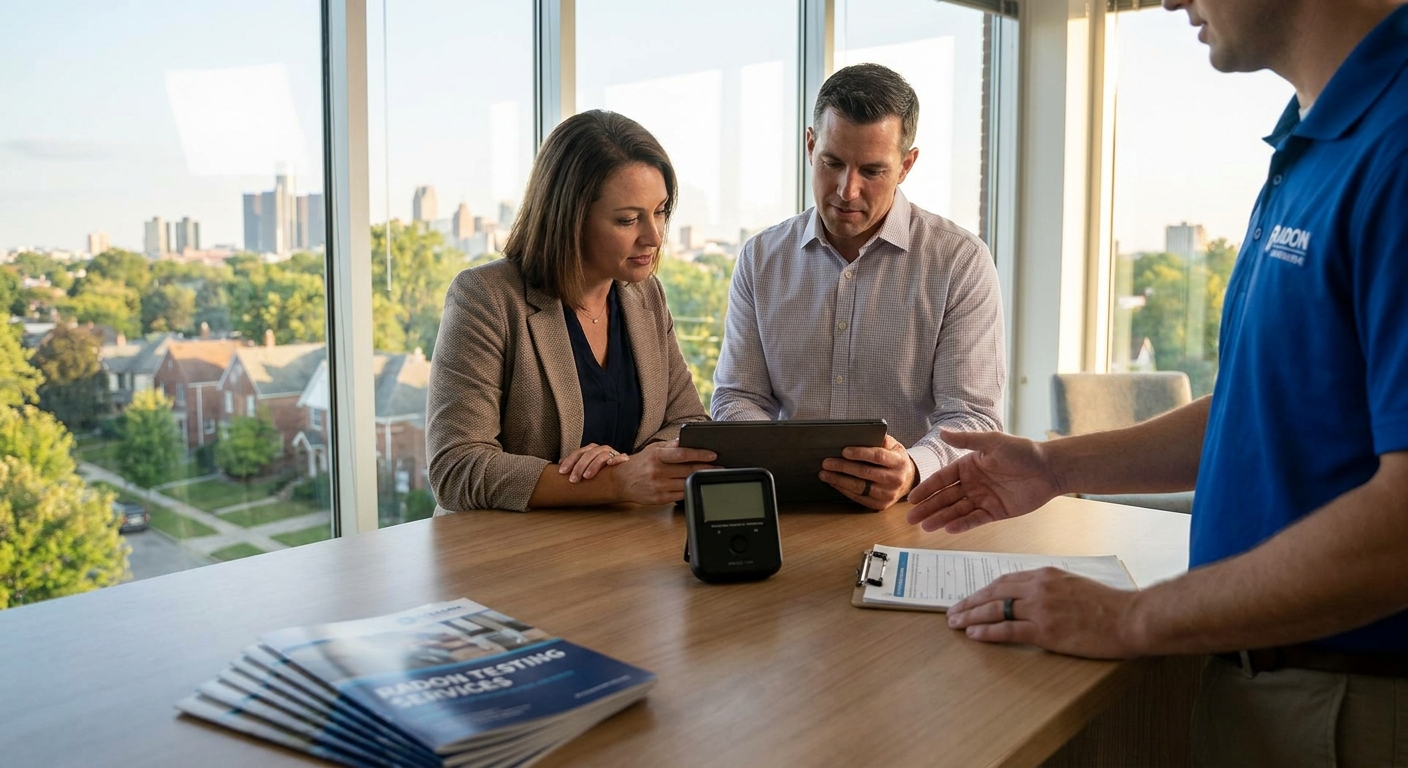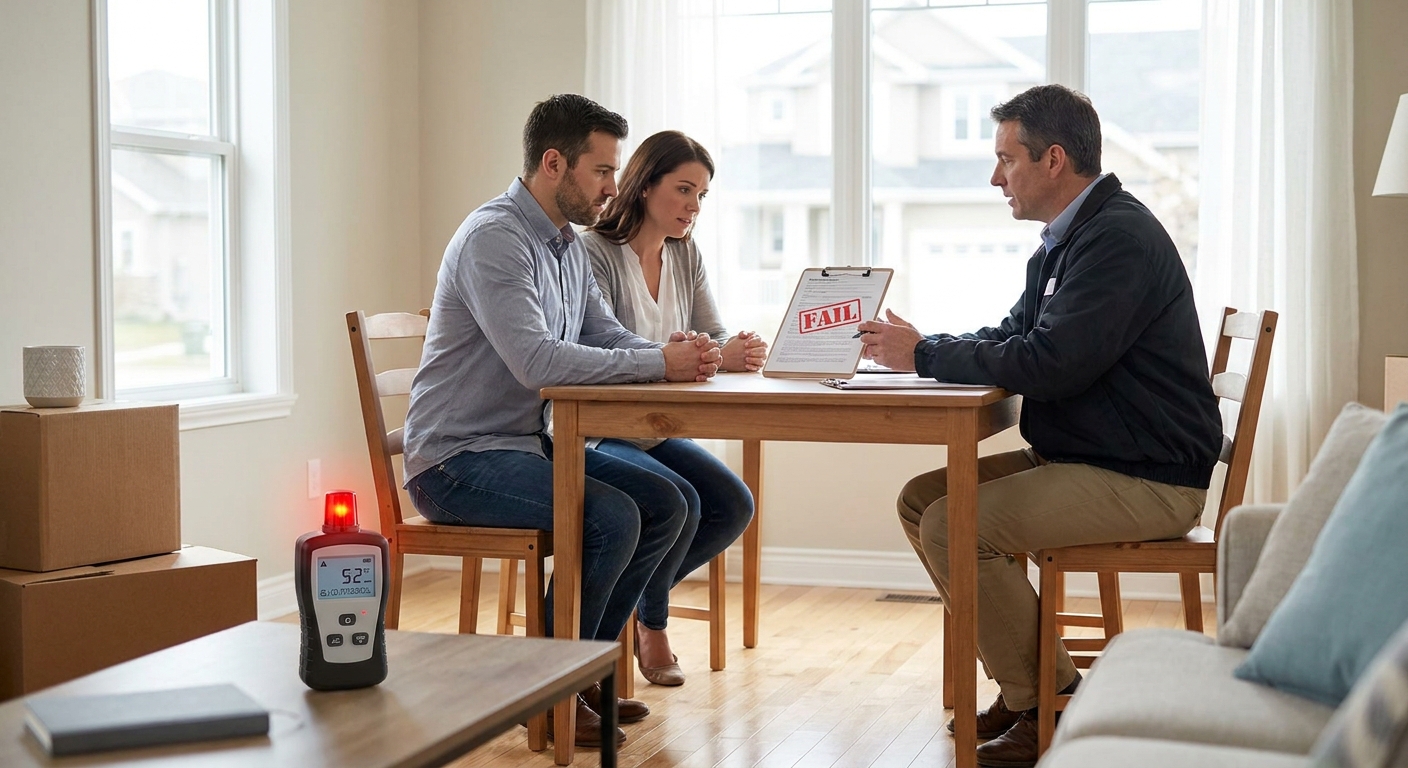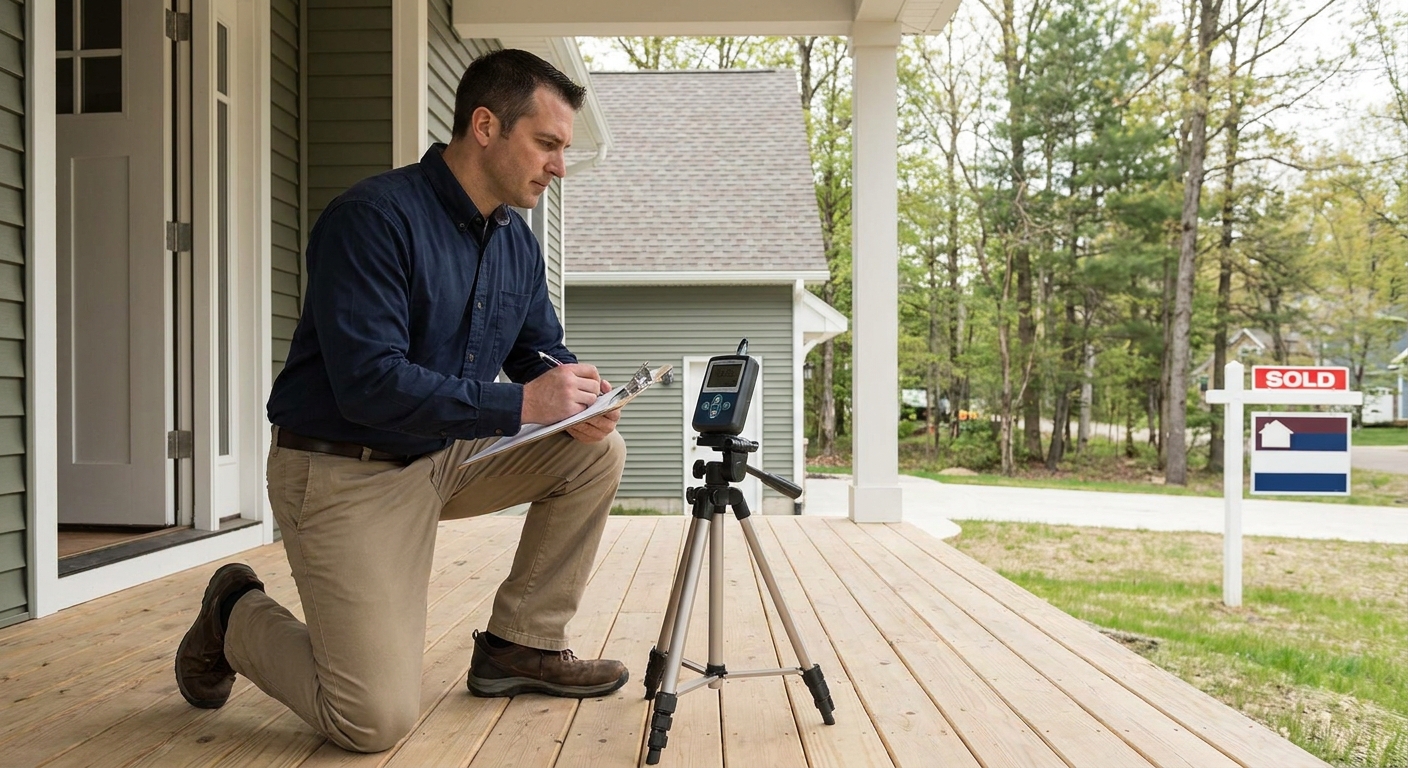
Buying a home in Michigan means dealing with radon before you close, not after you've unpacked the boxes. This guide breaks down which radon test to order, which shortcuts to skip, and what a result above 4 pCi/L means for your purchase agreement.
- Radon testing home purchase Michigan buyers need is a 48-hour continuous monitor test, not a mail-in charcoal kit — buy the CRM test.
- Michigan Radon Control runs NRPP-certified testing built for real estate deadlines; DIY kits are a skip when your closing date is fixed.
- State radon data suggests roughly 1 in 3 Michigan homes test above the EPA action level of 4 pCi/L — test before, not after, closing.
- If a result comes back high, mitigation system installation typically closes the gap before your final walkthrough in 2026.
Why this matters
Michigan sits on glacial soil deposits that trap and channel radon gas upward into basements and crawl spaces, which is why the state's radon numbers run higher than the national average. A purchase agreement with a radon contingency gives you a narrow window, often tied to your inspection period, to test and negotiate before you're locked in. Order the wrong type of test, or test under the wrong conditions, and you'll burn days you don't have. Michigan Radon Control built its testing process around real estate deadlines specifically because closings don't wait for a retest.
Who this is for
This guide is for home buyers under contract in Michigan with a radon contingency clause, buyers whose lender requires a radon disclosure, and real estate agents coordinating testing on behalf of clients in Metro Detroit, Lansing, and surrounding counties. If you're a seller who already tested and wants to know whether that report will satisfy a buyer's lender or attorney, the same criteria below apply to you.
What to look for in radon testing for a home purchase
Test duration that matches your closing timeline
EPA real estate protocol calls for a minimum 48-hour test using a continuous monitor, and most purchase agreements build their contingency window around that number. A test that takes 5-7 days, like a standard long-term canister, simply doesn't fit a 10-14 day inspection period. Confirm the tester's turnaround before you schedule, not after.
NRPP certification on the tester, not just the company
Many states, and most Michigan title companies, want to see the individual technician's NRPP credential on the report, not just a business name. An uncertified reading can get challenged by the seller's agent or rejected by underwriting, which restarts your clock. Ask for the certification number up front.
Continuous monitor vs. charcoal canister method
A continuous radon monitor (CRM) logs hourly readings and flags interference, like a door left open or a storm front, that would invalidate a charcoal canister test. For a transaction where the result decides whether you renegotiate price or walk away, that tamper-detection matters more than saving a few dollars on a passive kit.
Chain-of-custody protocol for real estate transactions
Real estate radon tests need documented start and end times, sealed access to the test location, and a report format lenders and title companies recognize. A test run without that protocol is a data point, not evidence you can use in a negotiation.
Mitigation-ready reporting
If your result lands above 4 pCi/L, you want a report that tells you what a fix looks like, not just a number. Look for a tester who can walk straight from testing into a mitigation quote without a second inspection visit.
Local Michigan geology expertise
Radon entry points differ by foundation type and soil, and Metro Detroit's clay-heavy soil behaves differently than Lansing's sandier deposits. A tester who works Michigan basements daily will know where to place the monitor for an accurate read, not just a compliant one.
Top picks for radon testing during a Michigan home purchase
Continuous Radon Monitor (CRM) test — the standard pick. Logs readings every hour over a 48-hour period and time-stamps any interference during the test window. This is the format most Michigan lenders and title companies expect for a real estate transaction, and it's what Michigan Radon Control's testing service runs for buyers on a closing deadline. Buy.
Agent-coordinated NRPP-certified test — the smart pick for buyers working through a realtor. When your agent schedules testing directly with a certified provider, the report lands in the transaction file automatically instead of getting emailed around at the last minute. Real estate agents who use radon testing guidance built for Michigan transactions avoid the most common cause of contingency delays: a report nobody can locate on closing day. Buy.
Independent local testing company — the local-knowledge pick. A provider with recent readings from your specific city or county can tell you whether your result is typical for the neighborhood or an outlier worth a second look. Useful when you're weighing multiple companies but want someone who's actually tested homes on your street. Consider.
DIY charcoal canister mail-in kit — the risky pick. These run $15-30 at most hardware stores and take 3-7 days including lab processing, which almost never fits a real estate contingency window. Worse, most title companies won't accept a self-administered result without a certified technician's sign-off. Skip for any time-sensitive purchase.
Post-closing mitigation system installation — the follow-up pick. If your test comes back above 4 pCi/L, this is the step that gets the home under the action level before you move in. Systems installed through Michigan Radon Control's mitigation installation service carry a 5-year warranty, which matters if you're negotiating who pays for the fix. Buy if your result requires it.
Get radon testing scheduled before closing
NRPP-certified testing built around real estate deadlines.
What to avoid
- Testing during high winds or storms. EPA protocol flags weather interference because pressure changes skew readings, and a test run during a Michigan winter storm can read artificially high or low. Reschedule rather than accept a compromised result.
- Relying on the seller's old test alone. A radon reading from two years ago tells you nothing about current conditions, especially if the home's foundation, sump pump, or HVAC setup changed since then. Order your own test tied to your transaction timeline.
- Skipping certification to save time. An uncertified test might come back faster, but if it gets challenged during underwriting, you lose more days than you saved.
Verdict comparison
| Method | Duration | Certification Required | Best For | Verdict |
|---|---|---|---|---|
| Continuous Radon Monitor (CRM) | 48 hours | NRPP-certified technician | Real estate contingencies | Buy |
| Agent-coordinated NRPP test | 48 hours | NRPP-certified technician | Buyers working with an agent | Buy |
| Independent local tester | 48 hours | Varies by provider | Neighborhood comparison | Consider |
| DIY charcoal canister kit | 3-7 days | None | Non-time-sensitive testing only | Skip |
| Mitigation system installation | 1-2 days install | NRPP-certified installer | Results above 4 pCi/L | Buy if triggered |
FAQ
What's the best radon test for a home purchase in Michigan?
A 48-hour continuous radon monitor run by an NRPP-certified technician is the best radon test for a home purchase in Michigan. It fits real estate contingency deadlines and produces a report lenders and title companies accept.
Is a DIY charcoal canister kit better than a professional test?
No, a DIY charcoal canister kit is not better than a professional test for a home purchase. It takes 3-7 days including lab processing and most title companies won't accept a self-administered result.
How much radon is too much when buying a Michigan home?
The EPA action level is 4 pCi/L, and results at or above that number typically trigger a mitigation discussion in the purchase negotiation. Michigan's soil composition puts roughly 1 in 3 homes above this level according to state radon data.
Who pays for radon mitigation in a Michigan home sale?
Payment for radon mitigation is negotiated between buyer and seller, often through the contingency clause in the purchase agreement. Many deals split the cost or the seller covers it as a condition of closing.
How long does radon mitigation system installation take?
A radon mitigation system installation typically takes 1-2 days for a standard single-family home in Michigan. The system usually needs 24-48 hours of operation before a retest confirms levels have dropped below 4 pCi/L.
Can I close on a house before radon mitigation is finished?
Yes, many Michigan buyers close before mitigation is complete by negotiating a credit or escrow holdback for the installation. Check with your lender, since some require the fix completed before funding.
Does every Michigan home need radon testing before purchase?
Michigan does not legally require radon testing before a home sale, but it's strongly recommended given the state's elevated radon levels. Most purchase agreements include a radon contingency specifically because of this risk.
How often should a mitigation system be retested after installation?
A newly installed mitigation system should be retested within a week of installation to confirm it brought levels below 4 pCi/L. After that, annual retesting catches any system failure or new radon entry points.
One last thing
Closings that happen in winter tend to produce higher radon readings than the same home tested in summer, because closed windows and running furnaces trap gas indoors instead of letting it vent. If you're buying in a Michigan winter, treat a borderline result with extra caution — a retest in warmer months could land meaningfully lower.