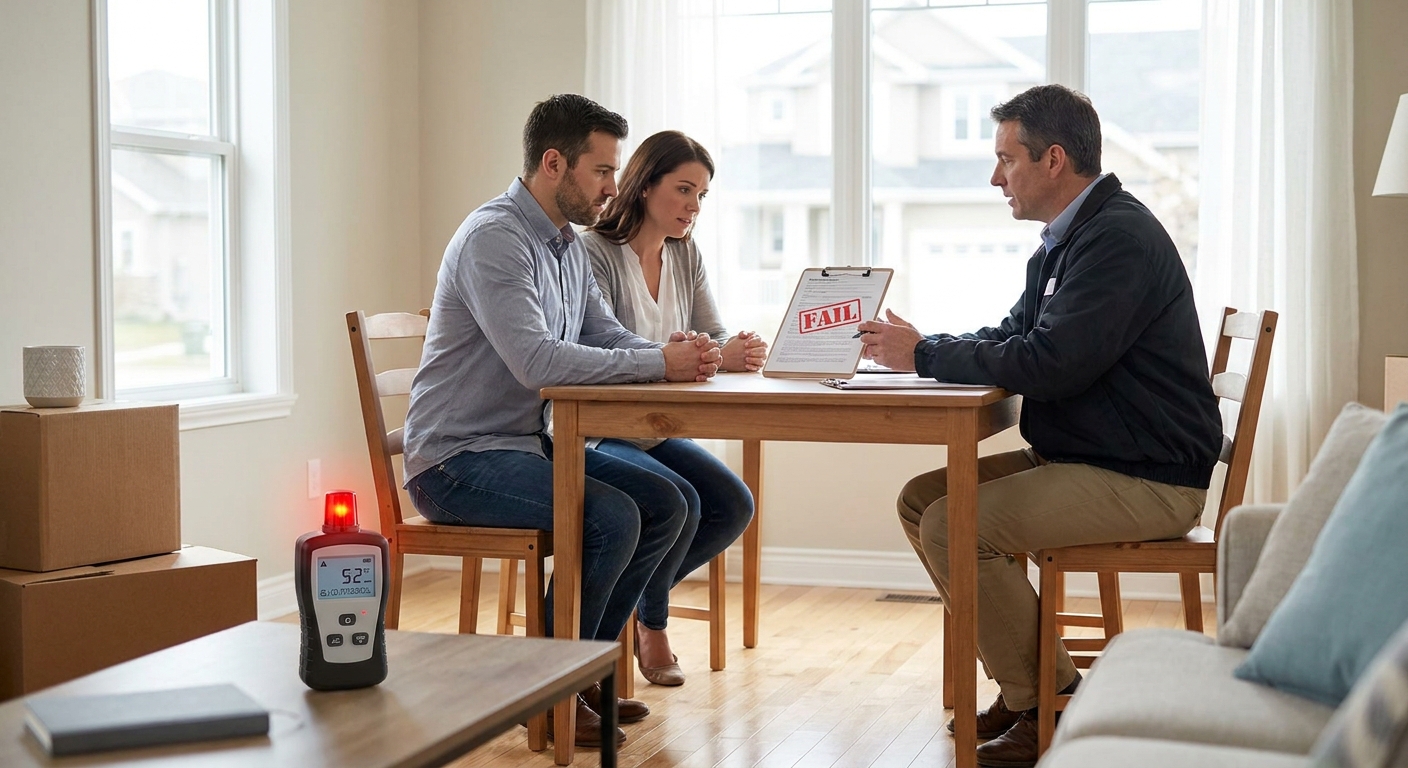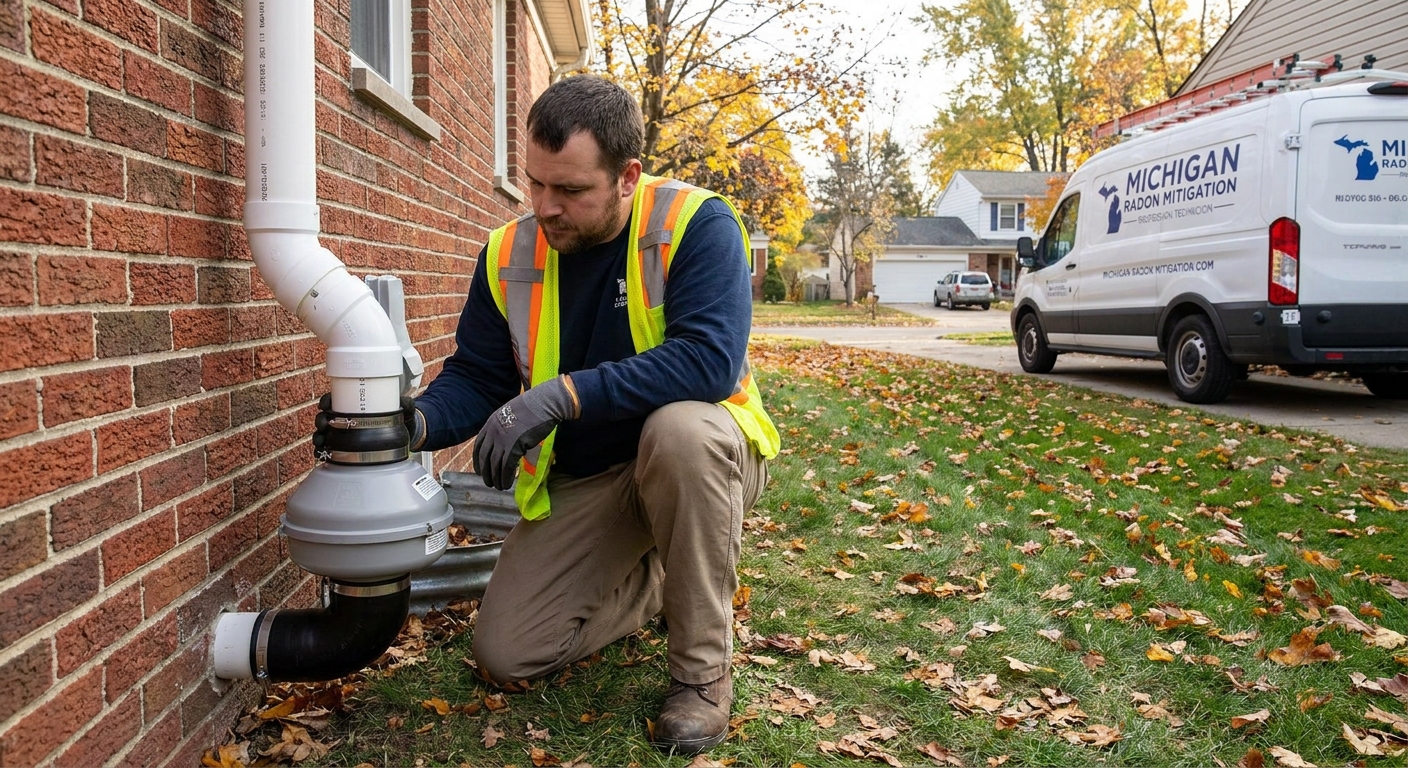
Michigan radon mitigation isn't one-size-fits-all — a slab-on-grade colonial in Novi calls for a different system than a 1960s block-foundation ranch in Livonia, and installing the wrong type wastes money while radon stays above the EPA's 4.0 pCi/L action level.
- Sub-slab depressurization is the default michigan radon mitigation system for slab and basement homes — Buy.
- Drain tile depressurization reuses an existing sump pit and cuts install time — Buy for homes with working sumps.
- Passive stack-only systems in Michigan basements often fail to stay below 4.0 pCi/L — Skip without an added fan.
- Crawl space homes need submembrane depressurization with sealed 6-mil poly, not a basement-style suction pipe.
- Always require a post-install retest in 2026 — the EPA action level is 4.0 pCi/L, not a suggestion.
Why this matters
Much of southeast and mid-Michigan, including Wayne, Oakland, Washtenaw, and Ingham counties, falls in the EPA's Radon Zone 1, where predicted average indoor levels exceed the 4.0 pCi/L action threshold. Glacial till soil traps radon gas close to foundations, and Michigan's long heating season keeps basements sealed up tight from October through April, giving that gas nowhere to go but up through slab cracks and sump pits.
That's the backdrop for anyone researching michigan radon mitigation in 2026: the geology and the housing stock both push in the same direction, and a generic system install often underperforms. Matching the mitigation type to the foundation is what separates a home that tests below 2.0 pCi/L after mitigation from one that limps along at 3.5.
Who this is for
This guide is for Michigan homeowners who've already tested above 4.0 pCi/L, or realtors and buyers navigating a pending sale where a radon result is holding up closing. If you haven't tested yet, start there before choosing a system — you can't size a mitigation system to a number you don't have. Michigan Radon Control handles both sides of that timeline, from initial testing through installation.
What to look for in a Michigan radon mitigation system
NRPP-certified installer
Radon mitigation is a licensed trade in Michigan, and NRPP (National Radon Proficiency Program) certification is the credential that matters. An uncertified installer can still run a pipe and a fan, but they won't necessarily size the suction points correctly for your foundation, which is the single biggest driver of whether the system actually works.
Suction point count matched to foundation type
One suction point handles a typical 1,200-2,000 square foot slab with continuous footing. Larger homes, homes with multiple foundation sections, or block-wall basements often need two or more points to pull air evenly across the whole slab. A one-point system on a sectioned foundation is a common reason retests come back high.
Fan CFM and noise rating
Mitigation fans typically move 60 to 160 CFM depending on soil permeability and pipe diameter. Undersized fans struggle in Michigan's dense clay soils common around Lansing and Ann Arbor. Ask for the fan's sound rating too — a unit installed in an attic or garage should run under roughly 40 dB, quiet enough that you forget it's there.
System monitor (manometer)
Every active system should ship with a simple U-tube or digital manometer mounted on the pipe, showing at a glance whether the fan is still pulling suction. It's a $20 part that tells you in three seconds if the fan failed, instead of finding out at your next test.
Warranty length
Look for at least a 5-year system warranty covering the fan and workmanship. Fans are mechanical parts that wear out; a warranty shorter than that shifts replacement cost back onto you within a few winters.
Post-install retest
A mitigation install isn't finished until a post-install test confirms levels below 4.0 pCi/L, ideally closer to 2.0. Any installer who treats the retest as optional is skipping the only step that proves the system works.
Top picks by home type
Sub-slab depressurization — the default pick
A single 3- or 4-inch PVC pipe runs from a sealed hole in the slab, through the fan, and out above the roofline, pulling soil gas from beneath the entire foundation. It's the standard system for slab-on-grade and poured-basement homes across Metro Detroit, and fan draw typically runs 60-160 CFM depending on slab size. Buy for the majority of Michigan basement and slab homes.
Drain tile depressurization — the sump pit shortcut
Homes with a functioning perimeter drain tile and sump basin can use the sealed sump lid as the suction point instead of cutting a new hole in the slab, often cutting install time by half a day. This works well in homes like the basement layouts common in Livonia, where drain tile already routes groundwater around the foundation. Buy if your sump pump is in good working order — see how it's applied on the Livonia radon mitigation systems page.
Block wall suction — the older-home fix
Pre-1970s homes with hollow concrete block foundation walls, common in older Detroit-area and Lansing neighborhoods, need a suction point that also pulls gas from inside the block cavities, not just under the slab. It requires sealing the top course of block and any wall penetrations first. Consider this system specifically if your foundation inspection shows block construction — a standard slab-only system will underperform here.
Crawl space membrane system — for homes without a basement
Homes built over a crawl space need a 6-mil poly vapor barrier sealed to the foundation walls and piers, with a suction point installed beneath the membrane. This is the standard approach for many newer subdivisions around Novi and Farmington Hills built on crawl space foundations. Buy if a crawl space is your only sub-floor area; skipping the full membrane seal is the top reason these systems fail retest.
Passive stack — the wildcard, often insufficient alone
Some new-construction Michigan homes ship with a passive vent stack built in during framing, relying on stack effect alone with no fan. It costs less upfront, but plenty of these homes still test above 4.0 pCi/L once occupied, because passive systems depend on temperature differentials that don't hold steady through a Michigan winter. Skip relying on passive alone if your test comes back elevated — adding an in-line fan converts it to an active system for a fraction of a full new install.
Get your system matched to your foundation
Request an inspection and a system recommendation built for your home type.
What to avoid
- Passive-only systems left as-is after an elevated test. They look like a finished mitigation system but without a fan they're not actively pulling gas — confirm active depressurization before you sign off.
- DIY crack sealing without a fan-based system. Sealing visible slab cracks might drop levels slightly, but it doesn't address soil gas pressure and rarely gets a Michigan home below 4.0 pCi/L on its own.
- Skipping the post-install retest. A contractor who installs and disappears without scheduling a retest hasn't proven the system works — insist on it before final payment.
If you're scheduling an install, check what needs to happen beforehand on the radon mitigation system preparation page — clearing basement storage and confirming sump access ahead of time keeps the install to a single day.
Verdict comparison
| System type | Best for | Fan CFM range | Verdict |
|---|---|---|---|
| Sub-slab depressurization | Slab-on-grade, poured basements | 60-160 CFM | Buy |
| Drain tile depressurization | Homes with working sump pits | 60-140 CFM | Buy |
| Block wall suction | Pre-1970s block foundations | 80-160 CFM | Consider |
| Crawl space membrane | Homes with no basement | 60-100 CFM | Buy |
| Passive stack only | New construction, low starting levels | None (no fan) | Skip if elevated |
FAQ
What is the best radon mitigation system for a Michigan basement?
Sub-slab depressurization is the best radon mitigation system for most Michigan basements with a poured concrete slab. It uses a single sealed pipe and fan pulling 60-160 CFM to draw soil gas out before it enters the home.
How much does radon mitigation cost in Michigan in 2026?
Costs vary by foundation type and how many suction points a home needs, so get a site-specific estimate rather than relying on a national average. Homes needing multiple suction points or block-wall sealing typically cost more than a single-point slab install.
Is a passive radon system enough for a Michigan home?
A passive system alone is often not enough if your test result is above 4.0 pCi/L. Michigan's basement-heavy housing stock and long heating season frequently overwhelm passive stack effect, and adding a fan converts it to an active system.
How long does radon mitigation system installation take?
Most single-point sub-slab or drain tile systems install in a single day. Homes needing multiple suction points or block wall sealing can take longer depending on foundation complexity.
Do I need a different system for a crawl space home?
Yes — crawl space homes need a submembrane depressurization system with a sealed 6-mil poly vapor barrier, not a standard slab suction pipe. Skipping full membrane sealing is the most common reason these systems fail a retest.
How do I know if my radon mitigation system is working?
Check the manometer mounted on the pipe — it shows continuous suction at a glance. A post-install retest confirming levels below 4.0 pCi/L is the definitive proof the system is working.
Why does Michigan have higher radon levels than other states?
Much of southeast and mid-Michigan falls in EPA Radon Zone 1, where glacial till soil and a long sealed-up heating season combine to push predicted indoor levels above the 4.0 pCi/L action threshold.
Can I install a radon mitigation system myself?
Sizing suction points, sealing the slab, and routing the fan correctly requires NRPP-certified expertise, so a DIY install risks an incomplete fix. An improperly sized system is one of the most common reasons homes fail a post-mitigation retest.
One last thing
The manometer gets ignored more than any other part of the system — homeowners glance at it once at install and never again, but it's the only $20 part that tells you the fan died before your next test does. Check it every few months, especially heading into a Michigan winter when the system runs hardest.