Radon is invisible, odorless, and according to the EPA the second leading cause of lung cancer in the United States — and Michigan's glacial soil and clay-rich basements make it a bigger problem here than in most states. If you're buying, selling, or just living in a home in Metro Detroit or the Lansing area, this guide walks through what actually matters in radon testing michigan homeowners can trust in 2026, plus which testing approach fits your situation.
- A 48-hour continuous monitor test is the safe pick for East Lansing home sales closing on a deadline in 2026.
- Hardware store charcoal kits fail closed-house protocol in real estate deals — use professional radon testing michigan agencies follow instead.
- EPA's 4 pCi/L action level triggers mitigation; many Troy and Ann Arbor homes test at or above it.
- Winter testing gives the most accurate baseline reading before Michigan homes seal up for the cold.
Why this matters
Radon seeps up through soil gas and enters homes through foundation cracks, sump pits, and slab joints — it doesn't care how new or well-built the house is. Michigan sits on uranium-bearing glacial till left behind from the last ice age, which is exactly why state health data flags counties across the Lansing corridor and Metro Detroit as higher-risk zones.
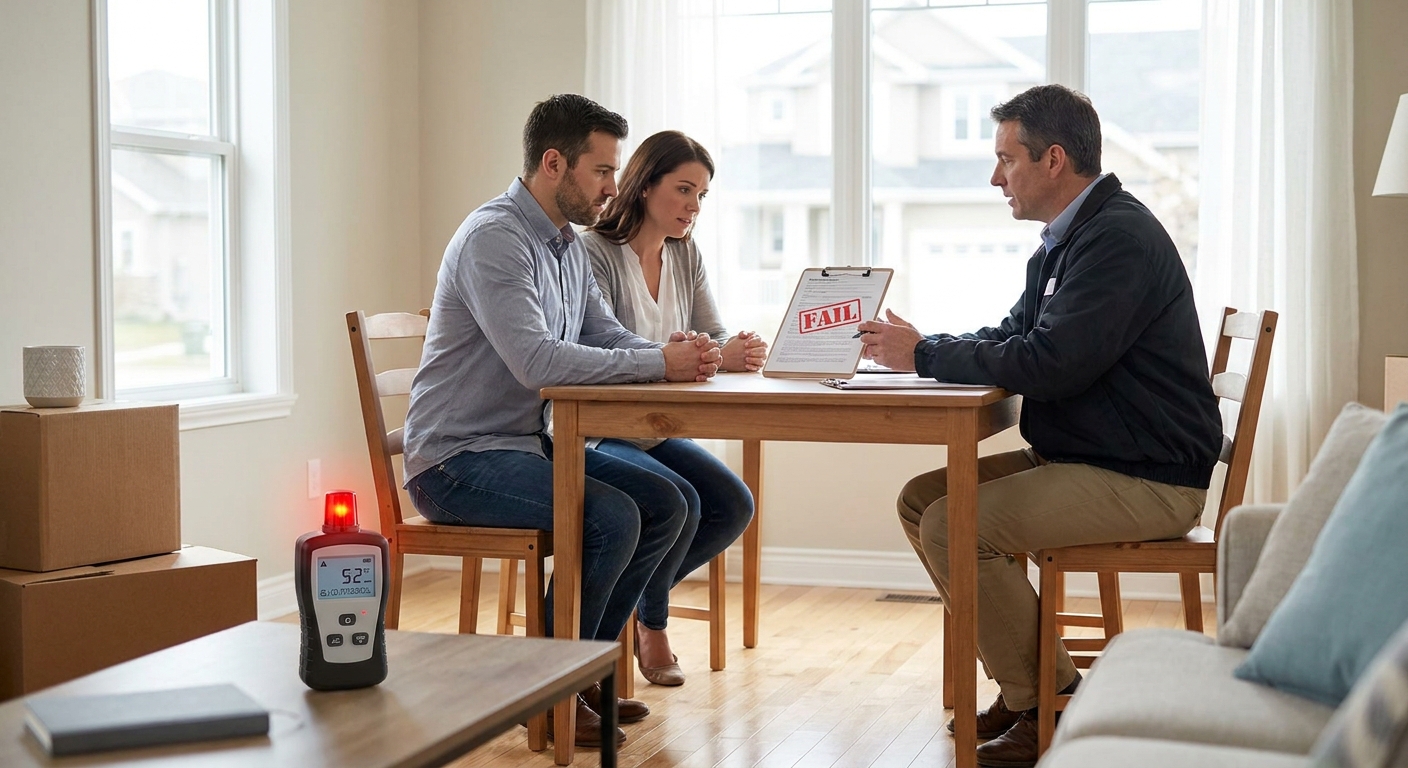
A test result under 4 pCi/L means you're in the clear for now. A result at or above it means the EPA recommends mitigation, and in 2026 that's a straightforward, fixable problem — but only if the test itself was done correctly. Bad test conditions produce false negatives more often than false positives, which is the real danger: homeowners who trust a flawed kit and skip mitigation entirely.
Who this is for
This guide is for Michigan homeowners weighing a radon test right now — whether you're closing on a home sale in East Lansing next month, refinancing in Troy, or just moving into a new place in Ann Arbor and want a baseline reading before winter locks the windows shut. It's also for real estate agents advising clients through a Michigan closing, since radon testing has become a standard contingency in most Metro Detroit purchase agreements.
If you already know your home tested above 4 pCi/L and you're shopping for a mitigation contractor instead of a tester, this guide will still help — the criteria below apply to picking the right follow-up service, and Michigan Radon Control handles both testing and mitigation installation under one NRPP-certified team.
What to look for in radon testing for Michigan homeowners
NRPP certification, not just a badge on a website
Anyone can sell a test kit. Only NRPP-certified technicians are trained on EPA protocol for continuous monitor calibration, tamper-evidence, and chain-of-custody documentation that real estate transactions require. If a tester can't show an NRPP certification number, skip them.
Test duration matched to your purpose
Short-term tests run 48 to 96 hours and are standard for real estate closings with a deadline. Long-term tests run 90 days or more and give a truer annual average, which matters more if you're not selling and just want to know your baseline. Pick the wrong duration and you'll either miss your closing date or get a reading that doesn't reflect how your home actually behaves across seasons.
Closed-house conditions before the test starts
EPA protocol requires the home to be closed — windows shut, exterior doors used only for normal entry — for at least 12 hours before testing begins and through the full test period. Michigan homeowners who crack a window mid-February to air the place out will skew results low, and that reading won't hold up during a real estate dispute.
Device placement on the lowest livable level
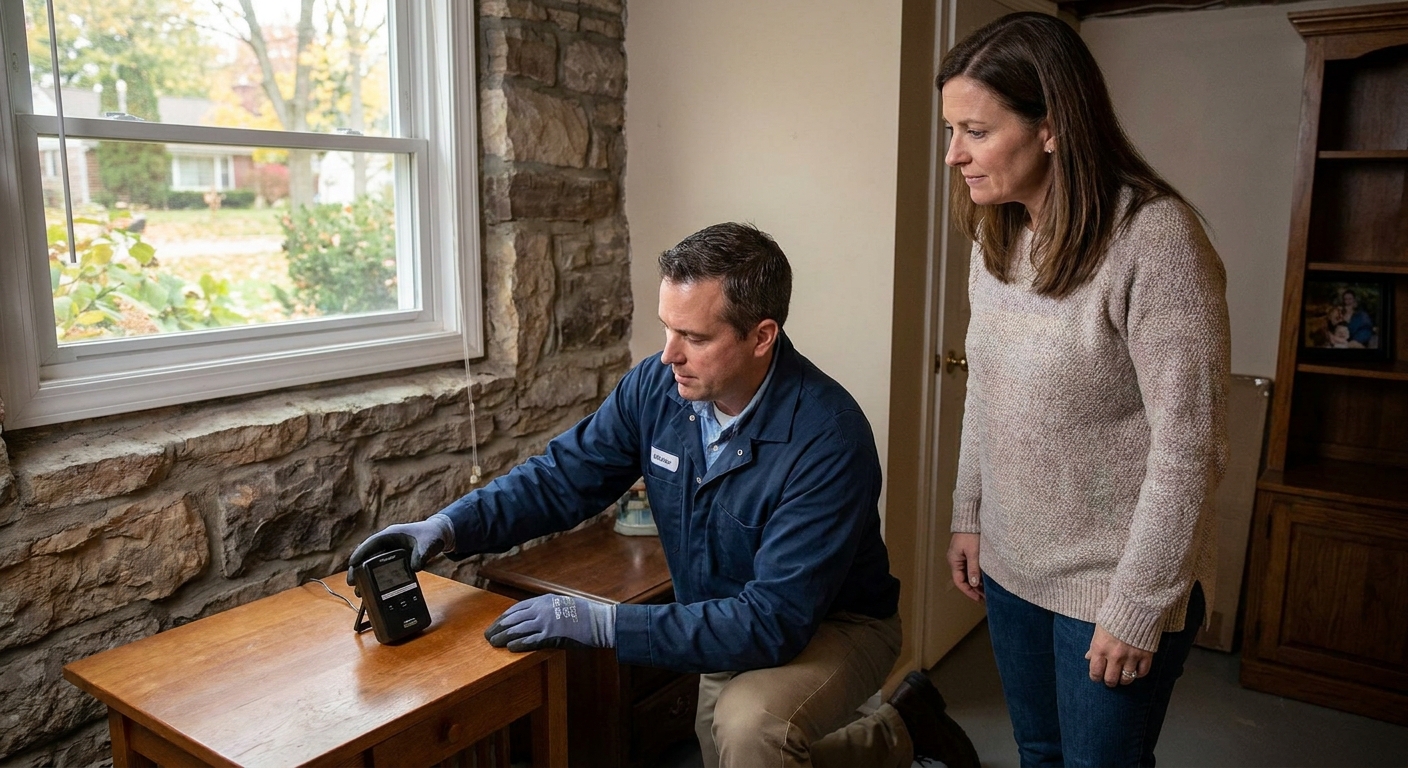
A continuous monitor placed in a finished basement guest room reads very differently than one placed on the main floor. Michigan basements finished for living space, home offices, or rentals need testing at that level, not just at grade, because that's where occupants actually spend time.
A documented follow-up plan if levels come back high
A testing report that just hands you a number and walks away isn't useful. Look for a provider that pairs the result with a clear next step — sub-slab depressurization quote, timeline, and warranty terms — so a 4.2 pCi/L reading doesn't sit in your inbox for six months while you figure out what to do next.
Timing around Michigan's seasons
Radon levels typically read higher in winter when homes are sealed tight and heating systems pull air (and soil gas) upward through the stack effect. Testing in January or February gives you a worst-case number; testing in July gives you a best-case one. If you're only testing once, winter is the more honest read.
Schedule a certified radon test
NRPP-certified testing across Metro Detroit and Lansing, with mitigation quotes if levels come back high.
Top picks by homeowner scenario
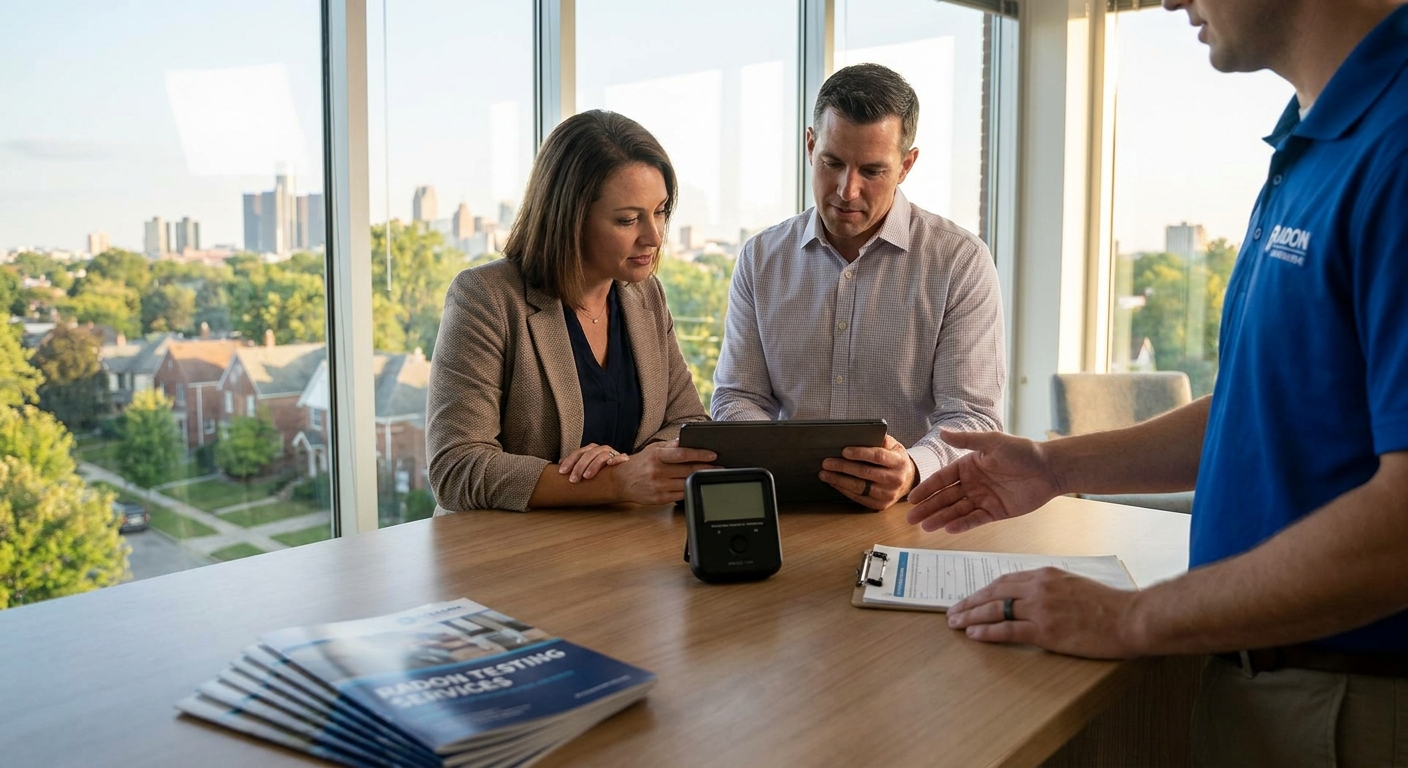
The real estate deal closer — East Lansing homeowners under a 30-day closing window need a fast, defensible result. A 48-hour continuous monitor test with tamper-evident chain of custody satisfies most Michigan purchase agreements and gives buyers and sellers a number both sides can trust. Radon testing for East Lansing homeowners covers exactly this scenario. Buy.
The long-game homeowner — if you're not selling and just want an honest annual picture, a longer test window beats a quick grab sample every time. Troy homeowners settling into a home for the next decade get more value from a test built around real living patterns than a rushed 48-hour snapshot. Radon testing for Troy Michigan homeowners is built for this. Consider.
The already-elevated case — if a prior test came back at or above 4 pCi/L, testing again with a different kit won't change the underlying geology. The move here is preparing the home for a mitigation system installation, not re-testing to get a better number. Skip a second test kit and go straight to the prep guide instead. Buy the mitigation path, skip re-testing.
The DIY skeptic — a $15 hardware store charcoal kit that sat open on a shelf for six months before you used it is not a reliable data point, especially if closed-house conditions weren't followed. These kits can work in ideal conditions, but for a real estate transaction or a health decision, the margin for error is too wide. Skip for anything transaction-related; Consider only as a rough first-pass curiosity check.
What to avoid
- Single-day grab-sample tests for real estate closings — they don't meet the closed-house duration most Michigan agents and lenders expect, and results can get challenged.
- Testing right after a window-airing session — even a few hours of open windows before a test starts can produce a falsely low reading that doesn't hold up.
- Basement-only placement when the basement isn't lived in — if nobody spends time down there, test on the level people actually use.
Verdict comparison
| Scenario | Test type | Duration | Verdict |
|---|---|---|---|
| Real estate closing (East Lansing) | Continuous monitor | 48-96 hrs | Buy |
| Long-term homeowner (Troy) | Extended monitor | 90+ days | Consider |
| Already elevated result | Skip re-test, move to mitigation | N/A | Buy mitigation path |
| DIY hardware kit | Charcoal canister | 2-7 days | Skip for transactions |
If a mitigation system is next, how to prepare your home for a radon mitigation system covers what the installation crew needs from you before they show up — clear access to the sump pit or slab penetration point, and a plan for where the exterior vent pipe will run.
FAQ
What's the best radon testing method for Michigan homes in 2026?
A 48-hour continuous monitor test run under EPA closed-house protocol is the standard for Michigan real estate closings in 2026. Long-term monitors of 90 days or more work better for homeowners not on a transaction deadline.
Is radon testing required when selling a home in Michigan?
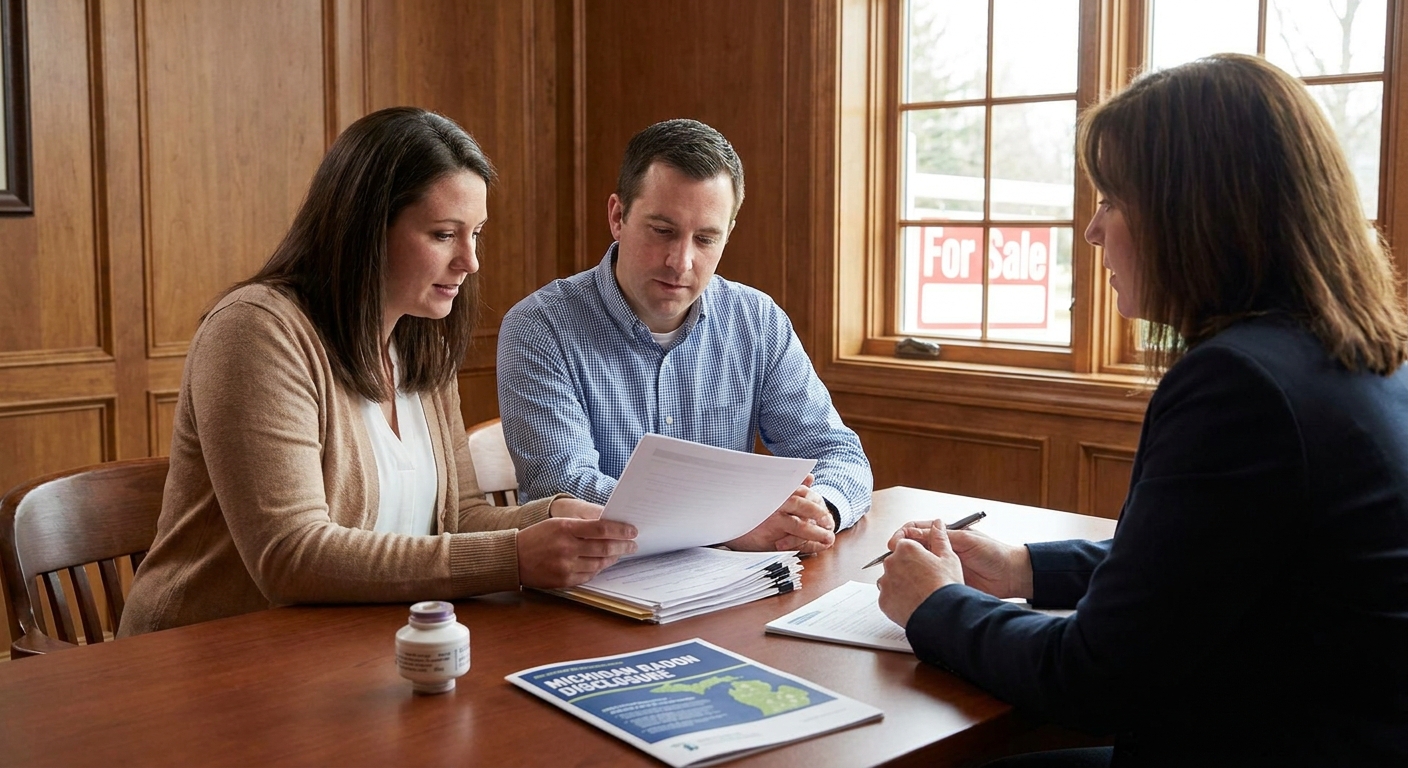
Michigan doesn't mandate radon testing by state law, but most purchase agreements in Metro Detroit and Lansing include it as a standard contingency. Skipping it can slow or derail a closing if the buyer's lender requires disclosure.
How much does radon testing cost in Michigan?
Professional radon testing typically runs in the low hundreds of dollars depending on home size and test type. Continuous monitor tests for real estate transactions generally cost more than long-term passive test kits.
How long does a radon test take?
Short-term real estate tests run 48 to 96 hours under closed-house conditions. Long-term tests for a home you're not selling run 90 days or more for a truer annual average.
Is a radon level of 4 pCi/L dangerous?
4 pCi/L is the EPA's action level, meaning mitigation is recommended at or above that number. It's not an emergency threshold, but long-term exposure at or above it raises lung cancer risk according to EPA data.
Can I test for radon myself or do I need a professional?
DIY charcoal kits exist, but they're unreliable for real estate transactions because closed-house protocol is easy to break without realizing it. Professional testing with an NRPP-certified technician holds up in a disputed sale.
Does Michigan weather affect radon test results?
Yes — winter testing typically produces higher readings because sealed homes and active heating systems pull soil gas upward through the stack effect. Summer readings tend to run lower since homes are more open.
How often should Michigan homeowners retest for radon?
Retest every two years, or immediately after any foundation work, new mitigation system install, or major renovation. Radon levels can shift after structural changes to a home's slab or sump system.
One last thing
Michigan's radon problem isn't uniform county to county — it tracks the glacial till left behind from the last ice age, which is why some neighborhoods a few miles apart show very different baseline readings. The number on your specific lot matters more than any statewide average, which is exactly why a proper test on your home, not a neighbor's result or a county chart, is the only number worth acting on in 2026.