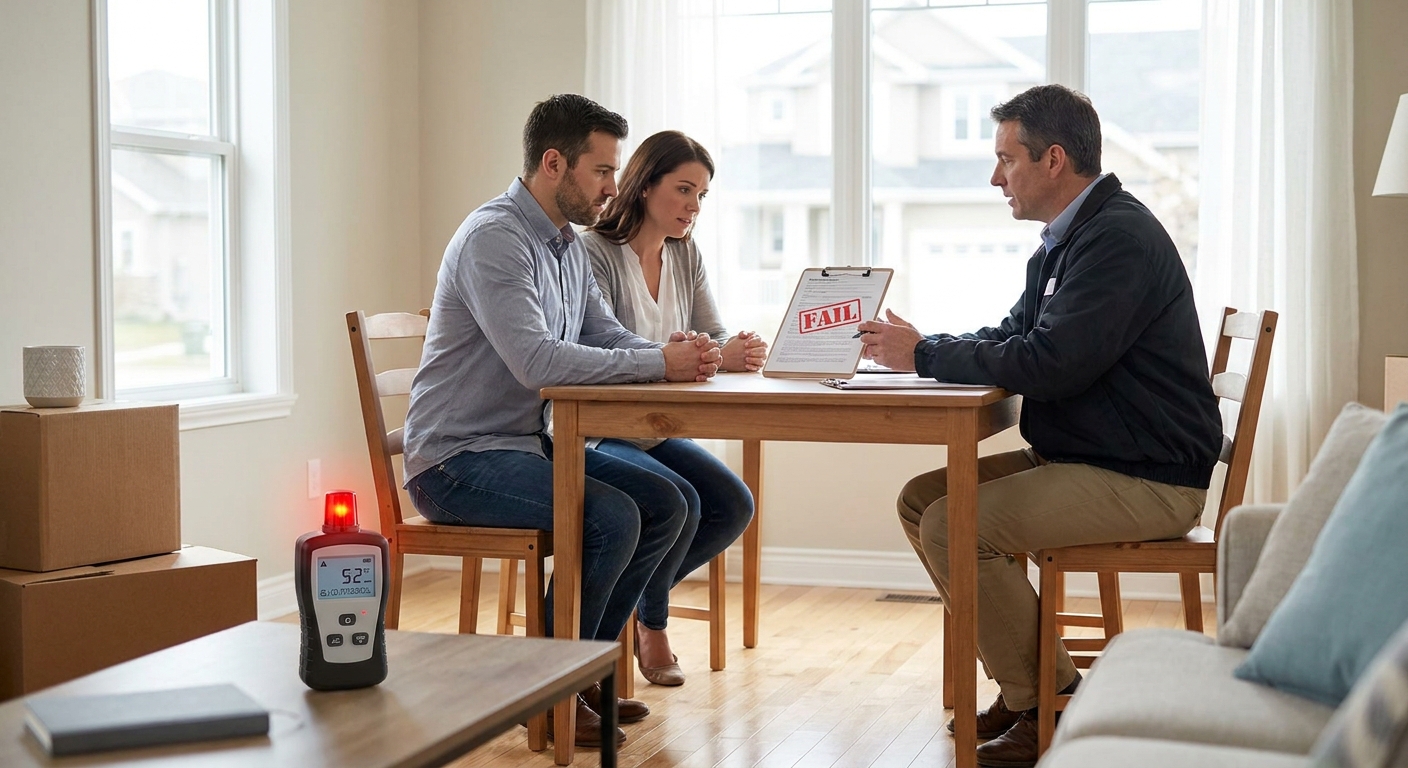
A radon test that comes back above 4 pCi/L can freeze a Michigan home sale mid-contract — sellers who mitigate before listing close faster and negotiate from a position of strength.
- Sub-slab depressurization is the safe pick for radon mitigation before selling a house in 2026 — it cuts radon by up to 99% and satisfies buyer-side inspectors.
- Test before you list, not after an accepted offer — a pre-listing test costs far less than a renegotiated price.
- A system backed by a 5-year warranty gives buyers one less reason to walk and gives sellers proof the fix holds.
- Skip patch-only fixes like sealing cracks alone — they rarely bring levels under the EPA's 4 pCi/L action level.
Why this matters
Michigan's glacial soils and uranium-bearing bedrock push a large share of homes above the EPA's action level of 4 pCi/L, and buyers know it. Most Michigan purchase agreements in 2026 include a radon contingency, which means a buyer's inspector can reopen price talks — or walk — the moment their own test comes back high.
Sellers who install radon mitigation before selling a house avoid that scramble entirely. Instead of negotiating a credit under deadline pressure during escrow, you list with a documented, working system and a number on paper that any buyer's agent can verify.
Who this is for
This guide is for Michigan homeowners planning to list in 2026 who already know their basement or crawlspace has tested high, plus real estate agents advising sellers on radon disclosure before an offer lands. It's also for sellers who got burned once — a prior contract that fell apart or got re-negotiated over a radon result — and don't want a repeat.
What to look for in radon mitigation before selling
NRPP certification on the install crew
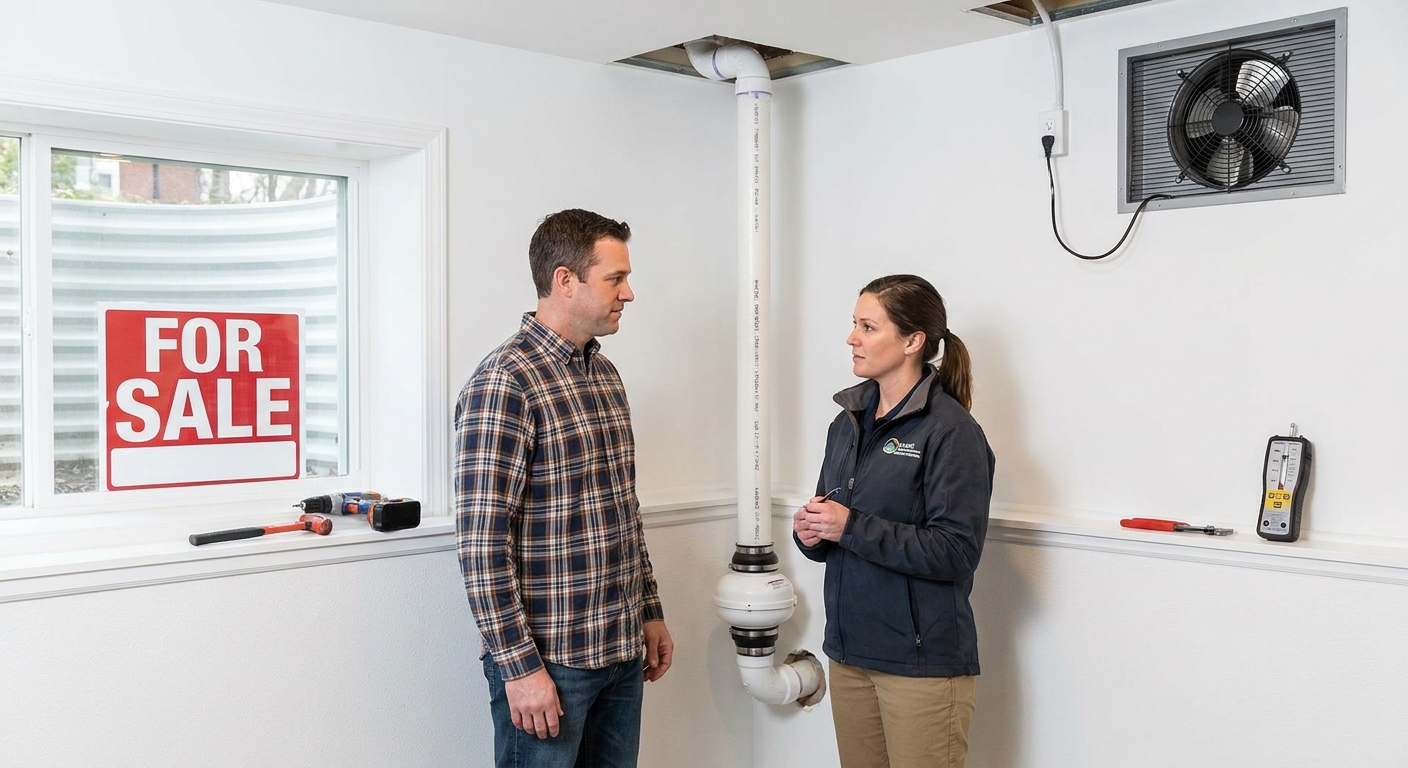
Michigan doesn't license radon contractors, so certification is the only real quality signal a buyer's inspector or their agent will recognize. An NRPP-certified installer follows EPA protocol on fan sizing, pipe routing, and sealing — details a home inspector checks during a pre-closing walkthrough.
A timeline that actually fits your listing date
A standard sub-slab system installs in one day, but retesting takes 24 to 48 hours minimum, and EPA guidance recommends waiting up to 30 days for a stable long-term reading. Book mitigation at least three weeks before your target list date so you have retest results in hand, not in progress.
Warranty language a buyer's agent will accept
A 5-year warranty on parts and labor is standard for a professionally installed system, and it should transfer to the new owner without a rebate or transfer fee buried in fine print. Buyer's agents ask about this specifically — a system with no transferable warranty reads as a red flag, not a fix.
Post-install retest documentation
A verbal "it's fixed" means nothing in a real estate transaction. Get the post-mitigation test result on a signed report with the device serial number and dates, because that's the document your listing agent will hand to the buyer's side when the question comes up.
System type matched to your foundation
A slab-on-grade home, a home with a sump pump, and a home with block foundation walls each call for a different mitigation approach. Getting this wrong doesn't just waste money — it can leave radon levels above 4 pCi/L even after a system is running, which is worse for a seller than never testing at all.
Confirm your listing agent understands the disclosure timeline too. Radon testing guidance for Michigan real estate agents covers what agents are expected to disclose and when, which matters if your buyer's contract includes a radon contingency clause.
Get ahead of a buyer's radon test
Request an inspection before you list — most Michigan homes retest within a week of mitigation.
Top picks: mitigation system types for sellers
Sub-slab depressurization — the default pick
This is the system most Michigan installers reach for first, and it's the one buyer's inspectors expect to see documented. A single fan and PVC stack pull soil gas from beneath the slab before it enters the living space, and properly sized systems reduce indoor radon by up to 99%. It works on slab-on-grade basements and most poured foundations. Verdict: Buy — this is the right call for the majority of Michigan listings.
Drain tile suction — the wildcard
If your basement already has interior drain tile (a perimeter drainage system installed for water management), a mitigation contractor can tie the fan directly into that loop instead of drilling a new suction point. Install time runs close to the standard one day, and the finished pipe routing is often less visible than a fresh sub-slab hole. Verdict: Consider if you have an unfinished drain tile system already exposed — it saves a step, not a system type.
Block wall suction — for block foundations
Homes with hollow block foundation walls trap soil gas inside the block cavities themselves, and a standard slab suction point won't reach that source. This method drills into the block wall and seals the top course, drawing radon out of the wall cavity directly. Verdict: Consider for homes built on block before 1990, common across older Metro Detroit neighborhoods.
Sump-hole suction — for homes with an existing sump
When a home already has a sealed sump pump pit, a contractor can often mount the suction point on a sealed sump lid instead of coring new holes in the slab. It's the least invasive option on move-in-ready listings where sellers want to avoid new floor penetrations before showings. Verdict: Buy if your sump pit is already sealed and accessible — Skip if the pit is open or shared with a floor drain, since that setup won't seal properly.
What to avoid before listing
- Passive vent pipes with no fan. A pipe routed through the roof without an active fan relies on stack effect alone and rarely gets a home under 4 pCi/L — inspectors flag these as incomplete.
- Crack sealing sold as "mitigation." Caulking foundation cracks helps with moisture, not radon; soil gas finds another path within weeks.
- DIY fan kits from online retailers. A buyer's inspector or their agent will ask who installed it and whether it's certified — an unlicensed install becomes a negotiation point instead of a solved problem.
Comparison: mitigation systems for sellers
| System type | Best foundation match | Typical install time | Retest wait | Verdict |
|---|---|---|---|---|
| Sub-slab depressurization | Slab-on-grade, poured basement | 1 day | 24-48 hrs | Buy |
| Drain tile suction | Basement with interior drain tile | 1 day | 24-48 hrs | Consider |
| Block wall suction | Hollow block foundation | 1 day | 24-48 hrs | Consider |
| Sump-hole suction | Sealed sump pit present | Under 1 day | 24-48 hrs | Buy (sealed pit) / Skip (open pit) |
FAQ
Should I do radon mitigation before selling my house?
Yes, mitigating before listing is the safer move in 2026 if a prior test came back above the EPA's 4 pCi/L action level. It removes the radon contingency as a negotiating point and lets you list with a completed system instead of a repair credit on the table.
How long does radon mitigation take before a home sale?
A standard sub-slab system installs in about one day, with a retest window of 24 to 48 hours minimum before you get a valid reading. Build in at least three weeks before your list date to have documentation ready.
Does a radon mitigation system add value when selling a house?
A working system with a transferable warranty removes a common objection buyers raise during inspection, which keeps deals moving instead of stalling over a re-negotiated price. It doesn't function like a renovation upgrade, but it prevents the deal risk radon creates.
Is sub-slab depressurization better than a sump-hole system?
Sub-slab depressurization works on the widest range of foundations and is the default choice for most Michigan homes. A sump-hole system is a strong alternative only when a sealed, accessible sump pit already exists.
How much radon reduction do sellers need to see?
A properly sized mitigation system reduces indoor radon by up to 99%, which typically brings even high-reading Michigan basements well under the EPA's 4 pCi/L action level. Anything less on a retest means the system needs adjustment before you list.
Do Michigan home buyers ask for radon testing?
Most Michigan purchase agreements in 2026 include a radon testing contingency, so buyers commonly test during inspection regardless of what the seller discloses. A pre-listing test and mitigation record answers that question before it becomes a negotiation.
Can I install a radon mitigation system myself before selling?
You can buy a DIY fan kit, but an uncertified install raises questions from the buyer's agent and inspector during closing. NRPP-certified installation gives you documentation a buyer's side will actually accept.
One last thing
Sellers often assume a high radon test means a stalled listing, but the opposite is usually true: a documented mitigation system installed before you list turns radon from a liability into a line item you control. Michigan Radon Control has walked Metro Detroit and Lansing-area sellers through exactly this timeline heading into 2026 — test, mitigate, retest, list — and the sellers who follow that order rarely see radon come up again once an offer lands.