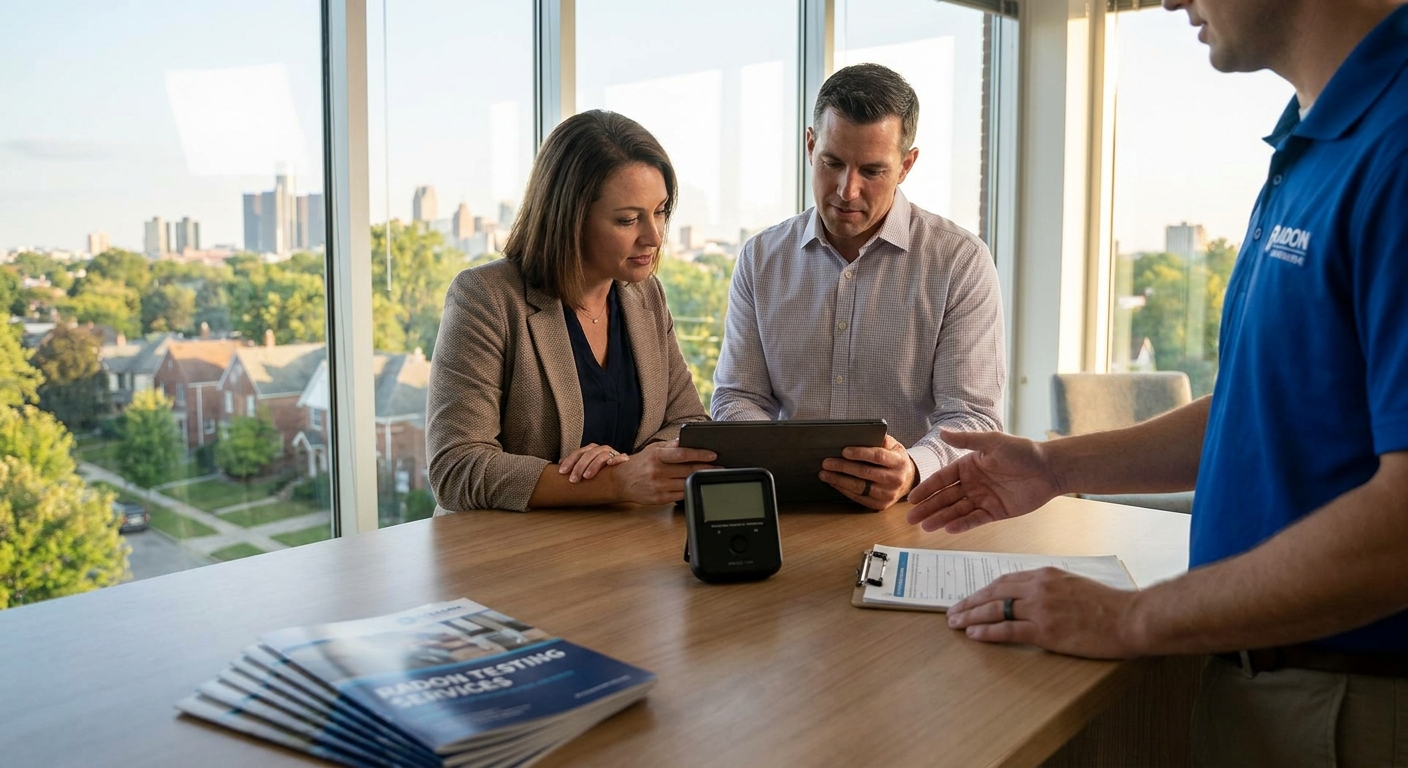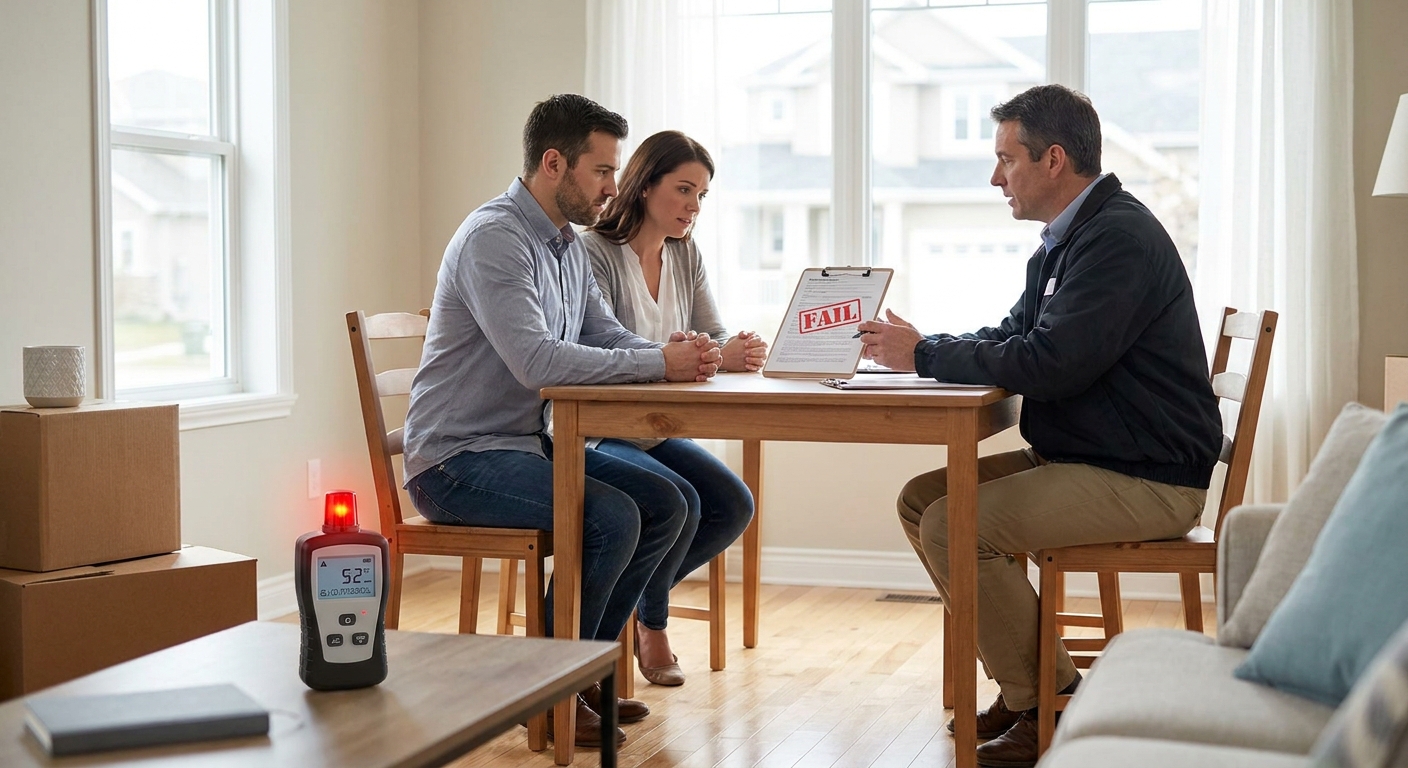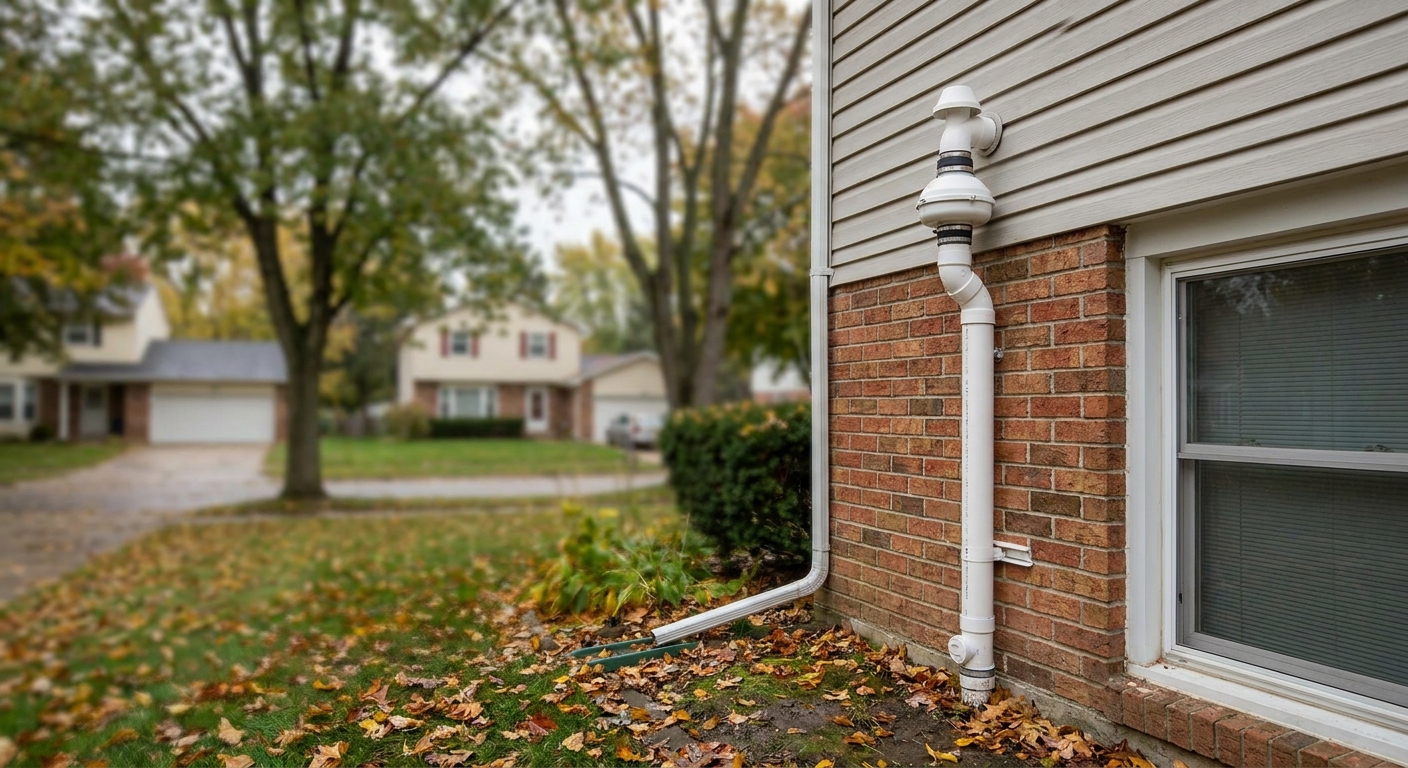
Lansing area homes sit on a mix of glacial till and older foundations that trap radon gas at levels well above the EPA's 4 pCi/L action threshold, and picking the wrong mitigation system for your foundation type wastes money without fixing the problem.
- Sub-slab depressurization fixes radon in 90%+ of slab and basement homes around Lansing, MI in 2026.
- Radon mitigation Lansing MI costs vary by foundation type — crawlspace homes need submembrane suction, not sub-slab.
- NRPP-certified installers guarantee post-mitigation readings below 4 pCi/L, often under 2 pCi/L.
- Skip single-suction-point systems on multi-zone foundations larger than 1,500 square feet.
- A 5-year warranty on the system is the baseline you should expect from any Michigan installer in 2026.
Why this matters
Michigan sits inside EPA Zone 1, the highest radon-potential category in the country, and Lansing's mix of pre-1980 basements and newer slab-on-grade subdivisions means no two houses need the identical fix. A system built for a Livonia basement won't necessarily work on an Okemos crawlspace, and a contractor who installs the same design on every job is cutting corners.
Radon is odorless and invisible, so the only way you know your home has a problem is a test. Once a test comes back at or above 4 pCi/L, the fix has to match your foundation, not the other way around.
Who this is for
This guide is for Lansing area homeowners who've tested at or above 4 pCi/L, or who are closing on a home and need to understand what system a seller installed (or should have). It's built for people evaluating quotes right now, not for contractors comparing equipment specs. If you're a realtor advising a buyer on a pending inspection, the criteria below apply the same way. Michigan Radon Control serves Lansing alongside Metro Detroit, and the foundation-matching logic here is the same logic used on every job.
What to look for in radon mitigation for Lansing homes
Foundation type match
A sub-slab system pulls air from under a poured slab; it does nothing for a home with an open crawlspace. Lansing's older neighborhoods mix basements, crawlspaces, and slab additions on the same block, so the installer has to identify which zones need separate suction points, not just count square footage.
NRPP certification
Any installer working in Michigan should carry National Radon Proficiency Program certification. This isn't a formality — it means the technician follows EPA protocol for fan sizing, pipe routing, and sealing, and it's the credential that backs a warranty claim if levels creep back up.
Post-mitigation test results
A finished system should bring readings below 4 pCi/L, and a well-sized system typically lands under 2 pCi/L. Ask for the post-test number in writing before you sign off on the job — a verbal "it's fixed" isn't a result.
Warranty coverage
A 5-year warranty on parts and performance is standard for a properly sized system in 2026. Anything shorter suggests the installer isn't confident the system will hold at that home's radon levels long-term.
Fan placement and noise
Fans mounted in an attic or garage run quieter than exterior-wall units, and Lansing's older homes with tight setbacks sometimes limit where an exterior pipe run can go. Ask where the fan lives before installation day, not after.
Maintenance and monitoring
Every system needs a manometer — the small U-tube gauge that shows suction is still active. A homeowner should be able to glance at it monthly without calling anyone.
Get a radon mitigation quote for your Lansing home
NRPP-certified inspection and system design tailored to your foundation type.
Top picks: mitigation systems for Lansing area foundations
Sub-slab depressurization — the standard pick. This is the system used on roughly 90% of slab and basement radon jobs nationally, because it pulls soil gas from directly beneath the concrete before it enters the living space. One suction point typically depressurizes 2,000 square feet of slab if the sub-slab material is consistent gravel or sand. Verdict: Buy for any Lansing basement or slab home with uniform sub-slab fill.
Drain-tile suction — the retrofit pick. Homes with an interior perimeter drain tile system (common in Lansing basements built after the 1970s) can route suction through the existing tile loop instead of drilling new slab penetrations. It cuts installation time and avoids extra holes in a finished basement floor. Verdict: Buy if your home already has drain tile; Consider if you're unsure — an installer can confirm during the pre-installation walkthrough.
Sump-hole suction — the practical pick. When a home has an active sump pump, sealing the sump lid and running suction through it avoids a separate slab penetration entirely. It works well in Lansing homes with high water tables near the Grand River, where a sump pit is already doing double duty. Verdict: Buy for homes with an existing sump pit; check that the seal is airtight, since a loose lid defeats the whole system.
Submembrane suction — the crawlspace pick. Crawlspace-only homes need a heavy plastic membrane sealed across the entire earthen floor, with suction pulled from beneath it. This costs more in materials than a slab penetration but is the only method that works when there's no concrete floor to drill into. Verdict: Buy for crawlspace-only structures; Skip trying to adapt a sub-slab design to a crawlspace — it won't hold suction.
Passive stack systems — the wildcard. Some new-construction Lansing subdivisions include a passive vent pipe (no fan) installed during the build. Passive systems rely on natural stack effect and typically only reduce radon by 30-50%, well short of what's needed if your pre-fan test came back above 4 pCi/L. Verdict: Hold — a passive system usually needs a fan added to become an active, reliable fix.
What to avoid
- A single suction point on a home over 1,500 square feet with mixed foundation zones. It looks like a full fix on the quote but leaves half the house untreated, and the post-test will show it.
- DIY short-term test kits as your only data point before a permanent decision. A 2-7 day charcoal kit is fine for a first screen, but a system installed off one short reading without a longer follow-up test can be oversized or undersized.
- An installer who skips the post-installation test. Without a documented reading below 4 pCi/L, you have no proof the system works — just an invoice.
Comparison table
| System type | Best foundation | Typical suction points | Verdict |
|---|---|---|---|
| Sub-slab depressurization | Basement / slab-on-grade | 1 per 2,000 sq ft | Buy |
| Drain-tile suction | Basement with perimeter tile | 1 loop connection | Buy |
| Sump-hole suction | Homes with active sump pit | 1 sealed pit | Buy |
| Submembrane suction | Crawlspace-only | 1 per membrane zone | Buy |
| Passive stack (no fan) | New construction, low starting levels | 1, no fan | Hold |
FAQ
What's the best radon mitigation system for a Lansing, MI home?
Sub-slab depressurization is the best fit for most Lansing basement and slab homes because it treats the largest area with the fewest suction points. Crawlspace-only homes need submembrane suction instead, since there's no slab to depressurize.
How much does radon mitigation cost in Lansing MI?
Cost depends on foundation size and type, with multi-zone or crawlspace jobs running higher than a single-point slab system. Get a site-specific estimate rather than relying on a national average, since Lansing's mixed foundation styles change the scope.
Is a passive radon system enough for a Michigan home?
A passive system without a fan typically only cuts radon by 30-50%, which usually isn't enough if your test came back at or above 4 pCi/L. Most passive systems in Michigan need a fan added to become active and reliable.
How long does radon mitigation installation take?
Most single-point sub-slab or sump-hole systems install in a single day. Crawlspace submembrane jobs or multi-zone homes with more than one suction point can take longer depending on square footage.
Do I need a new radon test after mitigation is installed?
Yes, a post-mitigation test is the only way to confirm the system brought your home below 4 pCi/L. A properly sized system should test under 2 pCi/L, and that number should be documented in writing.
Does radon mitigation affect home resale in Lansing?
An active mitigation system with documented post-test results is generally seen as a resolved issue by buyers and their agents. An undocumented or DIY system can raise more questions during inspection than no system at all.
How often does a radon mitigation system need maintenance?
Check the manometer gauge monthly to confirm the fan is still running under suction. Most systems otherwise need little upkeep within a 5-year warranty period, aside from occasional fan replacement.
Can one radon system cover a home with both a basement and a crawlspace addition?
Usually not with a single suction point — mixed foundations typically need a sub-slab point for the basement and a separate submembrane zone for the crawlspace addition. An installer should identify both zones during the site walkthrough.
One last thing
The detail most Lansing homeowners miss: a system that tests fine the day it's installed can drift upward over 2-3 years if the fan starts to fail or a slab crack opens a new gas path, which is exactly why the manometer gauge matters more than the install-day paperwork. Check it when you check your smoke detector batteries.