Royal Oak sits on the same Oakland County glacial soil that pushes radon above the EPA's 4.0 pCi/L action level in a meaningful share of Michigan basements, and radon testing royal oak mi is the only way to find out which side of that line your house lands on.
- Radon testing royal oak mi calls for a continuous monitor on real estate deals, charcoal kits for annual checks. Buy the monitor.
- EPA's action level is 4.0 pCi/L, and Michigan Radon Control mitigation systems ship with a 5-year warranty in 2026.
- Skip retail DIY kits without an EPA-listed lab partner — shipping delays past 48 hours skew the reading.
- Test in winter with windows shut for the worst-case, most useful number before a Royal Oak home sale closes.
Why this matters
Royal Oak's housing stock skews older — lots of 1920s-1950s bungalows and colonials with full basements, exactly the construction type that pulls soil gas indoors fastest. Michigan's glacial till and fractured bedrock underneath Oakland County concentrate radium decay products closer to the surface than in states with deeper, more uniform soil layers.
That geology doesn't care whether you're buying, selling, or just staying put in 2026. A basement that tested clean in 2015 can read differently after a sump pump replacement, a foundation crack, or a finished-basement remodel that sealed off natural ventilation. Radon testing for Troy Michigan homeowners covers a nearby Oakland County market with nearly identical soil and housing-age patterns, worth a look if you're comparing notes across the county.
Who this is for
This guide is for Royal Oak homeowners in three situations: closing on a home sale where radon disclosure is part of the deal, doing a routine annual check on a house you already own, or reacting to a neighbor's or inspector's high reading and wondering if your own basement is next. Each of those scenarios points toward a different test method, and picking the wrong one wastes time or money.
What to look for in radon testing for Royal Oak homeowners
NRPP or NRSB certification
Anyone placing or reading a radon test in Michigan should carry NRPP (National Radon Proficiency Program) or equivalent state-recognized certification. Uncertified placement is the single biggest reason test results get challenged during a real estate closing, and a challenged result can delay a sale by weeks.
Test duration matched to your purpose
A 48-hour test suits a closing deadline. A 90-day test suits a homeowner who just wants an honest seasonal average and isn't under time pressure. Matching the method to the situation avoids paying for urgency you don't need, or accepting a snapshot when you need a season-long average.
EPA protocol placement
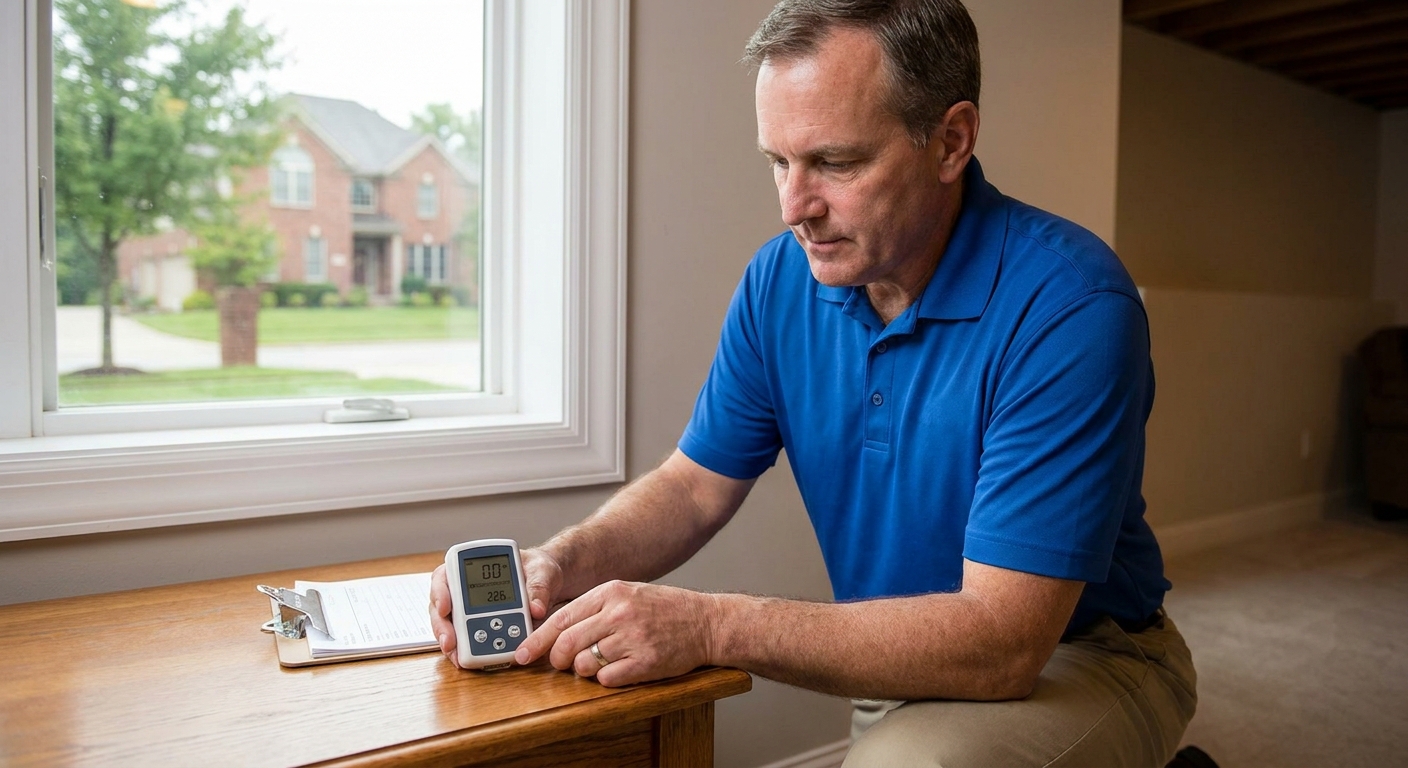
The device belongs on the lowest livable level, at least 20 inches off the floor, away from drafts, exterior doors, and windows. A monitor placed in a laundry room next to a dryer vent will read low and give you false confidence.
Tamper and movement logging
Real estate deals need a device that flags if it was bumped, moved, or covered during the test window. Without that log, either party can dispute the number and the whole test starts over.
Report turnaround time
A charcoal canister sent to a lab takes 3 to 5 business days to process. A continuous monitor can produce a report the same day it's picked up. If your closing is in 10 days, that difference decides which method you can actually use.
Top picks for Royal Oak radon testing
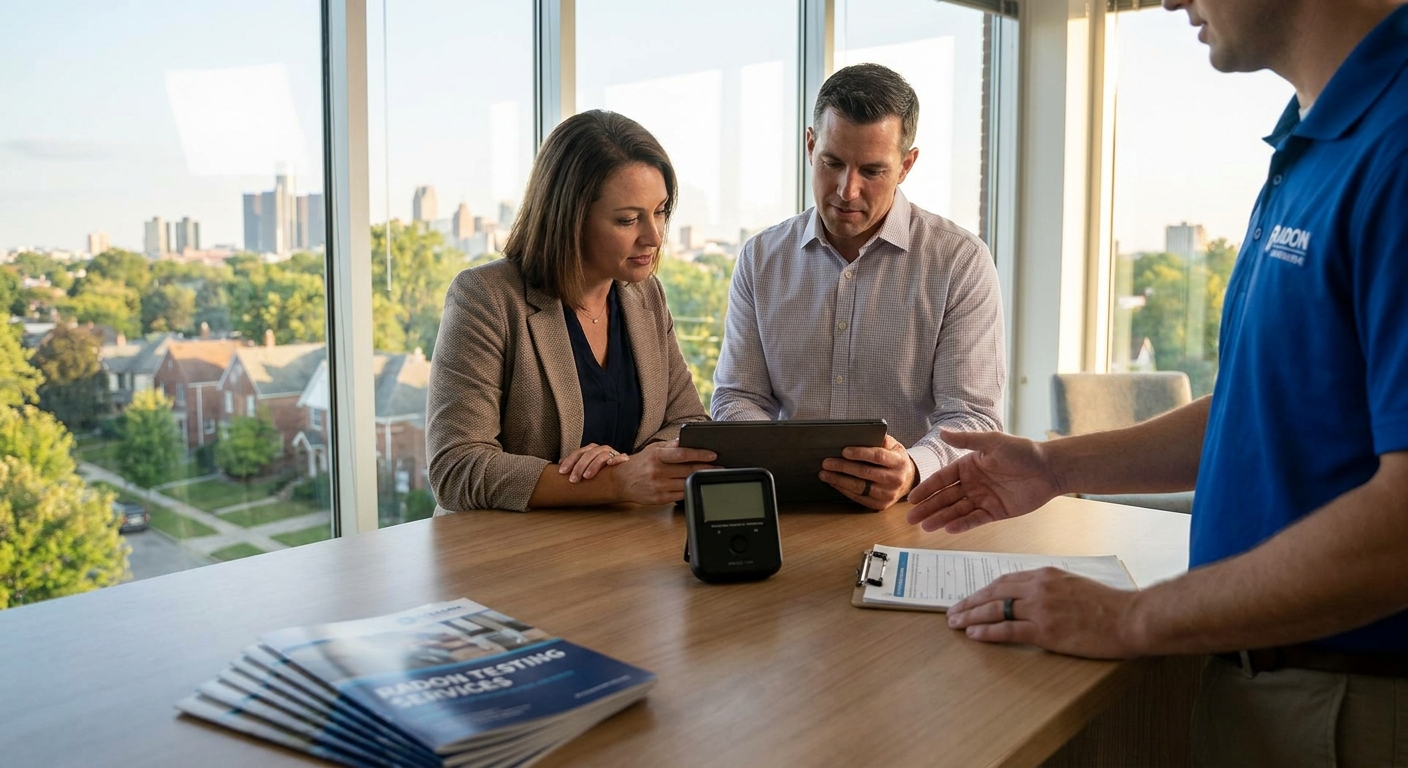
Continuous Radon Monitor (CRM) — the real estate closer. Logs hourly readings to 0.1 pCi/L resolution and flags any movement or tampering within a minute of it happening, which is exactly what a title company wants to see. Results are ready the day the device comes off the wall, not after a lab turnaround. Buy this method any time a sale is on the calendar.
48-Hour Short-Term Charcoal Canister — the budget baseline. Passive charcoal absorption, no batteries, no electronics, mailed to a lab for a 3 to 5 business day analysis. It's the cheapest legitimate option and fine for a homeowner who just wants a number, not a closing document. Consider it for a routine check outside of a sale.
90-Day Alpha Track Test — the annual health check. Instead of a snapshot, this measures a seasonal average, which matters because radon levels in Michigan homes typically run higher in winter when windows stay shut. Consider running one every year or two if you're not selling anytime soon.
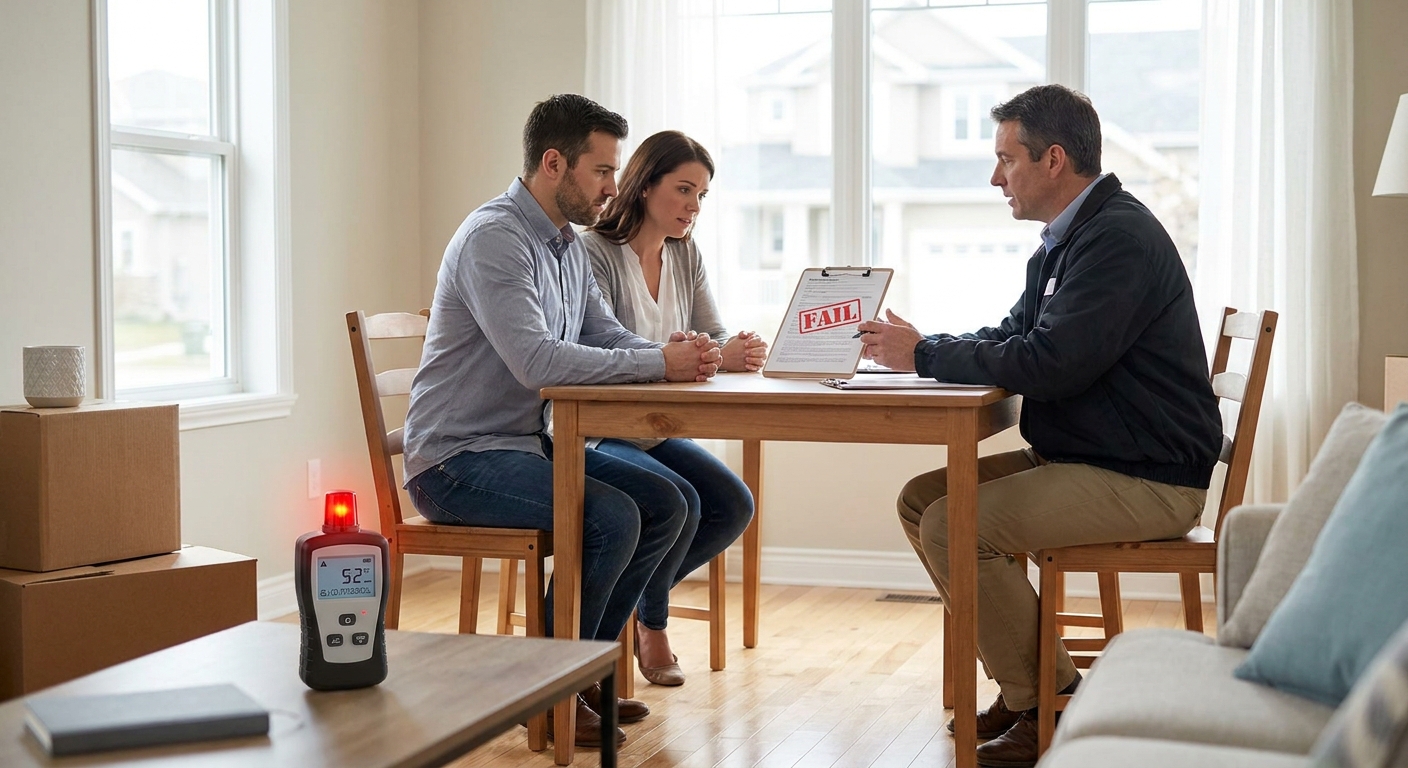
Mitigation consult after a high reading. If any method comes back above 4.0 pCi/L, the next move is a mitigation system, not a second test hoping for a different number. How to prepare your home for a radon mitigation system walks through what an installer needs from your basement before the crew shows up. Buy into this step immediately rather than waiting for a re-test to confirm what you already know.
What to avoid
- Retail DIY kits without a named, EPA-listed lab partner. If the box doesn't say where the sample gets analyzed, you have no way to verify the number, and a title company won't accept it anyway.
- Testing during a storm front or with windows open. Barometric pressure swings and open windows both push readings artificially low, which means a clean-looking result that doesn't hold up a week later.
- Skipping the retest after mitigation. A system that's installed but never verified is a guess dressed up as a fix. Michigan Radon Control-style follow-up testing confirms the fan and pipe network actually pulled the level below 4.0 pCi/L, not just that a system exists in the basement.
If your situation looks more like Ann Arbor's older college-town housing stock than Royal Oak's postwar subdivisions, radon testing and mitigation for Ann Arbor homeowners covers a comparable mix of basement types and foundation ages.
Verdict comparison
| Method | Turnaround | Best For | Verdict |
|---|---|---|---|
| Continuous Radon Monitor | Same-day report | Real estate closings, urgent timelines | Buy |
| 48-Hour Charcoal Canister | 3-5 business days | Budget annual check, no deadline | Consider |
| 90-Day Alpha Track | 90+ days | Seasonal average, non-urgent | Consider |
| Retail DIY kit, no lab named | Unpredictable | Nothing you'd act on | Skip |
Book NRPP-certified radon testing
Get a Royal Oak test scheduled and a mitigation plan if levels come back high.
FAQ
How much does radon testing cost in Royal Oak, MI?
A short-term charcoal canister test typically runs less than a mitigation system quote, while a continuous monitor for a real estate closing costs more due to same-day reporting and tamper logging. Ask for the price broken out by method before booking.
What is a safe radon level for a Michigan home?
The EPA action level is 4.0 pCi/L; anything at or above that number means mitigation is recommended in 2026. Levels between 2 and 4 pCi/L are worth monitoring even though they fall below the action threshold.
How long does a radon test take?
Short-term tests run a minimum of 48 hours, while long-term alpha track tests run 90 days or more for a seasonal average. Real estate closings almost always use the 48-hour continuous monitor method.
Is radon testing required to sell a house in Michigan?
Michigan doesn't mandate radon testing by state law, but many buyers and lenders request it as a condition of the purchase agreement. Skipping it can slow down or reopen negotiations if the buyer's own inspector finds an elevated reading.
Can I test for radon myself?
A homeowner can place a retail charcoal kit, but real estate transactions typically require NRPP-certified placement and a tamper-logged device to hold up during closing. DIY results are fine for personal peace of mind, not for a sale contingency.
Does radon testing work in winter?
Winter is actually the best season to test because closed windows and running furnaces trap indoor air, giving you the worst-case and most reliable reading. A test run during a mild, open-window week can understate your actual exposure.
What happens if my radon test comes back high?
A reading at or above 4.0 pCi/L means a mitigation system is the next step, typically a sub-slab depressurization setup with a fan and vent pipe. A follow-up test after installation confirms the system brought levels down.
One last thing
The worst time to test, according to EPA guidance on seasonal variation, is also the time most homeowners pick by accident: a mild spring week with windows cracked open. Schedule your Royal Oak test for a stretch of closed-window winter weather instead, and you'll get the number that actually matters if you ever sell.